Posted in Book covers, Book promotion

Author photos & bios: Reasons to care

Would this make a good book-jacket photo?

They say a picture is worth a thousand words, but I’m wondering what those thousand words could possibly be as I contemplate the photos on some of my book covers.  And then when I read the bios, it occurs to me that the author bio issue is even more fraught with considerations.

Generally, from my point of view, the author photo on the book cover has two distinct objectives:

* To assist in the marketing of the book.

* To massage the author’s ego.

Achievement of the first objective is very difficult to figure out.  Achievement of the second – a lot easier.

Book marketers see the visual needs of the potential book buyer as very important important (that’s why covers are very important); thus the author photo is a key part of the book jacket’s appeal or lack thereof as far as they’re concerned.  One web commentator suggests that there are three reasons to put author photos on book covers…

  1. Author photos help to sell books.
  2. Author photos help to build name recognition.
  3. Author photos help TV bookers decide whether the author would be “good television” material[1].

Valid points, all; however, no one really knows the extent to which an author’s image assists in the selling of the book.  No one seems to have done any solid research.
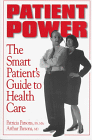
We convinced them to put us on the front cover. Quite a coup!

Some years ago when my co-author (husband) and I were negotiating the cover for a health-related  book targeted at the general public, we insisted that to personalize it, our photo had to be on the cover.  We had previous experience of this publisher; they had not wanted any photo on the earlier one, front or back.  In fact the cover issue was a contentious one with this publisher.  This time around, we wanted our photo there – and not on the back cover – we wanted it to be the front cover.  When a doctor and a health educator are writing a book that they hope will benefit the readers, it seemed important to us that when potential readers slid it off a shelf in a book store (it was the dark ages, after all), they might be interested in who was speaking to them.  It seems that most book marketers agree, but there are pitfalls here.   The selection of the photo can be hazardous.

Paul Hiebert, writing online in Flavorwire makes a very good point:  “Excellent authors avoid writing clichés. The problem is that some of these very authors do not apply the same level of vigilance when it comes to taking promotional photographs, whether they’re for magazine profiles or back-of-the-book biographies…”[2]  He describes the kinds of staged photos that really do give little information to the potential reader and often make the author look, well, clichéd.  His piece is worth a click.

If you think that no one actually looks at author photos, you might want to surf by David Wills’ piece The Curse of the Douchey Author Photo, wherein he writes an email to a reader who actually had the temerity to write a nasty note about the photo on his book.  It makes an author think carefully about image, an image and personal brand that are influenced by both the photo and the bio.

Over the years, I’ve had publishers who insisted that there be no author photo (very hard on the author ego) as well as others who insist on one (easy on the ego if I get to select the photo – which I do). Their focus was on the author bio. A succinct statement of author credentials is very important to readers who are looking for information in addition to entertainment.  I take great pains over the construction of that very brief bio, taking into consideration the needs and wants of the actual target market.  What do they want to know about me?  What do they need to know about me?  What do they not care about?  Then I avoid over-sharing – the plague of the modern technological society.

When it comes to fiction, the author’s bio might not be all that important.  Do you really care what kinds of previous books the author wrote?  Do you care where the author lives?  Probably not.  You are probably going to be more concerned about the book summary on the cover and whether or not it is compelling to you as an individual reader.  Do you care what the author looks like?  Probably not.  But you might be curious.  The real down side to this is that an author photo might actually put off the bigots of the world who might be the very people who need to open their minds.

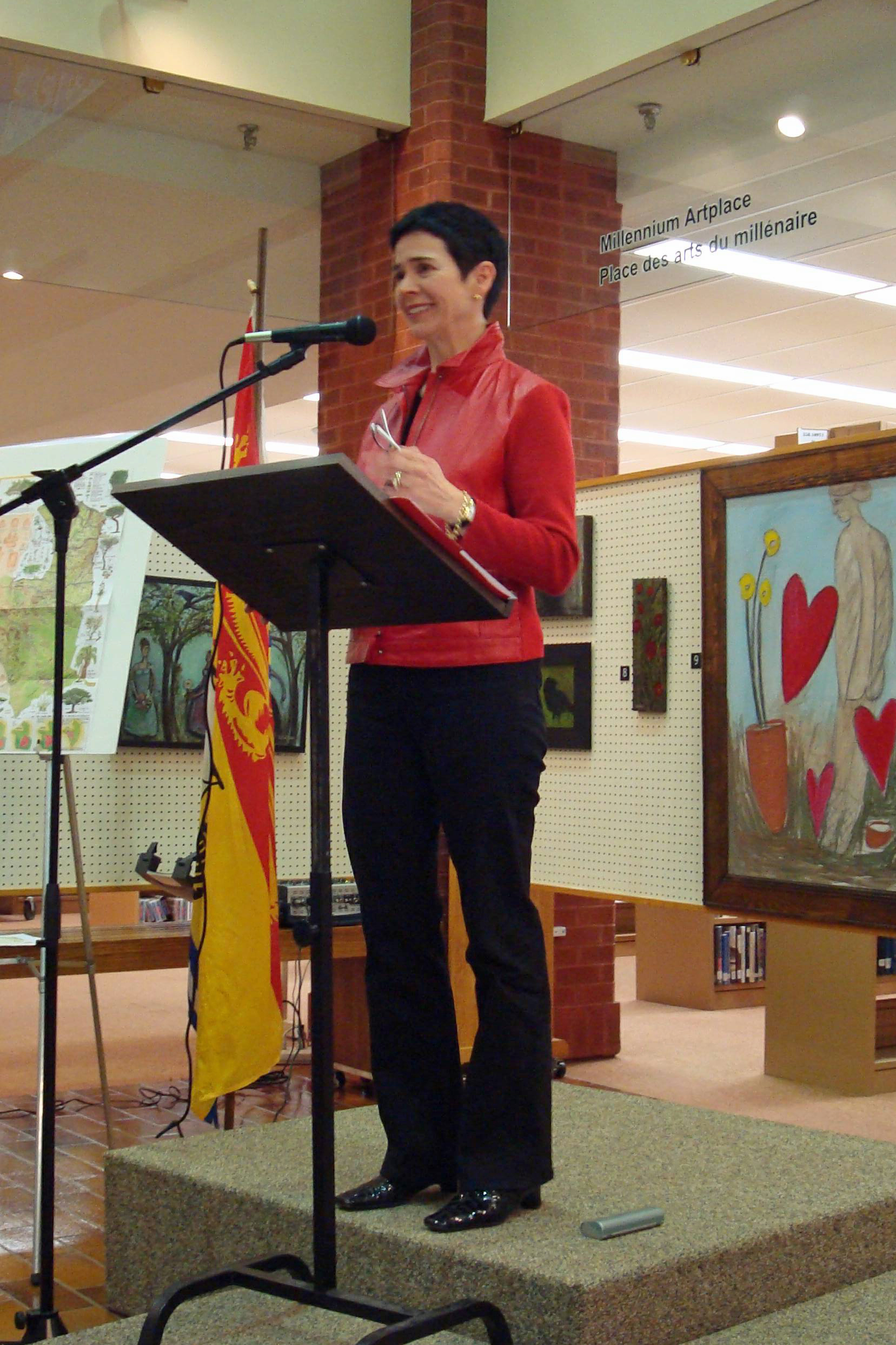
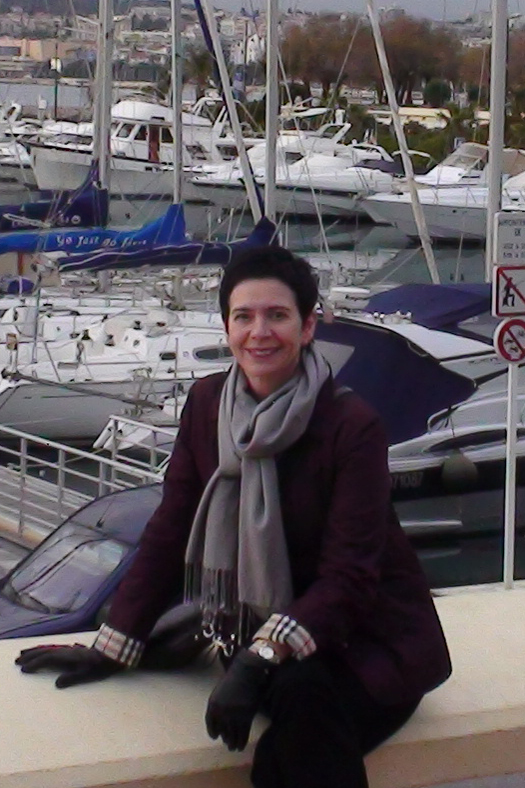
Two different kinds of books (first, historical fiction; second, business), two different photos & bios — same author.

HIstorical fiction book: Author photo & bio

A business-related photo & bio

Posted in Blog tours, Book promotion

The virtual book tour: virtually useful?

Anyone who thinks that public communication about anything and everything has not changed much in the past few years is clearly living a life of denial.  Organizations these days have learned this lesson – often the hard way. Now, in these days of do-it-yourself book marketing, authors need more than ever to be vigilant for new opportunities.

I’ve talked in the past about how book marketers at publishing companies seem to have a different role than marketers of other products and services.  There is an urgent need for anyone who writes these days – and expects to be published – to be able to articulate clearly how the work can be marketed and to whom.  And this isn’t just for self-publishers.

Traditional publishers these days are even requiring book proposals to have fairly well-developed section on exactly how this book might be marketed.  This means that keeping abreast of the new approaches is vital for writers.

We’ve talked at length about book trailers and have yet to come to any conclusion about their effectiveness.  The next newest approach to book promotion is the virtual author tour.  It is much on my mind this week as I tackle such a plan for my latest book.  So I thought I’d let my blog readers in on the research I’m doing and the action I’m taking.  Maybe some of my work might help you.

Let’s start by defining the virtual book tour.  Any kind of a book tour is a marketing technique that puts a writer front and center in public communication vehicles.  In a traditional book tour, a writer moves from venue to venue giving interviews to media personalities – radio, television and print (newspapers & magazines).  The traditional book tour (effectiveness notwithstanding) is generally predicated on the notion that the writer will tour around and talk about the book.  In a virtual book tour, the tour is virtual (the book usually not!).

And there is a whole cottage industry that has sprung up around the notion of virtual book tours (also known as blog tours).  There are even tour coordinators.  Who knew? Precisely.  The problem in my view is this: no one seems to know much about virtual book tours except the people organizing and implementing them.  Excuse me for a moment, but I thought that the main purpose was to publicize a book to potential readers.  If readers don’t know about virtual book tours or are not tuned into those pieces of social media where they take place, then what’s the point?  I digress…

In his book Plug Your Book: Online Book Marketing for Authors, Steve Weber provides some useful guidelines for setting up these tours.  In his view, these so-called blog tours are “especially valuable for authors unable to travel, uncomfortable with public speaking [remember my discussion about author readings?] or whose dispersed audience makes touring impractical.”[1]  Of course, not only are book tours often impractical, they are expensive and the ROI (return on investment) is often not substantial.

My virtual book tour (because I told my publisher I’d do one) is currently in the planning stages. I’m following Weber’s advice and am doing the following:

  1. I am first building a list of target blogs that might actually be read by potential readers of my book.  I’m looking for content that is congruent with the kinds of things these readers might be interested in – since this is in the historical fiction genre, that’s where I’m looking.  In this case, much of what I’m finding is book blogs – and there are hundreds of thousands of them.  This is going to take a bit of time.  If I were trying to organize a blog tour for one of my earlier non-fiction works, I think the job might be easier.  The smaller the niche, the easier it is to find blogs whose owners might be interested in guest bloggers on their topic
    are (especially if the guest blogger is an expert).
  2. The second step that I’m going to take is to evaluate these blogs.  I need to find out if it’s worth my time to even approach them.  If the blog in question has only a trickle of readers, it’s probably not going to be worth it to me.  I need to find those blogs spaces where large numbers of my readers accumulate.  Weber suggests looking at not only traffic volume, but also reader involvement – this is what I’d call online engagement. (He provides details on how to accomplish this.)
  3. While I’m doing the above, I’m working on the excerpt that I’ll offer to the blog and the Q & A author interview that some bloggers might be interested in using rather than sending along their own questions.

All throughout this process, I’m continuing to question the effectiveness of this marketing strategy.  I’ve been looking for stats on this, but like in the case of the book trailer, no research yet exists on the effectiveness of these tours.  Maybe one of my grad students will take this on?   Hmm?  Anyone out there listening??


[1]
Weber, Steve. 2007.  Plug your book: Online book marketing for authors. Stephen W.
Weber, p. 87.

Posted in Book launches, Book promotion

Author Readings: Purposeful or painful?

Ah, the pain of the author reading...

Last week someone asked me if I’d consider taking part in an author reading event featuring my new book. If someone had asked me this question twenty years ago when I first started shopping books to publishers, I would have been flattered.  I would have jumped at the chance.  However, many years of writing and publishing experience later have left me a bit dubious about these events.   And discussing these kinds of events with
other writers does little to disabuse me of the notion that they are largely a waste of time – depending on your objective.  So, what precisely are the possible objectives of an author reading in public?

From a publisher’s point of view there is only one bottom line objective, and that is the bottom line. Their objective is to sell more books. Publishers seem to believe that putting an unknown author in front of twenty people will result in massive book sales.  Given the effort involved in doing a reading and the sales potential from such a small audience, one has to question the wisdom of this approach.  Keep in mind, though, that there is no effort on the part of the publisher – only on the part of the writer and the organizers.  And in fact, in Canada, the Canada Council for the Arts even offers grants to publishers for readings. Who knew?

From a reader’s point of view, it’s a free night (or afternoon) of entertainment.  Sometimes there are refreshments and often there will be like-minded people attending.  Sometimes readings are at bookstores, sometimes they’re in libraries or other related public spaces.  When I was in New York city in July, I visited a gargantuan bookstore on Broadway where they had a more or less permanent dais and chairs set up for readings. Only in a large city would you ever see this!  But, is an author reading really “entertainment”?

My most recent experience of doing a reading was at a “literary festival” where a number of authors would take part in workshops and do readings.  This particular afternoon when I was scheduled to read from my memoir (it was about one month pre-publication at the time), I was on the agenda after three others reading from their varied recent books.  What can I say?  At the risk of being lambasted by fellow authors, my only conclusion that (painful) afternoon was that writers are crappy speakers.  To say I was appalled would be an understatement.  One after the other they took to the stage and monotonously read.  Every single one of them.  It was all I could do to stay awake.

A couple of weeks ago, there was a piece in the Globe and Mail titled “The season of readings is upon us, let the misery begin.”  It was delightful to see that I am not the only one who cringes at the thought of authors reading from their work.  Douglas Bell who wrote the article quotes Irish author Aidan Higgins.  He says it so much better than I could:

“There’s nothing more calculated to cause a gritting of the teeth, a shudder of the spirit or even a rising of the gorge than to be voluntarily confined in a Function Room to endure an hour-long ranting by the author in person, of predigested matter now regurgitated, delivered in a monotonous drone. It is enough to make a cat laugh or a dog throw up.”[1]

[I beg you to click through and read the article – If it doesn’t make you laugh out loud, you have less of a sense of humor than I do.]

I’ve been teaching and doing public speaking for many years.  I’ve taken the time to hone my skills and it was clear when I came to the podium and began speaking about my writing and then reading, that this was a breath of fresh air for the audience.  They couldn’t get to me fast enough after the readings were over to tell me how much they enjoyed the presentation.  But sell books?  LOL.

When you spend so much solitary time with your work as writers do, I think it can be fun to share it with a live audience.  But if you are a crappy speaker, just back away.  Please.  The fact is that unless you’re a celebrity to begin with or have a rabid following from previous books, the reading will not sell many books.  And if you already are a celebrity or have a fan base, they’re going to buy the book anyway.  So, the reason to do it has to be more than to sell books.

So, here are my tips for doing an author reading:

  • Don’t focus on selling books.  Just focus on connecting with live people.
  • Prepare. Take the time to consider what you’ll say to put your reading into
    context for the audience.
  • Consider your presentation skills.  If you’re not a good presenter and can’t make your work come alive for the audience, either get some coaching or just don’t do it.
  • For the love of god, don’t drone on and on.  Or you’ll have to carry a gun – to put the audience out of their misery.