Posted in Book contests, Book promotion, Self-Publishing

Writers’ contests: The good, the bad & the very ugly (& a few tips)

I opened my email the other day to find a note from the Next Generation Indie Book AwardsCongratulations, it read, …your book has been named a Finalist in the GENERAL FICTION/NOVEL (Over 80,000 words) category…

Oh, I thought.  What’s that?  Did I enter that contest?  Immediately my skeptic kicked in until I remembered, yes, I did enter this contest many months ago when I was fixated on book marketing.  But now I found myself researching it again just to see if there was any legitimacy to it, and for that matter, any legitimacy to any of the contests designed to part independently and small-press published authors from their money (most have entry fees).
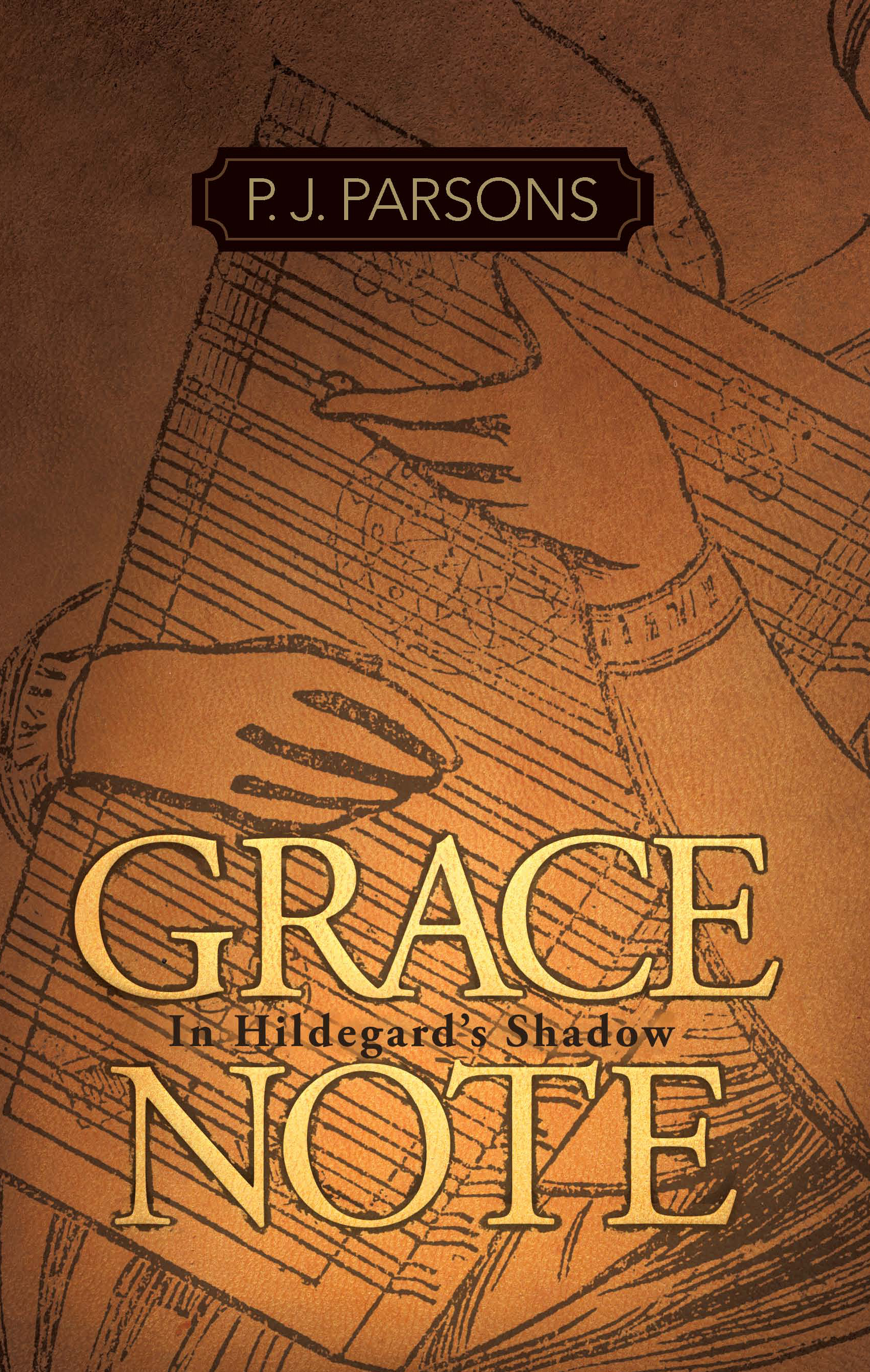
An award winner? Just wish the publisher had given it a cover I like more than this one!

What’s the point of giving awards for books?  It used to be – back in the day as they say – that book awards recognized truly gifted authors whose work has or is destined to make a difference.  Of course, that presupposes that those judging for the awards have the capability to distinguish the very best – whatever that might be at any given point in time.

These days, however, in addition to these long-standing, prestigious awards (at least they’re prestigious in some circles), there is an absolute glut of awards and contests for writers.

The Science Fiction & Fantasy Writers of America posted a terrific description of awards and award scams here.  They differentiate among outright scams, contest mills, award mills, fake contests etc.  The list is long and very dispiriting.  But why would a writer enter a contest anyway?

If your book is published by a traditional publisher, that traditional publisher just might decide to enter your book in an appropriate award contest.  Or not.  If your book is independently published, then watch out.  You are going to be vulnerable to every possible attempt to get you to enter a contest.  Why would you even consider that, anyway?

In a word: publicity. This is the promise.  Your book will be read by others who might, just might, like it. Or at least they might – just might – actually read it. They might like it enough that you might win an award.  And that award will mean publicity (not the New York Times kind of publicity, though).

Lots of other people have researched these contests, so I thought I’d take a slightly different tack.  I hypothesized that if a book award is so credible, then the books awarded must be of high quality.

I took a random sample (albeit a convenience sample for all of you researchers out there), to get a bit of anecdotal evidence to support or discredit my thesis.

I started with the 2012 Independent Publisher Book Awards which bills themselves as the “World’s largest international and regional book awards competition” and selected their first-place winner in the popular fiction category, Vertical, by Rex Pickett (Loose Gravel Press — Pickett is co-owner).  Surfing over to Amazon, I read inside the book, as I would do if I were at a book store trying to decide whether or not I wanted to read the book.  In case you didn’t pick it up – and I certainly did not – Pickett’s first book was Sideways, which later morphed into the film Sideways.  So, I read.  My conclusion:  I’m ordering this book.  He writes in an accessible and entertaining way: this just might be my summer schlock reading for this year.

Next on my list was the Writer’s Digest Award for self-published authors.  They charge $100 to enter and offer the following:  chance to win $3,000 in cash, national exposure for your work, the opportunity to catch the attention of prospective editors and publishers, and a paid trip to the ever-popular Writer’s Digest Conference in New York City![1] Well, after more online research than I care to mention, I could not identify even one of their winners.  I’m sure they’re listed somewhere, but I can’t seem to find them – or at least I’m not willing to do spend any more time on it.  Onward!

The Amazon Breakthrough Novel Award is a highly visible award for self-published authors.  Their prize is a publishing contract with Penguin with whom they are partnered.  I selected Bill Warrington’s Last Chance: A Novel by James King which won in 2010.  A multi-generational saga, the book is not really my personal cup of tea.  I started to read it, and it’s as good as any “coming-of-age” “road-trip” novel, so it’s mainstream.  Just not my thing.  But the reader reviews on the site are really quite good.  Given the number of their finalists who are published on their own Createspace, though, I have a few questions.

At this point I’m beginning to think that the high-profile of these awards really do have some substance to them.  Obviously, there will always be scams, but in the grand scheme of things if you do your research, entering a contest like this just might get you what you’re looking for: recognition and a bit of publicity — a bit.  But beware; there are more scams than there are legitimate contests.

I have a few suggestions to authors who are interested in entering their work in book contests:

  1. Before doing anything, sit down and decide what your objective is.  If it’s to get onto the NYT best-seller list, you might be a wee bit unrealistic.  If you want publicity, it’s possible.  If you’d like a bit more exposure, you’ll likely get it.  At least your work will be read by someone.
  2. Decide how much money you’re willing or able to cough up.  Many of these contests, even some of the more credible, do charge for entries.
  3. Do an online search for contests that fit your particular genre, just as you would when seeking a compatible publisher.
  4. Select four or five that impress you the most and research them.  Look at what bloggers or independent writers are saying apart from what is on the web site.
  5. Read the contest’s web site very carefully.  Look at every bit of the fine print.  Then go back to the blog I linked to above from the Science Fiction Writers and check to make sure that none of the red flags are there.
  6. Make a decision on one or two contests.
  7. Read the entry requirements carefully.
  8. Follow the instructions to the letter – and make sure your entry is in before the deadline.
  9. Then wait.

Oh…it might be worthwhile to make a note of contests you enter.  See my opening sentence! And what’s my conclusion about that contest?  Still don’t know what to think.  I’ll let you know.
Posted in Book covers, Book promotion

Author photos & bios: Reasons to care

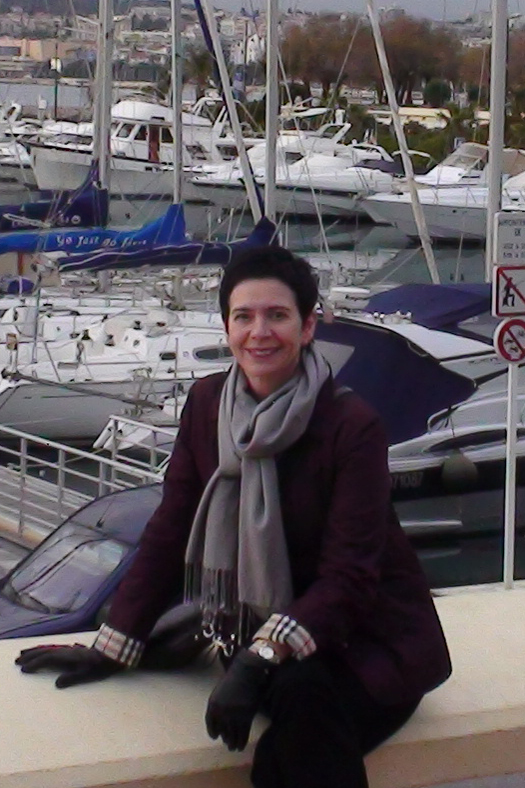
Would this make a good book-jacket photo?

They say a picture is worth a thousand words, but I’m wondering what those thousand words could possibly be as I contemplate the photos on some of my book covers.  And then when I read the bios, it occurs to me that the author bio issue is even more fraught with considerations.

Generally, from my point of view, the author photo on the book cover has two distinct objectives:

* To assist in the marketing of the book.

* To massage the author’s ego.

Achievement of the first objective is very difficult to figure out.  Achievement of the second – a lot easier.

Book marketers see the visual needs of the potential book buyer as very important important (that’s why covers are very important); thus the author photo is a key part of the book jacket’s appeal or lack thereof as far as they’re concerned.  One web commentator suggests that there are three reasons to put author photos on book covers…

  1. Author photos help to sell books.
  2. Author photos help to build name recognition.
  3. Author photos help TV bookers decide whether the author would be “good television” material[1].

Valid points, all; however, no one really knows the extent to which an author’s image assists in the selling of the book.  No one seems to have done any solid research.

We convinced them to put us on the front cover. Quite a coup!

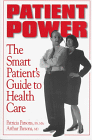
Some years ago when my co-author (husband) and I were negotiating the cover for a health-related  book targeted at the general public, we insisted that to personalize it, our photo had to be on the cover.  We had previous experience of this publisher; they had not wanted any photo on the earlier one, front or back.  In fact the cover issue was a contentious one with this publisher.  This time around, we wanted our photo there – and not on the back cover – we wanted it to be the front cover.  When a doctor and a health educator are writing a book that they hope will benefit the readers, it seemed important to us that when potential readers slid it off a shelf in a book store (it was the dark ages, after all), they might be interested in who was speaking to them.  It seems that most book marketers agree, but there are pitfalls here.   The selection of the photo can be hazardous.

Paul Hiebert, writing online in Flavorwire makes a very good point:  “Excellent authors avoid writing clichés. The problem is that some of these very authors do not apply the same level of vigilance when it comes to taking promotional photographs, whether they’re for magazine profiles or back-of-the-book biographies…”[2]  He describes the kinds of staged photos that really do give little information to the potential reader and often make the author look, well, clichéd.  His piece is worth a click.

If you think that no one actually looks at author photos, you might want to surf by David Wills’ piece The Curse of the Douchey Author Photo, wherein he writes an email to a reader who actually had the temerity to write a nasty note about the photo on his book.  It makes an author think carefully about image, an image and personal brand that are influenced by both the photo and the bio.

Over the years, I’ve had publishers who insisted that there be no author photo (very hard on the author ego) as well as others who insist on one (easy on the ego if I get to select the photo – which I do). Their focus was on the author bio. A succinct statement of author credentials is very important to readers who are looking for information in addition to entertainment.  I take great pains over the construction of that very brief bio, taking into consideration the needs and wants of the actual target market.  What do they want to know about me?  What do they need to know about me?  What do they not care about?  Then I avoid over-sharing – the plague of the modern technological society.

When it comes to fiction, the author’s bio might not be all that important.  Do you really care what kinds of previous books the author wrote?  Do you care where the author lives?  Probably not.  You are probably going to be more concerned about the book summary on the cover and whether or not it is compelling to you as an individual reader.  Do you care what the author looks like?  Probably not.  But you might be curious.  The real down side to this is that an author photo might actually put off the bigots of the world who might be the very people who need to open their minds.

Two different kinds of books (first, historical fiction; second, business), two different photos & bios — same author.

HIstorical fiction book: Author photo & bio

A business-related photo & bio

Posted in Blog tours, Book promotion

The virtual book tour: virtually useful?

Anyone who thinks that public communication about anything and everything has not changed much in the past few years is clearly living a life of denial.  Organizations these days have learned this lesson – often the hard way. Now, in these days of do-it-yourself book marketing, authors need more than ever to be vigilant for new opportunities.

I’ve talked in the past about how book marketers at publishing companies seem to have a different role than marketers of other products and services.  There is an urgent need for anyone who writes these days – and expects to be published – to be able to articulate clearly how the work can be marketed and to whom.  And this isn’t just for self-publishers.

Traditional publishers these days are even requiring book proposals to have fairly well-developed section on exactly how this book might be marketed.  This means that keeping abreast of the new approaches is vital for writers.

We’ve talked at length about book trailers and have yet to come to any conclusion about their effectiveness.  The next newest approach to book promotion is the virtual author tour.  It is much on my mind this week as I tackle such a plan for my latest book.  So I thought I’d let my blog readers in on the research I’m doing and the action I’m taking.  Maybe some of my work might help you.

Let’s start by defining the virtual book tour.  Any kind of a book tour is a marketing technique that puts a writer front and center in public communication vehicles.  In a traditional book tour, a writer moves from venue to venue giving interviews to media personalities – radio, television and print (newspapers & magazines).  The traditional book tour (effectiveness notwithstanding) is generally predicated on the notion that the writer will tour around and talk about the book.  In a virtual book tour, the tour is virtual (the book usually not!).

And there is a whole cottage industry that has sprung up around the notion of virtual book tours (also known as blog tours).  There are even tour coordinators.  Who knew? Precisely.  The problem in my view is this: no one seems to know much about virtual book tours except the people organizing and implementing them.  Excuse me for a moment, but I thought that the main purpose was to publicize a book to potential readers.  If readers don’t know about virtual book tours or are not tuned into those pieces of social media where they take place, then what’s the point?  I digress…

In his book Plug Your Book: Online Book Marketing for Authors, Steve Weber provides some useful guidelines for setting up these tours.  In his view, these so-called blog tours are “especially valuable for authors unable to travel, uncomfortable with public speaking [remember my discussion about author readings?] or whose dispersed audience makes touring impractical.”[1]  Of course, not only are book tours often impractical, they are expensive and the ROI (return on investment) is often not substantial.

My virtual book tour (because I told my publisher I’d do one) is currently in the planning stages. I’m following Weber’s advice and am doing the following:

  1. I am first building a list of target blogs that might actually be read by potential readers of my book.  I’m looking for content that is congruent with the kinds of things these readers might be interested in – since this is in the historical fiction genre, that’s where I’m looking.  In this case, much of what I’m finding is book blogs – and there are hundreds of thousands of them.  This is going to take a bit of time.  If I were trying to organize a blog tour for one of my earlier non-fiction works, I think the job might be easier.  The smaller the niche, the easier it is to find blogs whose owners might be interested in guest bloggers on their topic
    are (especially if the guest blogger is an expert).
  2. The second step that I’m going to take is to evaluate these blogs.  I need to find out if it’s worth my time to even approach them.  If the blog in question has only a trickle of readers, it’s probably not going to be worth it to me.  I need to find those blogs spaces where large numbers of my readers accumulate.  Weber suggests looking at not only traffic volume, but also reader involvement – this is what I’d call online engagement. (He provides details on how to accomplish this.)
  3. While I’m doing the above, I’m working on the excerpt that I’ll offer to the blog and the Q & A author interview that some bloggers might be interested in using rather than sending along their own questions.

All throughout this process, I’m continuing to question the effectiveness of this marketing strategy.  I’ve been looking for stats on this, but like in the case of the book trailer, no research yet exists on the effectiveness of these tours.  Maybe one of my grad students will take this on?   Hmm?  Anyone out there listening??


[1]
Weber, Steve. 2007.  Plug your book: Online book marketing for authors. Stephen W.
Weber, p. 87.