Posted in Publishing, Writing

Setting priorities: A writer’s lament

Lately, it seems that I’ve been spending far more time on creating blog entries (mostly on The Discerning Travelers) and trying to figure out Pinterest (in fairness, I’m once again teaching a course on Social Media to our graduate students this spring and need to keep up), than I have been doing real writing.  I seem to have a notion that there is real writing and there is – other stuff.  But what, precisely is real writing and why do I think it has to be my priority?

…just as I was considering this question, I opened up my email and found a message from one of my publishers.  This is a publisher that I haven’t heard from in some two years – nope, not even a royalty statement – that is unless you count an email from someone in the office there suggesting that I pay them for the 100 books they sent to me that I did not order.  When I told them that I would send them back to them when they sent me a royalty statement (because, as I mentioned casually to them, they were in breach of contract), I never heard from them again.  Until today.

It seems that the company is being liquidated.  Further, it seems that the authors were aware of this; the publisher herself is ill.  Funny about that – I’m one of their authors and I didn’t know.  So, what this means it that all rights to the book revert to me and I can do with it what I want.  This raises a few important questions for an author.

First, I’m wondering what, if anything, I ought to do.  I immediately sent them an email asking for a specific confirmation of the revision of all rights and for all of the electronic files related to the work.  Which begs the second question…

What should I do with the files when I get them?   What I am certainly not going to do is to buy their copies that are currently housed in a warehouse at the University of Toronto Press which distributes for them.  I was never all that happy with the quality of the actual physical book in any case.  So, if I do anything with it, I do it myself.  Which leads to the next question…
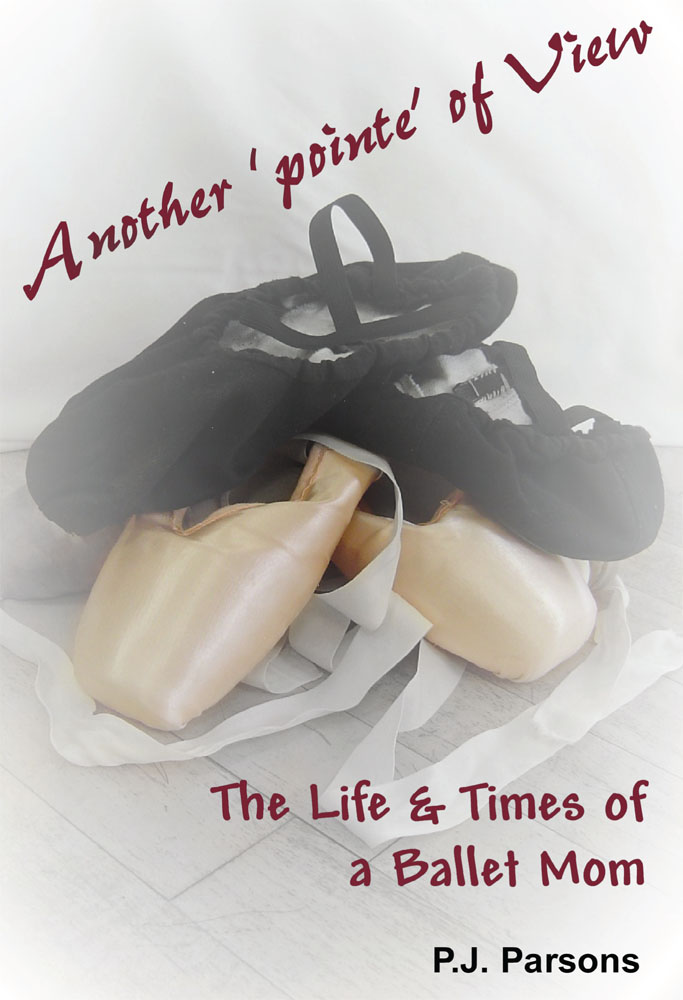
Is the book still current enough for it to be made available on other terms?  Since it is a memoir, it isn’t really out of date, and if a bit of effort were put into marketing (that was never done by the publisher in the first place – I did it all myself), it could re-emerge as both a physical book and as an e-book.

And all of this leads me to the final, and perhaps more philosophical question:  Why did I even proceed with having it published by a traditional publisher in the first place?  I could have done as good a job on my own, had as much reach on my own and kept control. This is a problem with many small publishing houses – they don’t have the resources needed to do a really professional job.  I’ve reflected on the models of publishing before, and now I’m more convinced than ever that we do need to find a new model that captures the best of the traditional approach to publishing while at the same time manages to put the author front and center, rather than the publisher.  The author needs to be in the driver’s seat in my view.

So, does all of this have any relevance to the question of real writing and the priority it need or need not have in a writer’s life?  It does insofar as it takes me back to a piece of writing that, by all accounts, seems like real writing.  And it gives me yet another reason to procrastinate from finishing the novel that languishes among the electronic files on my computer in a file titled…well, I’m not going to tell you yet.

Suddenly, my priority focus, for better or for worse, is on a book that I thought had been put to bed.  Now I just have to decide if I should tuck it in and turn off the lights, or wake it up and have a party.

Posted in Book publishers, Publishing, Self-Publishing

Publishing trends: The good, the bad and the really ugly

I’ve been on vacation for the past month and decided to go on hiatus from this blog during that time.  (I did continue to blog at www.thediscerningtravelers.com because that’s my writing practice for fun – and did seem relevant since I was in LA and Hawaii!).  This pause did give me a chance to reflect on the future of publishing in general and on my continuing participation in it in particular.

hawaii
The view from where I was sitting when I was thinking about all of this. Waikoloa, Hawaii.

In early 2009 Time published an article by Lev Grossman titled “Books Gone Wild: The Digital Age Reshapes Literature.”  In that article, he recounted the now-familiar story of neuroscientist Lisa Genova who couldn’t get her novel published after pursuing all the traditional approaches: agents, queries, submissions etc.  Blah, blah, blah – those of us who write books of any kind have been there.  Done that.  Sick of it.

Well, most of you will already know the rest of the story.  She took matters into her own hands and went to iUniverse, published the book herself and was subsequently offered half a million dollars from Simon and Shuster.  And you’ve probably all read Still Alice (I have not).  That’s becoming like an urban myth.  And it does speak to our continuing need to be validated by “real” publishers as opposed to those do-it-yourself approaches.  I think that most aspiring novelists would welcome this kind of outcome in any case.  I’m probably among them: traditional (aka “real”) publishers seem to want only my non-fiction.  But what is so different about fiction and what lies in the future for how those stories get from writer’s head into reader’s hands?

Grossman put it this way in his article: “We think of the novel as a transcendent, timeless thing, but it was shaped by the forces of money and technology just as much as by creative genius.”[1]  There is likely no doubt in your mind that money and technology are important in publishing – I submit that they are also part of the good, the bad and the really ugly.

Obviously writers need money to be able to continue with their habit.  How much money seems moot since most writers these days do it for love rather than money.  Making a living at it is a whole different issue, and that’s what makes money a good part of publishing.   Publishers are clearly in business to make money – that’s good for their employees, but bad for writers, since writers are typically the worst paid contributors to the process.  Full stop.  That’s when the money part gets really ugly.

Technology is a really good part of publishing.  It first started with the word processor back in the dark ages.  I remember when I had to make corrections on hard copy page proofs and any changes after that were very costly indeed.  Technology has changed all that.  That’s a good thing.  Further, technology has advanced to the point where books are more accessible than ever (of course you might need to revisit the definition of a book – but I digress).  Technology has also allowed all of us to be publishers (to wit: you’re reading this blog now, aren’t you?).  This is good?  Maybe.  But it is also bad, since there are no editors, no filters, no quality control.  And that’s where it gets downright ugly.

You might have the best possible piece of literature and if a “real” publisher takes it on, it gains credibility.  If you publish it yourself, it is suspect in some, perhaps many, circles.  That’s ugly, since the number of poorly written, unedited, crappily designed self-published books gives everyone a bad name.  And there are some truly bad pieces of work around.  We live in an age where everyone seems to think they’re really good, even when they’re not.  Just take a look of some of those so-called reality talent contests on television and you’ll see the negative reactions of people who can’t carry a tune in a bucket, yet are personally insulted to be told this; whereas others who are truly talented are the most modest.  (See the interview with Martin Short in this months’ issue of Toronto Life Magazine.).

So, where does all of this ranting leave me?  It leaves me questioning the direction of my future writing.  I know I write well – at least I know that I write some things well based on external review (Huh, see the Martin Short reference above).  Objectively, I have a good command of the English language; I have a track record in traditional and non-traditional publishing; I’ve been reviewed positively for several different kinds of work.  But I’m pragmatic enough to understand that it is much more difficult to get fiction than non-fiction published, both in general for everyone and in particular for me.

Maybe it’s time to suck it up and stick to what I know I’m good at.  Or maybe I’ll just surf on over to Pinterest and start a pin-board of writing ideas.  Want to join me?

Posted in Publishing

A publishing co-op: An idea whose time has come?

Discussions of traditional publishing versus vanity publishing versus self-publishing always lead to the same conclusion: there has to be a better way in the wake of the new technologies and expectations.  And so the idea of a publishing co-op is born.

What is a co-op?

There are housing co-ops, banking co-ops, insurance co-ops.  According to the Canadian Co-Operative Association, “A co-operative is an organization owned by the members who use its services or are employed there.”[1]  Further, the association suggests that co-op ventures exist in every part of the economy.  So, a little bit of research leads to some interesting information on terminology in the publishing business.

Some people who have written about cooperative publishing consider it to be a publishing model that represents the middle ground between traditional and print-on-demand publishing.  Although this might represent cooperation between an author (who pays) and a “publisher” who is contracted by the author, it still says self-publishing to me.  The model of cooperative publishing I’m suggesting here is based on a business co-op model where, as the CCA says, the business (in this case the publisher) is owned by the members who use its services.  In the case of a publishing co-op that I’m suggesting is worth exploring, the owners both use the services and are the “employees.”

Current publishing co-op models

The use of the term “co-op” in the publishing business at present clearly does not embrace the ideals of a co-operative business venture.  For example, one such venture called Ocean Cooperative says clearly in the answers to their frequently asked question that the author contributes $895: “Nothing else.”[2]   This is a self-publishing model since the author is not one of the business owners.

On the other hand, Vala Publishing is closer to the model I’m working toward here.  They say that they are “… a community of people, a cooperative, who participate in the business of producing books.”  They use what they call “grassroots commissioning” an acquisitions model that utilizes people other than editors and marketers as is the case in the traditional publishing model.  The members of this co-operative venture are the business owners and their business structure is that of a traditional co-op business venture, but the members are not necessarily the people who also use the services: some of their members are authors, others involved in the commissioning and acquisitions are not.  This is all clearly set out in their interesting business plan.  This seems a very interesting and democratic sort of approach to the business of publishing but does not quite approach the model of the author-led cooperative publishing business where the authors use editorial contractors and make all the decisions on one another’s books that I’m proposing might be worth considering.

The new co-op publisher business model

Here some characteristics that I think are worth contemplating in a new publishing model:

  • The publishing company is structured like a traditional co-op business venture.
  • The owners are authors.
  • The owner/authors all commit to submitting book-length work.
  • The owner/authors all commit to involvement in book promotion – of their own work and the work of colleagues.
  • The owner/authors agree on a mission (the kind of work they will and will not publish, size of ownership), vision and values.
  • Author/owners edit one another’s work.
  • Owner/authors make decision regarding production issues.
  • Owner/authors make decisions regarding distribution contracts.

This is just a place to start. although I cannot imagine that there are not others out there already – I jsut haven’t found them yet.

There are many (many) unanswered questions, so feel free to submit them as we work toward a model that might compete with the “traditional” model where the author is at the bottom of the heap – lets’ put the author back on top!

[PS I’m on vacation so this might not be as fleshed out as it could be.  I’ll get to that!]