Posted in Book publishers, Publishing, Self-Publishing

Self, main, hybrid, co-op: Publishing may be publishing but you have to follow the money

booksI’ve come to the conclusion that the single most important defining feature of each of the publishing models that I’ve personally tried, or that I’ve explored, comes down to one important question: Who is paying?

Way back when vanity publishing was that icky, underbelly of the publishing world (at least that’s how mainstream publishers and many I-wouldn’t-stoop-that-low self-described literary writers thought), the main defining feature of the genre, if you will, was the question of who pays.  And of course, as we all know, in vanity publishing the author pays.  So, if it is vain for a writer to pay for his or her work to be published, and self-publishing smacks of the same defining feature, they are one and the same – we’ve just sanitized our vocabulary for the sake of appearances.  And the truth is if you begin to protest that there is a difference: availability of editing blah blah blah, you’re really missing the point.

Good ideas, followed by good writing, followed by good editing, followed by good marketing is the formula for a really great piece of writing and getting it into the hands of readers who might appreciate it/learn from it/ be entertained by it.  There is no reason at all why this formula can’t work – and work well – regardless of who is paying.  It’s just publishing snobbery.  The problem of course remains that many indescribably bad books are published by mainstream/traditional publishing models where the manuscript is acquired by a publisher who pays for the publishing (there is no guarantee that the publisher knows a good book from a bad one, nor is there any guarantee that the editing will be done well); just as many unspeakably ghastly volumes are published by authors who are paying out of their own pockets.  The digital age with its consequent ease of publication is what has contributed to the sheer volume of bad books regardless of who is paying.  So, I got to thinking about this notion of following the money.

Last month The National Post’s Mark Medley published an article “Words from their sponsors: Can authors cash in on crowd-sourced funding sites?”[1]  In it he explores the vast new world of online crowd-sourcing for funds for a variety of projects zeroing in on writing.  I had been peripherally aware of the phenomenon – evidently even the saintly and storied Margaret Atwood has used crowd-sourced funds – but I had never really taken the time to look closely.  I think that if you are the funder, there may just be a lot of money to be made on the backs of people with hair-brained ideas who can persuade others to give them seed money.

In general, here’s how it works: you, the writer sign up for one of these funders online (indiegogo, for example), describe your project in a way that entices others to believe that it’s a project that should see the light of day, and wait for the money to flow in.  You then use the money to make it happen.  You can hire an editor (if you want), hire a book designer (if you want), hire a book publicist (if you want), and if you have enough money.  I suppose you could also offer the money to a traditional publisher to defray the cost of publication – but of course since that would be like marrying traditional publishers with the author-pays, vanity approach (there’s a word in academic publishing for that: co-publishing), you’ll probably get an icky I’d-never-touch-that-project kind of response – unless, of course, the project is fantastic and the publisher can see past the end of his or her metaphorical nose.  But there’s another kind of crowd-sourced funding publishing model that I found more fascinating.

I’m talking about the UK online funder Unbound.  Here’s how they work:

“… instead of waiting for [writers] to publish their work, Unbound allows you to listen to their ideas for what they’d like to write before they even start. If you like their idea, you can pledge to support it. If we hit the target number of supporters, the author can go ahead and start writing (if the target isn’t met you can either get your pledge refunded in full or switch your pledge to another Unbound project)…”[2]

When a selected project is funded, the writer then completes it and Unbound designs, edits and prints the book.  The funders get copies and even sometime lunch with the author.  So, the author doesn’t pay.  So it’s not vanity publishing and it’s not self-publishing.  It’s a new model.   In my view it’s an innovative idea that adds to the richness of the publishing approaches.  But does it make for better books?

In the end, I doubt very much that it is the publishing model that has much to do with the success of a book project.   It has more to do with a book that resonates with its readers that is somehow is able to connect with.   Just look at 50 Shades of Grey and its story.  When it comes to commercial success in book publishing, sometimes the writing is fantastic, and other times it’s epically flawed.

But it’s really the writer who is at the heart of it in any case.  If the author pays, what difference does it make?

Posted in Book publishers, Publishing, Self-Publishing

Are writers back in control? The electronic rights challenge

About two years ago I received an email from a former student who had stumbled upon one of my books – online.  The book was not published as an e-book.  Far from it.  In fact, when it was published in 2003, no one was even considering anything but the hold-in-your-hands, paper-between-covers kind of book.  However, it was a professional reference handbook that had continued to sell in dribs and drabs so was evidently still useful.  My student posed this question: Was I aware that it was available electronically through Questia?  I most assuredly was not.

The book I sold to a ‘traditional’ publisher after publishing the first edition myself. Then the publisher made it available on Questia without my knowledge.

I contacted the publisher (a large American textbook publisher that had since been acquired by a yet larger American textbook publisher) to try to find out how it got there, and why I wasn’t being compensated for its online use.  I got exactly nowhere.  And this is the story that came to my mind this morning as I read Simon Houpt’s article in the Globe and Mail.  He tells the story of the new e-book about (God forbid that we should need to know any more about her) Karla Homolka, accessory to brutal rape and murder a few years back.

Houpt describes the 14,000-word book Finding Karla that author and journalist Paula Todd decided to release as an e-book last week for a variety of reasons – the primary one was that since she found Homolka alive and well and living in Guadaloupe, she feared the story might be scooped by others on her trail.  Add onto this the idea that 14,000 words is more than a magazine feature and less than a “real” book and you have a writer seeking a new publishing model.  And no editor standing in front of you saying that 14,000 words are not enough.  Evidently readers beg to differ with those editors.

What’s interesting about this story is not the content of Todd’s book; rather it’s the story of how publishing models are changing.  I’ve talked about this previously, trying to figure out where all of this is heading.  But Houpt make an interestingly provocative observation of what might be happening: “…for the first time in decades, some of the power in publishing is shifting back to writers, who are trying to grab the electronic rights that publishers have been taking for granted…[1]

It’s these electronic rights and the on-going difficulty we have with publishers who seem to think they have the right to be the sole beneficiaries of the material that we slaved over.  Of course, these days a contract is likely to contain reference to electronic usage (I await my contract from the University of Toronto Press as we speak and I’ll be looking for a fair division of rights), but it still seems that unless we take matters into our own hands, we are the last ones to be paid – rather than the first.

I still haven’t figured out what to do with things I’m working on – apart from the final revisions on the UTP manuscript.  Will I dive back into the traditional publishing model; or will I go right to Kindle?  I’m thinking about it!

Posted in Book contests, Book promotion, Self-Publishing

Writers’ contests: The good, the bad & the very ugly (& a few tips)

I opened my email the other day to find a note from the Next Generation Indie Book AwardsCongratulations, it read, …your book has been named a Finalist in the GENERAL FICTION/NOVEL (Over 80,000 words) category…

Oh, I thought.  What’s that?  Did I enter that contest?  Immediately my skeptic kicked in until I remembered, yes, I did enter this contest many months ago when I was fixated on book marketing.  But now I found myself researching it again just to see if there was any legitimacy to it, and for that matter, any legitimacy to any of the contests designed to part independently and small-press published authors from their money (most have entry fees).

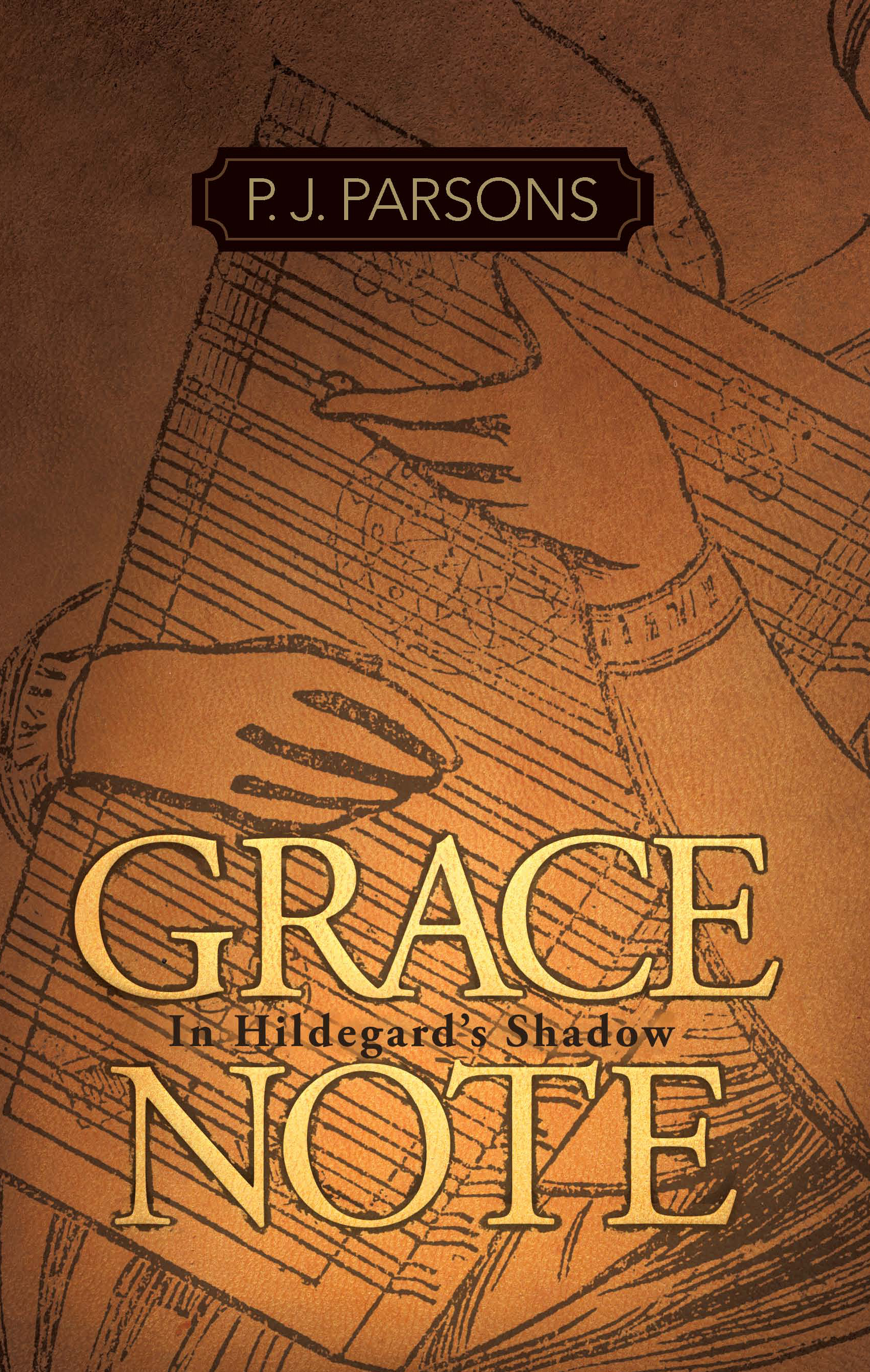
An award winner? Just wish the publisher had given it a cover I like more than this one!

What’s the point of giving awards for books?  It used to be – back in the day as they say – that book awards recognized truly gifted authors whose work has or is destined to make a difference.  Of course, that presupposes that those judging for the awards have the capability to distinguish the very best – whatever that might be at any given point in time.

These days, however, in addition to these long-standing, prestigious awards (at least they’re prestigious in some circles), there is an absolute glut of awards and contests for writers.

The Science Fiction & Fantasy Writers of America posted a terrific description of awards and award scams here.  They differentiate among outright scams, contest mills, award mills, fake contests etc.  The list is long and very dispiriting.  But why would a writer enter a contest anyway?

If your book is published by a traditional publisher, that traditional publisher just might decide to enter your book in an appropriate award contest.  Or not.  If your book is independently published, then watch out.  You are going to be vulnerable to every possible attempt to get you to enter a contest.  Why would you even consider that, anyway?

In a word: publicity. This is the promise.  Your book will be read by others who might, just might, like it. Or at least they might – just might – actually read it. They might like it enough that you might win an award.  And that award will mean publicity (not the New York Times kind of publicity, though).

Lots of other people have researched these contests, so I thought I’d take a slightly different tack.  I hypothesized that if a book award is so credible, then the books awarded must be of high quality.

I took a random sample (albeit a convenience sample for all of you researchers out there), to get a bit of anecdotal evidence to support or discredit my thesis.

I started with the 2012 Independent Publisher Book Awards which bills themselves as the “World’s largest international and regional book awards competition” and selected their first-place winner in the popular fiction category, Vertical, by Rex Pickett (Loose Gravel Press — Pickett is co-owner).  Surfing over to Amazon, I read inside the book, as I would do if I were at a book store trying to decide whether or not I wanted to read the book.  In case you didn’t pick it up – and I certainly did not – Pickett’s first book was Sideways, which later morphed into the film Sideways.  So, I read.  My conclusion:  I’m ordering this book.  He writes in an accessible and entertaining way: this just might be my summer schlock reading for this year.

Next on my list was the Writer’s Digest Award for self-published authors.  They charge $100 to enter and offer the following:  chance to win $3,000 in cash, national exposure for your work, the opportunity to catch the attention of prospective editors and publishers, and a paid trip to the ever-popular Writer’s Digest Conference in New York City![1] Well, after more online research than I care to mention, I could not identify even one of their winners.  I’m sure they’re listed somewhere, but I can’t seem to find them – or at least I’m not willing to do spend any more time on it.  Onward!

The Amazon Breakthrough Novel Award is a highly visible award for self-published authors.  Their prize is a publishing contract with Penguin with whom they are partnered.  I selected Bill Warrington’s Last Chance: A Novel by James King which won in 2010.  A multi-generational saga, the book is not really my personal cup of tea.  I started to read it, and it’s as good as any “coming-of-age” “road-trip” novel, so it’s mainstream.  Just not my thing.  But the reader reviews on the site are really quite good.  Given the number of their finalists who are published on their own Createspace, though, I have a few questions.

At this point I’m beginning to think that the high-profile of these awards really do have some substance to them.  Obviously, there will always be scams, but in the grand scheme of things if you do your research, entering a contest like this just might get you what you’re looking for: recognition and a bit of publicity — a bit.  But beware; there are more scams than there are legitimate contests.

I have a few suggestions to authors who are interested in entering their work in book contests:

  1. Before doing anything, sit down and decide what your objective is.  If it’s to get onto the NYT best-seller list, you might be a wee bit unrealistic.  If you want publicity, it’s possible.  If you’d like a bit more exposure, you’ll likely get it.  At least your work will be read by someone.
  2. Decide how much money you’re willing or able to cough up.  Many of these contests, even some of the more credible, do charge for entries.
  3. Do an online search for contests that fit your particular genre, just as you would when seeking a compatible publisher.
  4. Select four or five that impress you the most and research them.  Look at what bloggers or independent writers are saying apart from what is on the web site.
  5. Read the contest’s web site very carefully.  Look at every bit of the fine print.  Then go back to the blog I linked to above from the Science Fiction Writers and check to make sure that none of the red flags are there.
  6. Make a decision on one or two contests.
  7. Read the entry requirements carefully.
  8. Follow the instructions to the letter – and make sure your entry is in before the deadline.
  9. Then wait.

Oh…it might be worthwhile to make a note of contests you enter.  See my opening sentence! And what’s my conclusion about that contest?  Still don’t know what to think.  I’ll let you know.