Posted in Backstory, Book covers, Book titles, Journals

I: What’s in a book cover? Book Titles

now all we need is a title
A book about titles

I love journals.  No, not those academic-type “journals” that I have to refer to weekly for academic-type research (although I’ve come up with several incredible fiction ideas from reading journals – but I digress).

I’m talking about those journals that you write in.  I’m talking about those journals that have covers but no titles.  Then, as I considered telling you about all those journals I have in my office right now, and I looked at the book proof winking at me from my computer screen, it occurred to me that the issue of book titles was actually on the top of my mind. Book covers have titles written on them; journal books do not.  Journal books have no titles because they don’t need them.  Books, on the other hand, do.

How important is a book’s title?  Is a book’s title important to you?

I’m just about finished a proof round for my next book.[1]  But this has been a bit of a different experience for me this time around.  Unlike Ernest Hemmingway who evidently said:

“…I make a list of titles after I’ve finished the story or book – sometimes as many as a hundred.  Then I start eliminating them, sometimes all of them…”[2]

…I am unable to write anything longer than a letter without a title firmly fixed in my mind.  I absolutely must have it in front of me as I move forward, as if I can somehow see the finished product and it’s beckoning me toward it.  And the truth is that I rarely change that title. It may require a bit of a tweak here or there, but those tweaks rarely result in a marked difference.  This rule holds true for me regardless of the genre of the piece of work:  creative non-fiction, business books, or fiction.  It is this latter category into which my upcoming book falls.

So, this upcoming book, whose galley proofs (if you can call them that in these days of electronic proofing) I have before me on the computer screen, has been a bit of a different journey for me in the title area.

This piece of historical fiction required several years of meticulous background research on the 12th century, Roman Catholic mysticism, the Benedictine Order and ancient music.  And all through that work the book had a title – a title I liked.  It was called The Woman in the Shadow and it represented for me what the book was about.  Enter the editor.

The editor liked the story, the characterization, the theme, even the literariness of the writing (not the hallmark of most of my writing).  The editor did not, however, like the title.  The editor said, “As it stands, the title doesn’t tell much about the content of the book.”  Hmm, I thought.  Maybe the editor is right.  This got me thinking about book titles in general.

For example, did you know that Peter Benchley had a number of titles for his now-famous book before he settled on a final one?  Great White, Shark, The Jaws of Death and A Silence on the Water to name a few.[3]  Do you know the final title?  Jaws, of course.  Would a different title have  made a difference?

What difference would it have made if Steig Larsson had called his first book The Swedish Girl, instead of The Girl with the Dragon Tattoo?  Doesn’t have quite the same ring, does it?  So, it seems that in these days of online book-buying at the very least, the title of a book does make a difference.  Titles do matter, so what was I to do with this title I was so attached to?

Before the second editorial review I thrashed it out with my trusty reader – the person who has suffered through every single book manuscript for every type of book I’ve written over the years.  My long-suffering husband.  Genius that he is – and with a more objective view of the story than the author who has lived with her characters for several years – he suggested the new one, and I went with it.

The book has a new title that the editor and I both love and that will be proudly displayed on the fabulous cover – if we can just come to an agreement on the book cover design…


[1] A proof round is the step in book production (after the editor has had a go at the manuscript, after you’ve rewritten, after the designers’ of the book’s interior has laid it out) when you are presented with the book as it will look laid out and printed and you have to do a final edit, checking for last minute issues.  The first proof round is usually on the house.  If as the author you want to make further changes, a publisher will usually charge you a fee – you have to let it go sooner or later!

[2] Quoted in André Bernard’s little book Now All We Need is a Title (Norton Publishing, 1994).

[3] Bernard.

Posted in Blog tours, Book promotion, book tours, Fame

Book promotion…and the fun of an author tour

author tourWhen I think back over the years through all of the books that I’ve published – of different genres – it occurs to me that I’ve learned a lot about book promotion.  There are lots of things that authors themselves can and should (and need to) do to promote their books, but I’m here to tell you that since that first book of mine was published over 20 years ago, everything has changed.  With the advent of social media and online conversations, all bets are off and the tried and true methods for book promotion will never be the same.

That said, at the time when my first book was published, I had a romantic notion of the author tour.  And when my publisher told me that there would, indeed, be a tour, I was delighted – my 15 minutes of fame if Andy Warhol was right.  So, off I went to points west (since I live on the east coast everything is west) to be wined and dined and toured.  Okay, there was actually no wining and dining, but there were publicists who picked me up hotels and took me to media interviews.

I talked to print journalists who took photos and wrote bits and pieces; I did live television interviews; I did remote television interviews (where you talk into a camera lens as if you were really talking to the interviewer all the while with an earpiece that threatens to fall out); I did radio shows.  And, I might mention, I did all of this while increasingly pregnant.

Finding the appropriate and TV-friendly maternity wardrobe was something of a challenge I have to say.  Remember, if you’ve been reading my blog you realize that this backstory is about my first book which was published over 20 years ago – so we’re talking about the late 1980’s.  When it comes to fashion, need I say more?

I flew to Vancouver first and was immediately whisked to two television interviews.

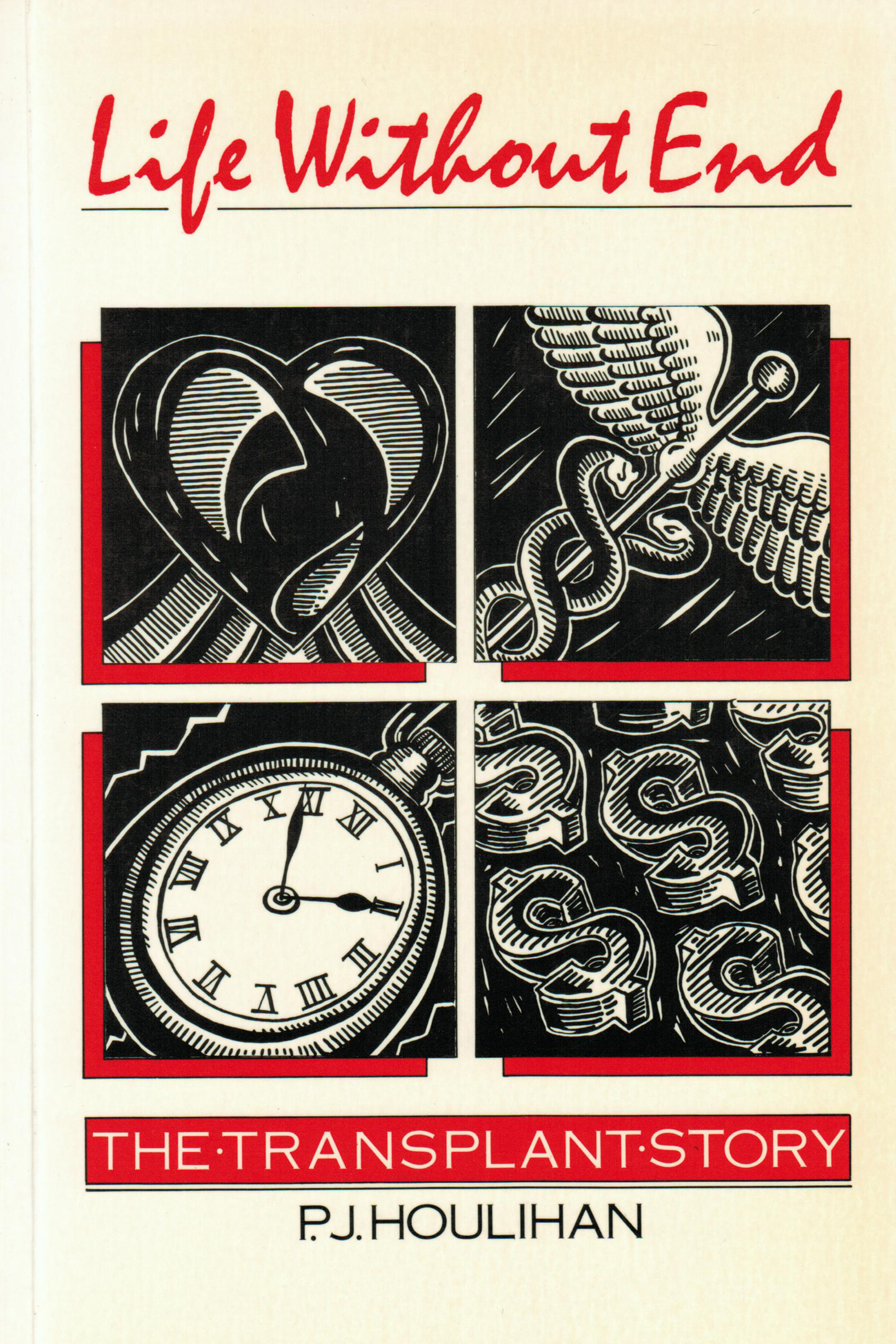
life without end
My First Book

You may recall that the book was about organ transplantation and was actually a bit controversial since I didn’t just worship at the feet of the transplant surgeons whose God-like presence saved lives.  The book asked questions about the ethics of some of the decisions that were made and how they were made.  It made for great television to pit this lone health writer with real experience in the business against the powerful medical establishment.  (I’ll tell you a bit more about how even unwelcome controversy can promote a book in a later blog post.)

Then I was off to Toronto for more television, radio and print interviews.  Notice how the smaller media markets were skipped: all of this to save money on the author tour for which my publisher (and the Canadian government grants) paid.

But the question we need to ask today is this: was it useful to do this (fun  notwithstanding)?  I’m not sure.  There’s little doubt that publicity for this kind of non-fiction book can be generated this way, but this does not necessarily translate into sales, and the publicity machine has changed dramatically since that time.  All the rules and vehicles have been transformed.

In a piece written last year by Carolyn Kellogg for the LA Times book blog, she says this: “As the business of publishing changes, book tours increasingly look like bad risks.” She goes on to say that people these days are less inclined to be drawn to books via the “hype machine” rather they rely on recommendations from others, and we all know where these increasingly come from: our “friends” on social networking sites and searches we do for ourselves online.  This way, our book choices come from
custom-made recommendations for us.  And you know that in these days of social media – it really is all about “me.”  For better or for worse. The latest buzz on the author tour scene is what is referred to as the “blog tour.”  I’m currently researching
this for my new book due out in about six weeks.

An author can set up a blog tour through some blogger link-up sites or through what are now known as blog tour companies (who knew?).  A blog tour is simply a strategy whereby an author “visits” appropriate blogs (book blogs, blogs on the conten
of your book etc.) and either “guest blogs” or provides answers to questions posed by the blogger who owns the site and then this becomes a Q & A blog post for that blogger.

As one book publicity blog I like suggests: “A blog tour is simply one type of online publicity.”

I’ll let you know how the blog tour works out since it’s unlikely that there will be a real tour for this one!

FYI: Read about one author’s blog tour in the New York Times.