Posted in Book publishers, Self-Publishing

The trouble with publishers (Part 2: Let’s talk self-publishing)

The book I sold to a 'traditional' publisher after publishing the first edition myself. They did give it a new cover - which I designed for them .

Lots of places define self-publishing as publishing projects that authors pay for themselves.  I’m going to dispute that definition and see if we can’t come up with a better understanding of the varieties of models available today.  My own backstory in publishing obviously informs my personal perspective – but stay with me and see if you don’t agree.

My foray into vanity publishing, a model of self-publishing whose very name is a pejorative, gave me a first glance at what it means to be completely in charge of your publishing venture, but more than that, it taught me what it means to be the only one who takes risks in the process – financial or otherwise.

What exactly is self-publishing?

Let’s consider some of the definitions I’ve found online:

Wikipedia (arguably an authority on online self-publishing) defines self-publishing as “the publication of any book or other media by the author of the work without involvement of an established third-party publisher.  The author is responsible and in control of the entire process…”[1]   Clearly the basis of this definition sits firmly on the absence of an established third-party publisher which naturally begs the question of what precisely is an established third-party publisher?  Does this mean it is not self-published if your friend says, “I’ll publish your book if you pay, and you can have complete control”?  Third-party, perhaps but established?  So, then what does it mean to be “established”?  Does that mean if you or I open a new publishing house we are a party to self-publishing because we haven’t been around long?  Or are we all right if we’re incorporated?  So many questions, so much vagueness.

Writing in Publishing Perspectives, Edward Nawotka moans about self-publishing being too, well, selfish.  He suggests that so-called self-publishers can only call themselves “publishers” if they have actually worked to publish someone else’s work.  He says…

…It’s my personal belief that a DIYer or self-publisher should not call themselves a “publisher” until they take risk and responsibility for publishing another person’s work, which in turn is taking responsibility for another author’s wellbeing. Yes, you can argue the semantics of it as much as you like, but until that point a self-publisher is merely a “printer” (digital or conventional, sophisticated or not) adopting an honorific that they don’t deserve.[2]

From my perspective, I think he’s nailed it in one important respect.  Unless you as an author take full responsibility for your work, and act as a publisher rather than getting an online so-called self-publishing business to do it for you, you are not really publishing – you are simply printing & distributing your work.  There are important values in the traditional publishing business that I believe are important to keep in mind, and quality of the editing is an important one.

If you read last week’s discussion of vanity publishing, you’ll remember that I was taken aback on my first venture into DIY publishing that not a single syllable was edited in my book.  If I had published it on Lulu (remember, though, it was back in the days before these online services) then of course there wouldn’t be anything edited: Lulu and others like it are not  really self-publishing platforms; rather they are print-on-demand services.

Why, though, do people get so bent out of shape when this is the reality?  You can print and distribute your own work, an approach for which you certainly take all the risk and responsibility. Is there something shameful in this?   You can hire (and make no mistake about it, you are hiring) a new breed publisher like iUniverse  or others, large and small like them, who will take over the publishing process and allow you to purchase some of the services of traditional publishers for a (substantial) fee.  Some do have a kind of vetting process for entry into certain publishing streams (iUniverse has Editor’s Choice for which your work can be chosen if it has benefit of professional editing, and can then be elevated into their Rising Star program if it meets certain other quality criteria etc.), but in the end, anyone can use the services if he or she is willing to pay.

Why things have changed

The advent of print-on-demand and online retailing has changed the entire landscape of both traditional (whatever that is) publishing and the new approaches (whatever we come to define them to be).  Perhaps even more important, the participatory nature of the online universe has permitted anyone with a computer and a connection to the internet to call him or herself a writer or author.  The fact that you can read this blog today is a testimony to that.  All I (or anyone else) has to do to be “published” online is to start a blog – and it doesn’t even cost anything.  This is both the beauty and the curse of the online writing environment.

How I came to conclude all this

My first foray into real self-publishing came as a result of a dearth of print material available for an undergraduate course I was teaching at the university that provides me with my day job.  Over time, I accumulated material and created first a booklet and then eventually a book.  In its original form, it was printed and bound by the university print shop which I then provided to students free of charge.  A few years later, the book grew again, so I decided that I would print it outside with better production values and perhaps distribute it more widely.

At the time, I happened to be running an outside consultancy and even had an employee or two from time to time.  Biomedical Communications Incorporated, then, published the book.  I personally did everything from layout to cover design to finding a distributor and negotiating a distribution contract.  I also did promotion.

To tell you the truth, it was one of the most satisfying projects I’ve ever been involved in for a couple of reasons.  I was able to see a project through from beginning to end, I had complete control, I took all the risks (financially and to my reputation) and I made all the money.  I did, in fact, make back all the money I put into it and then some.  It was delightful.  Then one day I decided that the book needed a new edition – an update – and I was not in the same mind-set to do the whole thing over again.  I had learned what I needed to learn so I shopped it to “traditional” publishers and sold it to Lawrence Erlbaum in New Jersey (which has since become part of Taylor and Francis), a large textbook publisher in the US.  It is still in distribution today – although I will say that it probably needs a third edition at this stage!

So, does the fact that the book was eventually published through conventional channels make that book any better than it was originally?  Perhaps in some people’s small minds, but the book is exactly the same as it was when I published it myself.  They bought it “camera-ready”!

I then took a foray into print-on-demand publication (not really the same self-publishing model in my view) by having my book In the Shadow of the Raven printed and distributed by Lulu.  That was an interesting experience, and points to the very real differences between true self-publishing and simply using current online printing capabilities of companies that sell services.  I upload the manuscript; they put it into a pdf if I haven’t (but I need to format it); I purchase an ISBN & bar code from them; I use their wizard to create a cover; I write the cover copy; they print, distribute and pay me anything left after they take their money.  Then, book promotion, trying to actually sell it, is entirely up to me  –actually not that different a scenario than that of traditional publishers these days!  They’ve already made their money by printing and putting my book on Amazon.

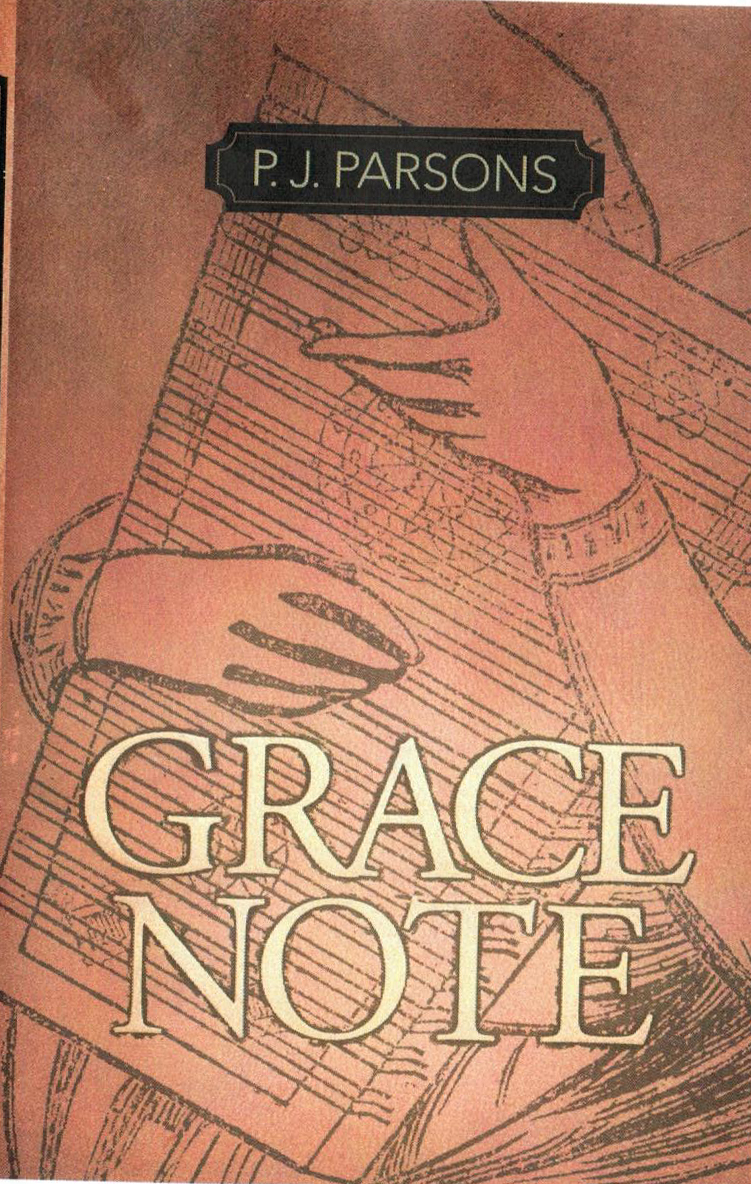
My book Grace Note was “published” by iUniverse whose editing and publishing services I bought.  But Grace Note was evidently of a high enough quality that it was chosen for their Editor’s Choice program and eventually, after benefit of professional editing and copy-editing, became part of their Rising Star program for which I was granted free of charge some services that others have to pay for – and it was more widely distributed.  So, why didn’t I even try to sell it to a “traditional” publisher?  To tell you the truth, I’m sick of them.

Between two these books, I’ve been published by a number of “traditional” publishers including such trade publishers as Doubleday  and academic publisher The University of Toronto Press, among others, and I’m sick to death of them.

I’m sick of their delays; sick of how influential their marketing departments are in the choice to publish or not publish regardless of the acquisition editor’s opinion of the merits of the book; very sick of the paltry percentage of profits that are given to the person who actually wrote the book; sick of losing control of the work.  I was also peeved off at a literary agent who said this to me, “If I had a dollar for every bona fide non-fiction author who wanted to be a novelist, I’d be rich,” and then refused to represent me in the fiction realm.

Will I be published ever again through a “traditional” publisher?  Probably yes – I have a manuscript at a publisher as we speak and it seems to be on the road to publication.

It would be very nice to find a new approach that encompasses the best of both tradition and the new approach, while at the same time acknowledging the writer as a more important part of the process.  I’m thinking about the notion of cooperative publishing where a half a dozen or so of us writers begin to work together, editing and working on one another’s projects, and then publishing under a co-op imprint.  I think I’ll think about that idea, and if you’re interested, drop me a line.  We can share ideas.

When I get back from vacation I’ll write about that with your input.  See you after a few weeks of sun and surf!

BTW, here’s a list of some famous authors who self-published.  Might surprise you.

Posted in Book proposals, Book publishers, Pitching books

Finding the right publisher: Tales from the trenches

I recently became the founding editor-in-chief of a new academic journal.  Although this might not seem all that exciting to the average writer, it has opened my wide eyes even further on the topic of the “right fit” between writers and publishers.  I am stupefied by the astounding lack of research that prospective writers do about the theme and focus of the journal and our manuscript requirements.  Do writers who want to be published – regardless of whether they are writing an academic article or a fantasy novel – not have the intellectual capacity to grasp the concept of editorial fit, and that they need to do at least a modicum of information-gathering to check this out?

The truth is that I’ve had a surprising number of submissions to the journal that are (in no particular order of importance): longer than the maximum length for our manuscripts (and I’m not talking about a few hundred words; I’m talking about three to four times longer than our editorial guidelines clearly state); only peripherally related to the focus and objectives of the journal and then only if you really squint at the manuscript;  not formatted in any way that resembles the guidelines that are clearly posted on the front page of the journal’s web site.  I don’t think I need to go on.

If you are a writer (like me) and you want to be published (like me) there are lessons to be learned about finding the right publisher – the one with the right fit.  Because if you don’t, the publisher will simply send you a rejection slip and that’s so hard on the ego and a waste of your time!  I’ve been published by a variety of publishers – types, sizes and countries (USA, Canada, UK), and along the way, I’ve learned a few things about finding that important right fit.  The first two steps I recommend are as follows:

  • Find a publisher that actually publishes in the genre that you want to sell to them.  This seems like a no-brainer to me.  The very first time I wanted to sell a book to a publisher, I knew that it would be pointless to send it to a publisher with no interest in books about health-related topics.  Publishers usually do make a statement on their web site (on the prospective author page) about what they do and do not publish.
  • Find a publisher whose books are targeted toward the same reader that yours is.  And forget about writing to the publisher’s needs rather than the audience you intend for the book.  When I first started writing, I was clearly focused on health-themed trade books for that nebulous “general public.”  I had an idealized notion that I would “educate” the masses about health issues, so I had to find a publisher whose books reflected that.  I had to examine their current and back-list to see what they’d done before – because publishers are not likely to see your book as the one that pushes them toward a different audience.  If they only publish children’s books, then forget about your romance novel!

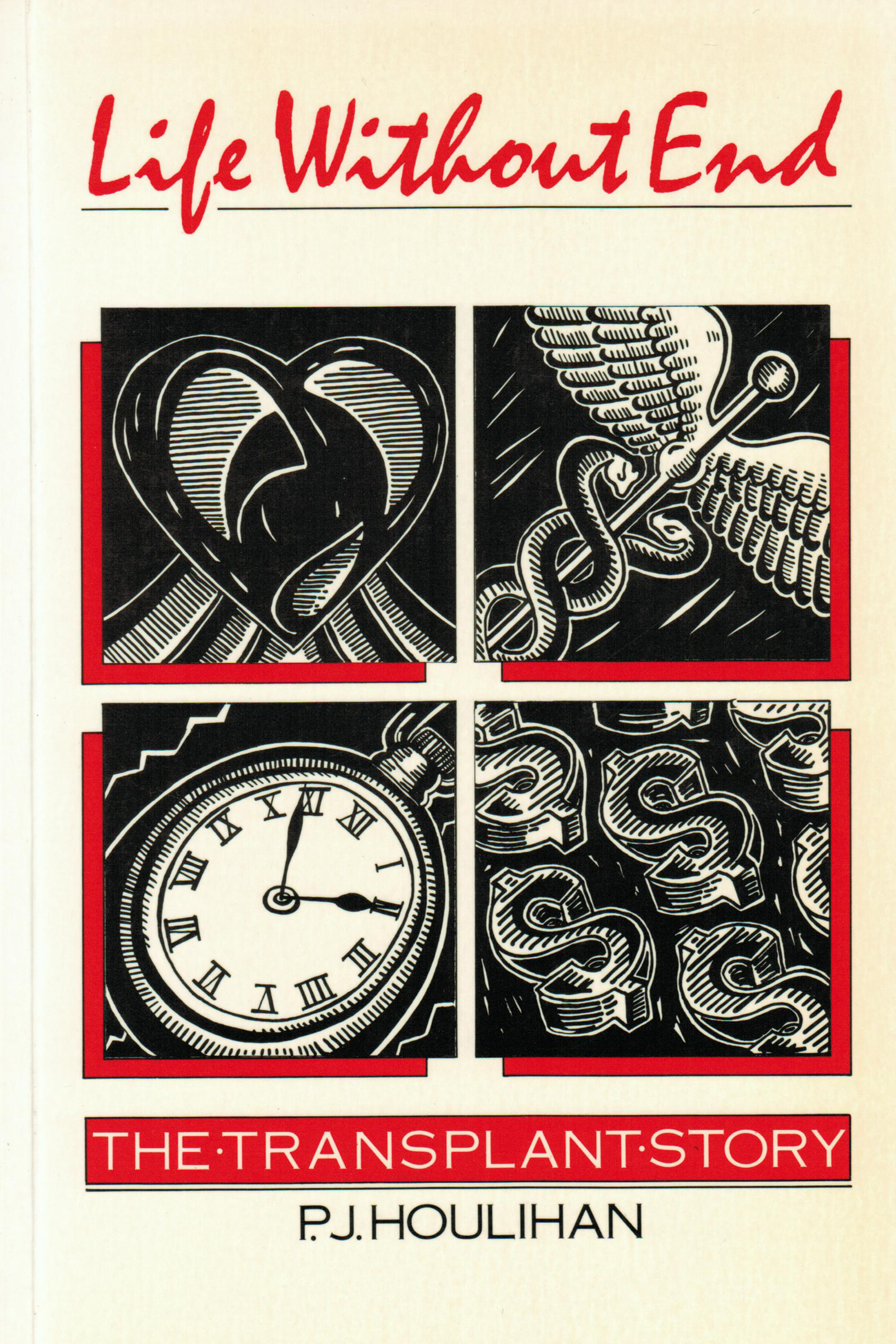
    life without end
    My first-ever book published by a now-defunct Toronto publisher. I had to do research to find the right fit.

Now that you’ve narrowed your search and have a list of publishers whose list reflects the type and readership of your own material, you still have a few more steps before you can submit your work.

  • Research their submission requirements.  This is very important.  (who knew writers were so lax about this!)  It is the packaging of your ideas, and if it doesn’t conform to their particular guidelines, it means that they are likely to reject your work. If you’re submitting non-fiction, you’ll need to determine exactly what they’re looking for in terms of a book proposal – the format, content & length.  Not all publishers want the same things, but all of them cover some important bases:  Can you succinctly state the purpose and market for your book?  What is it about?  Why are you the right one to write it?  How is it structured?  What’s in each chapter?  When will it be finished?  How long will it be?  If you’re submitting fiction, do they actually accept unagented books?  How much of the novel do they want to see?  If you send too much, they might not read it. 
  • Make sure that your query conforms exactly to their requirements.  This is a non-negotiable issue for unpublished writers.  And, frankly, why would you not follow their guidelines in preparing your submission?  It shows that you are professional, you are smart and you are interested enough in them as your potential publisher that you took the time to educate yourself about them.
  • Submit the query in precisely the method they prefer.  Do they accept email submissions?  If so, should it be an attachment or a query in the body of the email?  Or must you fill out an online form? Must you send a hard copy?  How many copies do they need?  Do they want a self-addressed, stamped envelope for a response and/or return of the materials?  When I first started writing and sending materials out to publishers, this latter approach was the only way they could be submitted, and some publishers actually continue this antiquated approach.  That meant making photocopies and sending large envelopes with folded pre-addressed and stamped envelopes inside, and waiting months for a response in the mail.  (Truth is you might still wait months even with an emailed submission.)
  • Send your query to the right person if at all possible.  Do a little research and find out which of the editors actually acquires (and therefore presumably enjoys) the kind of material you are sending.  Then you can address your query to the right individual which is far preferable to sending it to the info@ email address on the web site.
  • Keep meticulous records of where and to whom you send a query.  This will really help you to see a pattern of publishers and their needs, and it will ensure that you do not look unprofessional by sending a query to a publisher who has already rejected you.  Very embarrassing.

After following all of these rules, I still get responses from publishers that say things like:  “This is a very interesting proposal.  It just doesn’t seem to fit in with our publishing program at this time.”  B**s***.  What the editor is really saying is that they just don’t like it.  Their “publishing program” as such doesn’t really change much.  So, don’t let verbiage like this fool you into thinking that “at this time” might mean “perhaps another time.” It doesn’t.  You just move one.  And when that email comes saying, “We like this proposal very much.  We’d like to consider publishing your book,” you know that your prep work has paid off!

I actually sent out a book proposal this past week myself.  It’s one of those books that I’ve been mulling over and keeping notes about for a few years.  When I sent it in, the publisher replied asking me where I had learned of this publisher.  I had done my homework.  I was alerted to this particular niche publisher through a group I belong to on the business network site LinkedInwhich I’ve recently begun to see as a serious contender for writing leads.  Then I did my homework.  I researched the publisher, the books they’ve published, their authors (a number whom are people whose work I admire), and the publisher himself.  I wanted to know his background.  I told him all this – including the part about researching him.

His response was that I seemed to have the ideal credentials to be writing the book I proposed.  We’ll see.  I’ll let you know how the road to this one progresses.

Posted in Book covers, Book publishers, Book titles

What’s in a book cover? (Part 2): The Whole Damn Thing!

Some years ago I came to the full understanding of the realities of book covers.  The book was called Patient Power! The Smart Patient’s Guide to Health Care.  I had written it with my favorite (and only) co-author, my husband Art.  I lent the health science communication and writing chops to the collaboration; he lent the medical perspective and the credibility I might add.  We were pleased with the manuscript and the editing process; we had agreed on a book title.  Then we were faced with the cover issue.

With previous experience of this publisher, I was armed with all the arguments I could generate about the importance of a compelling cover that would draw potential readers into it – that would compel them to pick it up off the shelf in a bookstore (that was before most of us browsed the title online – but I’m fairly convinced that covers matter in cyber-shopping as well – although I’ll have to do some research on this to support my contention).  That previous experience was a result of them publishing my book with a cover that resembled the flag of some unknown nation, and that reflected not even in the remotest way what the book was about.  They were planning something similar.  I could feel it. I shouldn’t have been surprised though; the publisher was the University of Toronto Press and their experience with books for the general public (which this was) was minimal.  They were used to dealing with academic tomes.

Art & I flew to Toronto to meet with the art director because we had somehow convinced the editor-in-chief that a more personalized book, perhaps with the two of us on it, might be more appealing to people interested in their health and decisions about it.  We were in for a pleasant surprise.

We took a taxi to a studio in an old brownstone in the heart of the city.  From the outside, it didn’t look like much, but on the inside the place was an amazing photo studio.  But what was more amazing was the art director himself.

New to the position, he’d been with the press for only a few months.  As we chatted, it was clear that we were on the same page, as they say.  I knew this when he shared his opinion about a cover he had recently created for another of UTPs’ books.

“I could have photo-copied the book and sent copies to all twelve of the people who were likely to read it,” he said with some irony.

His disdain for obscure academic publications was clear, and I feared for the longevity of his career with this esteemed press, but was heartened nonetheless. Perhaps we’d get more than a few colored lines across a cover with a mundane typeface this time around.  We did.

The cover was dynamite and the blow-up of it looks fantastic on the high wall of my office at home.  But I learned lessons about the importance of the visual impact of covers.  This brings me back from the late 1990’s into the 21stcentury where I’m faced with the cover situation again.

The cover we loved

Two years ago when my memoir was in the process of being published, my publisher sent me a mock-up of the cover she was suggesting, as publishers do.  I guess I’m a bit picky now when it comes to my covers, but in my view the cover suggested didn’t even reflect what the book was about (What is wrong with publishers?  Perhaps we’ll explore that question in a future post.).  A story of my journey as the mother of an elite ballet dancer who happened to be a boy, the book begged for a cover reflecting something of a life of a boy in dance.  What she sent me was a photo of a ballerina’s foot – on pointe!  Did the cover designer not even know that boys don’t wear pointe shoes?? Or did the cover designer even have the slightest idea what the book was about?

Oh well, I asked my son who also happens to be a talented photographer, if he might consider a photo.  He did and it was a terrific cover.

Now I have in front of me a mock-up of a cover provided by my current publisher – and I hate it.  So, to any of you out there reading this, I’m presenting to you two covers.  Please vote on the one you like best (I know that you really don’t know what the book is about – so pretend that you’re seeing it on a bookshelf.  Which one would you pick up first?

Cover choice B
Cover choice A