Posted in Ideas generation, Writing

Books I wish I had written

Man Reading Book and Sitting on Bookshelf in LibraryWriters are usually avid readers. I suppose that it is expected of us, and possibly even required – although I’m certain that many of the classics were written by authors who did not read widely since there was so little to read (this is a theme I’ll get back to in a later post). I’ve given some thought before to the books that shape us as writers, but I’m still left wondering if others might be a little like me. Sometimes, when I come to the end of a book, I have a deep feeling that I wish I had written this book. It occurs to me that an examination of those books might provide insight into what we ought to be writing about – rather than simply always writing about what we think we should be writing about (or worse, only what sells).

I wish I had written…

Over-Dressed: The Shockingly High Cost of Cheap Fashion by Elizabeth L. Cline. This book affected me even beyond my deep feeling that I wish I had written it. An important examination of an industry that affects all of us in one way or another, this book is one that needed to be written, and needs to be read. This feeling of a book that needs to be written, coupled with my interest in the subject matter were the factors that perhaps conspired to make me wish I had written it. The author, Elizabeth Cline is an American journalist whose commitment to the investigation of the North American penchant for disposable fashion resulted in a story that had my head spinning – although much of it did not come as a surprise – and I avoid disposable fashion like the plague, given my penchant for quality.

i wish i had written 1I wish I had written…

Deluxe: How Luxury Lost its Luster by Dana Thomas. As I closed the cover of this book I had a very distinct feeling that it was one I should have written! A social history of the luxury goods industry, the book is also well-researched, lucidly written, informative and entertaining. The fact that it focuses on a topic that has been of interest to me since I started researching the marketing tactics of luxury goods manufacturers in my day job (don’t ask!) might also make it the kind of book that I would have liked to have written.

I wish I had written…

The Thoughtful Dresser: The Art of Adornment, the Pleasures of Shopping and Why Clothes Matter by Linda Grant (who is also a novelist). This book had me at the following statement on page 10:

“I consider it to be absolutely normal to care deeply about what we wear, and detest the puritan moralists who affect to despise fashion or those who love it. Who shrilly proclaim that only vain, foolish Barbie dolls, their brains addled by consumerism, would wear anything but sensible clothes made to last. As if appearances don’t matter when, most of the time, they are all we have to go on. Or sometimes all that is left in the ruins of life.”

This paragraph encapsulated for me the conundrum of my life as a professor and writer – and someone who has always enjoyed the fun of dressing. On a university campus, dressing fashionably is viewed in much the way Linda Grant describes. She nailed it. Oh how I would have loved to have written this book for my colleagues to read!

So, these books all do seem to have things in common. But what strikes me most is the fact that they are all non-fiction. I hope my inner writer is listening. I’ve been focusing my future writing on fiction – which I love to produce – and yet the books I wish I had written are all research-based, narrative non-fiction.

A few years ago during one of my many searches for an agent (two searches were successful; neither of them sold my manuscripts), one of them snottily said the following to me: “If I had a dime for every bona fide non-fiction writer who wanted to write fiction, I’d be rich.” Then she refused to represent any fiction I might produce. I guess I should have been happy to have been referred to as a bona fide non-fiction writer, which I suppose I am.

So I think I’m going to consider this analysis of my own reading interests. Don’t get me wrong, though, I love to read fiction. I just wonder how much of it I should be writing.

Posted in Book Reviews

When is a book review not a book review?

It seems simple enough. You write a book, someone reads it, likes it (or not), writes a review, and other potential readers interpret the review for themselves, deciding whether or not to read your book based on their own criteria. One of the most important factors readers might use to interpret a review is the identity – and therefore perceived credibility – of the review writer.

For example, for some readers there might be a big difference between a review written by the New York Times and one penned by Oprah (or at least endorsed by her). Or between the writer’s spouse and someone who doesn’t know that writer personally. That may be the line we cross into territory where a review is not really a review – it is an advertisement. And these are not the only kinds of ‘advertisements’ masquerading as book reviews.

There can hardly be a writer or ‘wanabe’ writer around these days who is unaware of the current book review scams visited upon readers.

In August of 2012 The New York Times published an article titled: “The Best Book Reviews Money Can Buy.” Author David Streitfeld reported on what appeared to be a newly established business model: writing book reviews for cash. He tells the story of Todd Rutherford’s gettingbookreviews.com, a business based on writing online book reviews – paid for by the writer. One of the service packages he offered was for him to write 20 online book reviews for $499. What could be better? Twenty reviews proclaiming a book to be worthy of 5 stars, the work of a literary genius. In my view, what would be better would be some honesty.

And Rutherford was merely one among myriad businesses that have been springing up all over the place to provide exactly the same service to writers desperate for sales. Quite often, the entrepreneurs offering this service are themselves wannabe writers.

But what happens when a reader finds out the truth of the review? Maybe the book is a good one; but maybe it isn’t. Readers searching for new, indie writers will soon become jaded from being burned. Buying book reviews hurts everyone.

So if a book review is not a book review when it is written for money, what about when it’s written by your spouse (or mother, or sister etc.)?

The Amazon review by a certain party whose last name is the same as mine was not penned by a relative.

I was mortified when I went onto Amazon.com to see that one of the reviews (and a 5-star one at that) of one of my historical novels Grace Note was penned by someone whose last name is PARSONS. I’m quite certain that anyone looking at that would make the reasonable assumption that it was written by one of my relatives. It wasn’t. I’m just glad the reviewer liked it! The bottom line, however, is that a review by one of your nearest and dearest isn’t really a review either.

So…and here is the one where I’m going to get myself into trouble… what if the review is written by a member of your co-dependency group. These are those writing groups, usually virtual, or Twitter communities, wherein everyone gushes about everyone else’s books mostly so that when yours is published everyone will do the same. I have to admit that this really bothers me. It puts me off buying the promoted books, which is a shame for the writers. However, I just don’t trust these reviews.

I follow a number of otherwise interesting indie authors who also review books on Twitter, but I find that the reviews are always 5-star ones, or very close to it. I’m presuming that they only tweet their 5-star ones (surely there are books they dislike?), but I’d like to be directed to one that might be a 4 or even a 3 ½ star review so that I can make up my own mind. When everything is ‘awesome’, then nothing is ‘awesome.’

Let’s get back to some truth in advertising among writers and publishers. Please.

Posted in Memoir, Reading, Uncategorized, Writing

A writer’s early roots: What we read & what we write

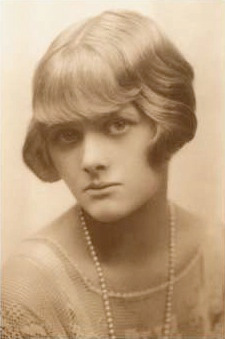
A young Daphne DuMaurier (Source; Wikipedia)
A young Daphne DuMaurier
(Source; Wikipedia)

This morning I had a very odd experience.  I had the privilege of peering in to the mind of a 16-year-old girl – or should I say a 16-year-old writer.  And the most peculiar thing of all is that it was me.

A bit of backstory: when I was in high school (lo these many years ago) I wanted nothing more than to be a novelist – but I also had a very practical side and that practical side won out in the university program selection process.  I had my very best marks in biology, chemistry and analytical trigonometry in my senior year, and you can guess what I studied in university.  And to tell you the truth, that health science degree and the Master of Science have stood me in good stead in my career evolution from health communication, to health & business writer, to creative non-fiction writer, and now into fiction.

But in high school, my English marks weren’t far behind my math and science.  In fact, when given the opportunity in my junior year to complete what was then referred to as a “distinction” project” I didn’t choose to do it in science, rather I chose English.  To be more specific I chose the short story.  This morning I took three magazine boxes off the highest shelf in my office to begin the laborious process of digitalizing all of my publications to rid myself of the glut of paper that threatens to overtake most writers from time to time.  What do you suppose was the first document that I pulled out?  Much to my surprise, it was my Grade 11 “distinction project.”

The framework for the project was aspects of the short story (very apropos since lately I’ve been thinking that I really ought to read some Alice Munro given that she won the Nobel prize for literature recently based on a career writing short stories – and I’ve never read a single sentence she’s written).  The project, painstakingly typed on an old typewriter (with only one or two whited-out typos) was an analysis of the components of the short story.  For each of the traditional components – character, setting, plot etc. – I had written a short story that supposedly showcasing each.  One story’s character took center stage; in the next one setting was the most important part etc.   But it was the themes of each of the stories that told the story of that 15-year-old writer.

The theme that came through again and again, regardless of the actual characters or plot of the story was this: Know who you are, and be true to yourself.

First-edition cover of Rebecca (Source: Wikipedia)
First-edition cover of Rebecca
(Source: Wikipedia)

When I think back through my day-job career, and my writing by moonlight, I think that I have truly tried to do this – but I didn’t realize that it was so deeply embedded in my psyche.  This was kind of a light bulb moment, because I just finished re-reading what I have long considered to be my very favorite novel: Rebecca by Daphne DuMaurier.

I first read the book when I was in high school, right around the time that I wrote those short stories.  I had seen the various iterations of the movies based on it in the interim, but it was eye-opening for me to read this book so many decades later to try to see what it was that captivated me and to figure out if the book had, in fact, had any influence on my writing.

This time around, I found myself impatient with the narrator.  A twenty-something woman of the 1930’s, the unnamed protagonist met and married a much older, and much more worldly man who took her back to England to his estate, Manderley.  Haunted by the ghost of his first wife, the young woman concocts in her mind all manner of scenarios, most of which have absolutely no basis in reality – indeed, the reality is much more sinister.  I kept wanting her to get over it, to move on, to ask the question to clear up the uncertainties.  I don’t remember being so impatient with her at the time.  So, I do think I’ve evolved as a woman.  But what about as a writer?

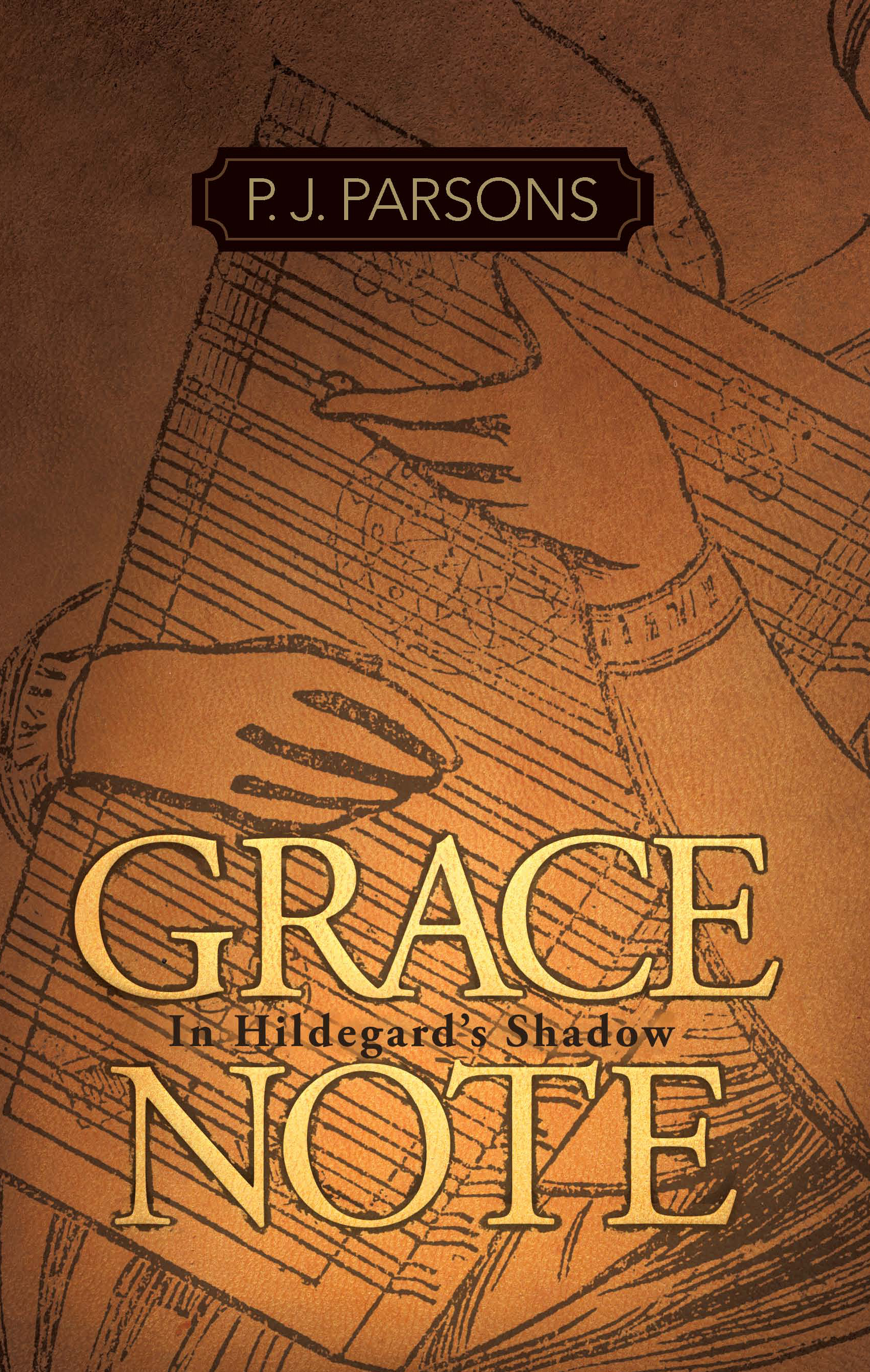
Grace Note Cover PaperbackWritten in 1938, Rebecca was not an historical novel, the genre I found myself drawn to both as a reader and as a writer in the last few decades.  However, I read it near the beginning of the 1970’s, so for me, as a young woman, it was historical indeed, and I remember always thinking about it that way.  Daphne DuMaurier did not need to create the world of the 1930’s: she lived in it.  But for me, the detail was now of historical significance, and I do believe that this influenced my choice of genres.

I enjoyed the book the second time around and hope that some of my own work will stand the test of time as did this ne.  Perhaps in the future some young woman will pick up Grace Note and think about the strength of the Lysanor, the heroine, and recognize that she, too, spent her life trying to be true to herself.