About two years ago I received an email from a former student who had stumbled upon one of my books – online. The book was not published as an e-book. Far from it. In fact, when it was published in 2003, no one was even considering anything but the hold-in-your-hands, paper-between-covers kind of book. However, it was a professional reference handbook that had continued to sell in dribs and drabs so was evidently still useful. My student posed this question: Was I aware that it was available electronically through Questia? I most assuredly was not.
The book I sold to a ‘traditional’ publisher after publishing the first edition myself. Then the publisher made it available on Questia without my knowledge.
I contacted the publisher (a large American textbook publisher that had since been acquired by a yet larger American textbook publisher) to try to find out how it got there, and why I wasn’t being compensated for its online use. I got exactly nowhere. And this is the story that came to my mind this morning as I read Simon Houpt’s article in the Globe and Mail. He tells the story of the new e-book about (God forbid that we should need to know any more about her) Karla Homolka, accessory to brutal rape and murder a few years back.
Houpt describes the 14,000-word book Finding Karla that author and journalist Paula Todd decided to release as an e-book last week for a variety of reasons – the primary one was that since she found Homolka alive and well and living in Guadaloupe, she feared the story might be scooped by others on her trail. Add onto this the idea that 14,000 words is more than a magazine feature and less than a “real” book and you have a writer seeking a new publishing model. And no editor standing in front of you saying that 14,000 words are not enough. Evidently readers beg to differ with those editors.
What’s interesting about this story is not the content of Todd’s book; rather it’s the story of how publishing models are changing. I’ve talked about this previously, trying to figure out where all of this is heading. But Houpt make an interestingly provocative observation of what might be happening: “…for the first time in decades, some of the power in publishing is shifting back to writers, who are trying to grab the electronic rights that publishers have been taking for granted…”[1]
It’s these electronic rights and the on-going difficulty we have with publishers who seem to think they have the right to be the sole beneficiaries of the material that we slaved over. Of course, these days a contract is likely to contain reference to electronic usage (I await my contract from the University of Toronto Press as we speak and I’ll be looking for a fair division of rights), but it still seems that unless we take matters into our own hands, we are the last ones to be paid – rather than the first.
I still haven’t figured out what to do with things I’m working on – apart from the final revisions on the UTP manuscript. Will I dive back into the traditional publishing model; or will I go right to Kindle? I’m thinking about it!
A few weeks ago I picked up a book that I didn’t realize was about deadlines. Okay, I now recognize that Chris Baty’s entertaining little book No Plot? No Problem isn’t supposed to be about deadlines, but it is. Baty, the creator of the National Novel Writing Month says this in the first chapter:
Deadlines are the dynamos of the modern age. They’ve built every city, won every contest, and helped all of us to pay our taxes reasonably close to on time…a deadline is…optimism in its most ass-kicking form…a potent force… (p. 26)
…and it occurs to me that I’ve been sympathetic to this point of view for many years. Just ask my students!
A deadline changes everything about any project that you plan to implement. It moves you past the planning stage and drops you head first into the implementation phase, forcing you to consider milestones along the way. And when the deadline is imposed by an external force (like your boss or your professor or your editor) those deadlines take on even greater importance. Or do they?
I have about a dozen writing projects on the go right now. Some of them are actually academic (low on the priority list at this point in my career), some of them are creative, and some of them are strictly personal. The one project that gets done every week is my contribution to the travel blog I write with my husband. Why? Because I have a self-imposed deadline. I made a personal commitment to a certain number of posts at certain intervals when we started on this project (which will become a book in due course) last fall, and I have neither looked back nor shirked my deadlines since. The truth is that I have never missed an externally-imposed writing deadline, and now it occurs to me that when I have actually taken the time to create personal deadlines, my work has progressed faster and more efficiently than the more organic, artistic approach to work schedules that seem to be common among the ‘creatives’ of the world.
Case in point: I had almost forgotten, but a number of years ago I decided that I’d take a foray into screen-writing. I think it’s because I see plot and dialogue as a kind of film running through my head when I write narrative, so I thought I might capitalize on that tendency. I registered for a script-writing course, and set about learning the nuts and bolts of the process (not to mention learning about the paranoia that seems to run rampant through the film industry: no one wanted to share their ideas for fear of them being stolen – this never seems to happen in the world of books!). After the course was finished, I had a notion of script framework, ideas and scraps of dialogue, but not much else. So, I did what I always do, I bought a book on script-writing.
In fact, I bought several, but the one that really got me to a different level is not Robert McKee’s classic (and wonderful) book titled Story; rather it is a small book called How to Write Movie in 21 Days by Viki King. I followed her framework for getting to a finished 90-minute script in 21 days and it worked. I have the proof of it sitting in a drawer just waiting for a producer/director to snatch up Something I’m Supposed to Do. But I had not noticed that her admonitions about deadlines really got inside my head. In fact she says, “…your deadline…is your friend. Focus to reach your deadline. Make it your priority. Sleep, food and phone are secondary to the deadline…” Okay, this was published in 1988. These days she would have had to add a list of social networking sites to avoid – but I digress.
The bottom line is that if I impose a deadline on myself, I get it done. It’s time I stopped flailing about trying to get the parts of my new novel (actually novels, and articles, and blog posts) perfect, and just get them finished. There will always be time for editing later – with an editing deadline, of course!
Novelist Rita Mae Brown said: “A deadline is negative inspiration. Still, it’s better than no inspiration at all.”
I opened my email the other day to find a note from the Next Generation Indie Book Awards. Congratulations, it read, …your book has been named a Finalist in the GENERAL FICTION/NOVEL (Over 80,000 words) category…
Oh, I thought. What’s that? Did I enter that contest? Immediately my skeptic kicked in until I remembered, yes, I did enter this contest many months ago when I was fixated on book marketing. But now I found myself researching it again just to see if there was any legitimacy to it, and for that matter, any legitimacy to any of the contests designed to part independently and small-press published authors from their money (most have entry fees).
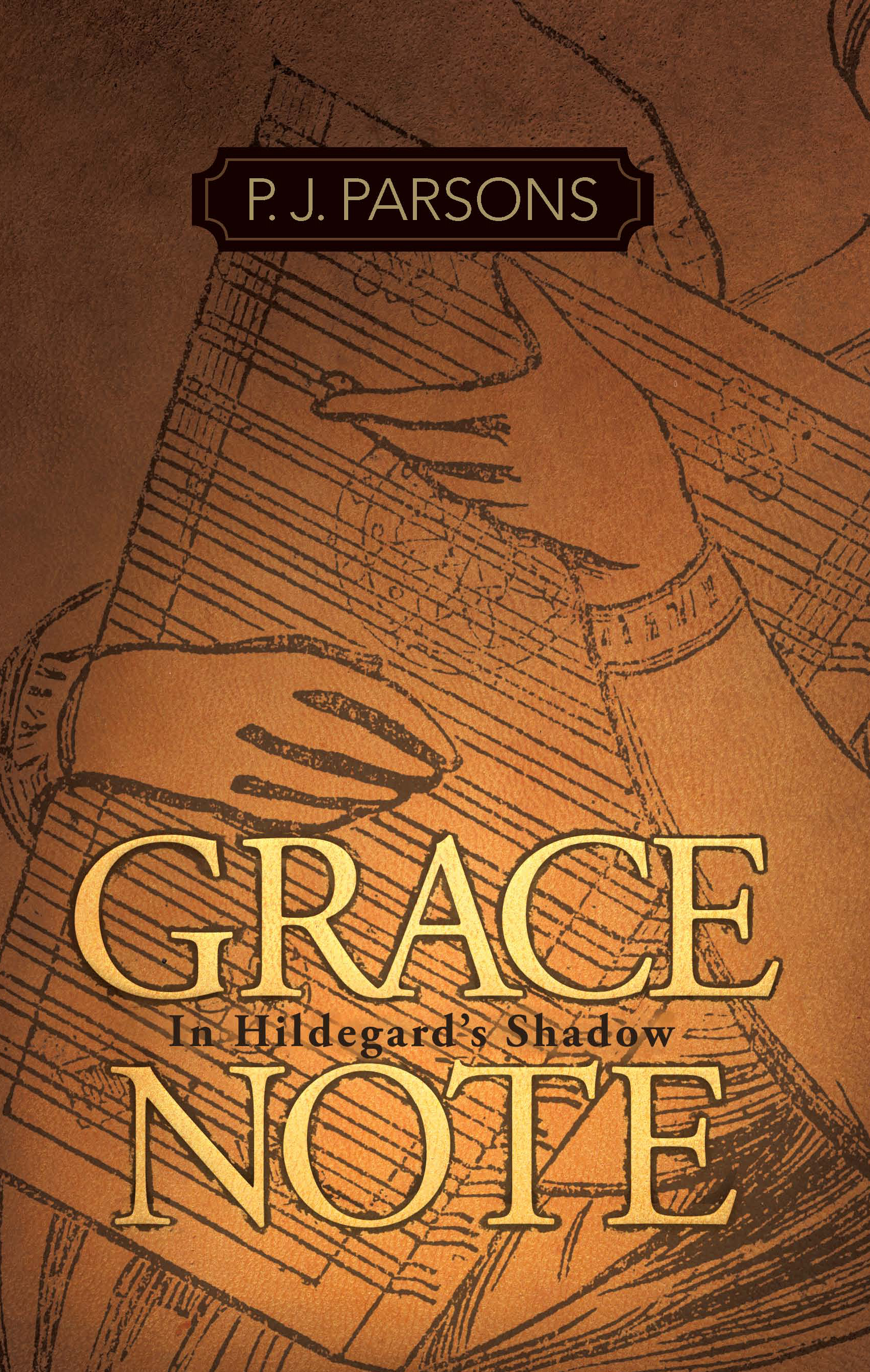
An award winner? Just wish the publisher had given it a cover I like more than this one!
What’s the point of giving awards for books? It used to be – back in the day as they say – that book awards recognized truly gifted authors whose work has or is destined to make a difference. Of course, that presupposes that those judging for the awards have the capability to distinguish the very best – whatever that might be at any given point in time.
These days, however, in addition to these long-standing, prestigious awards (at least they’re prestigious in some circles), there is an absolute glut of awards and contests for writers.
The Science Fiction & Fantasy Writers of America posted a terrific description of awards and award scams here. They differentiate among outright scams, contest mills, award mills, fake contests etc. The list is long and very dispiriting. But why would a writer enter a contest anyway?
If your book is published by a traditional publisher, that traditional publisher just might decide to enter your book in an appropriate award contest. Or not. If your book is independently published, then watch out. You are going to be vulnerable to every possible attempt to get you to enter a contest. Why would you even consider that, anyway?
In a word: publicity. This is the promise. Your book will be read by others who might, just might, like it. Or at least they might – just might – actually read it. They might like it enough that you might win an award. And that award will mean publicity (not the New York Times kind of publicity, though).
Lots of other people have researched these contests, so I thought I’d take a slightly different tack. I hypothesized that if a book award is so credible, then the books awarded must be of high quality.
I took a random sample (albeit a convenience sample for all of you researchers out there), to get a bit of anecdotal evidence to support or discredit my thesis.
I started with the 2012 Independent Publisher Book Awards which bills themselves as the “World’s largest international and regional book awards competition” and selected their first-place winner in the popular fiction category, Vertical, by Rex Pickett (Loose Gravel Press — Pickett is co-owner). Surfing over to Amazon, I read inside the book, as I would do if I were at a book store trying to decide whether or not I wanted to read the book. In case you didn’t pick it up – and I certainly did not – Pickett’s first book was Sideways, which later morphed into the film Sideways. So, I read. My conclusion: I’m ordering this book. He writes in an accessible and entertaining way: this just might be my summer schlock reading for this year.
Next on my list was the Writer’s Digest Award for self-published authors. They charge $100 to enter and offer the following: chance to win $3,000 in cash, national exposure for your work, the opportunity to catch the attention of prospective editors and publishers, and a paid trip to the ever-popular Writer’s Digest Conference in New York City![1] Well, after more online research than I care to mention, I could not identify even one of their winners. I’m sure they’re listed somewhere, but I can’t seem to find them – or at least I’m not willing to do spend any more time on it. Onward!
The Amazon Breakthrough Novel Award is a highly visible award for self-published authors. Their prize is a publishing contract with Penguin with whom they are partnered. I selected Bill Warrington’s Last Chance: A Novel by James King which won in 2010. A multi-generational saga, the book is not really my personal cup of tea. I started to read it, and it’s as good as any “coming-of-age” “road-trip” novel, so it’s mainstream. Just not my thing. But the reader reviews on the site are really quite good. Given the number of their finalists who are published on their own Createspace, though, I have a few questions.
At this point I’m beginning to think that the high-profile of these awards really do have some substance to them. Obviously, there will always be scams, but in the grand scheme of things if you do your research, entering a contest like this just might get you what you’re looking for: recognition and a bit of publicity — a bit. But beware; there are more scams than there are legitimate contests.
I have a few suggestions to authors who are interested in entering their work in book contests:
Before doing anything, sit down and decide what your objective is. If it’s to get onto the NYT best-seller list, you might be a wee bit unrealistic. If you want publicity, it’s possible. If you’d like a bit more exposure, you’ll likely get it. At least your work will be read by someone.
Decide how much money you’re willing or able to cough up. Many of these contests, even some of the more credible, do charge for entries.
Do an online search for contests that fit your particular genre, just as you would when seeking a compatible publisher.
Select four or five that impress you the most and research them. Look at what bloggers or independent writers are saying apart from what is on the web site.
Read the contest’s web site very carefully. Look at every bit of the fine print. Then go back to the blog I linked to above from the Science Fiction Writers and check to make sure that none of the red flags are there.
Make a decision on one or two contests.
Read the entry requirements carefully.
Follow the instructions to the letter – and make sure your entry is in before the deadline.
Then wait.
Oh…it might be worthwhile to make a note of contests you enter. See my opening sentence! And what’s my conclusion about that contest? Still don’t know what to think. I’ll let you know.
 About two years ago I received an email from a former student who had stumbled upon one of my books – online. The book was not published as an e-book. Far from it. In fact, when it was published in 2003, no one was even considering anything but the hold-in-your-hands, paper-between-covers kind of book. However, it was a professional reference handbook that had continued to sell in dribs and drabs so was evidently still useful. My student posed this question: Was I aware that it was available electronically through Questia? I most assuredly was not.


 Patricia J. Parsons