Posted in Book contests, Book promotion, Self-Publishing

Writers’ contests: The good, the bad & the very ugly (& a few tips)

I opened my email the other day to find a note from the Next Generation Indie Book AwardsCongratulations, it read, …your book has been named a Finalist in the GENERAL FICTION/NOVEL (Over 80,000 words) category…

Oh, I thought.  What’s that?  Did I enter that contest?  Immediately my skeptic kicked in until I remembered, yes, I did enter this contest many months ago when I was fixated on book marketing.  But now I found myself researching it again just to see if there was any legitimacy to it, and for that matter, any legitimacy to any of the contests designed to part independently and small-press published authors from their money (most have entry fees).
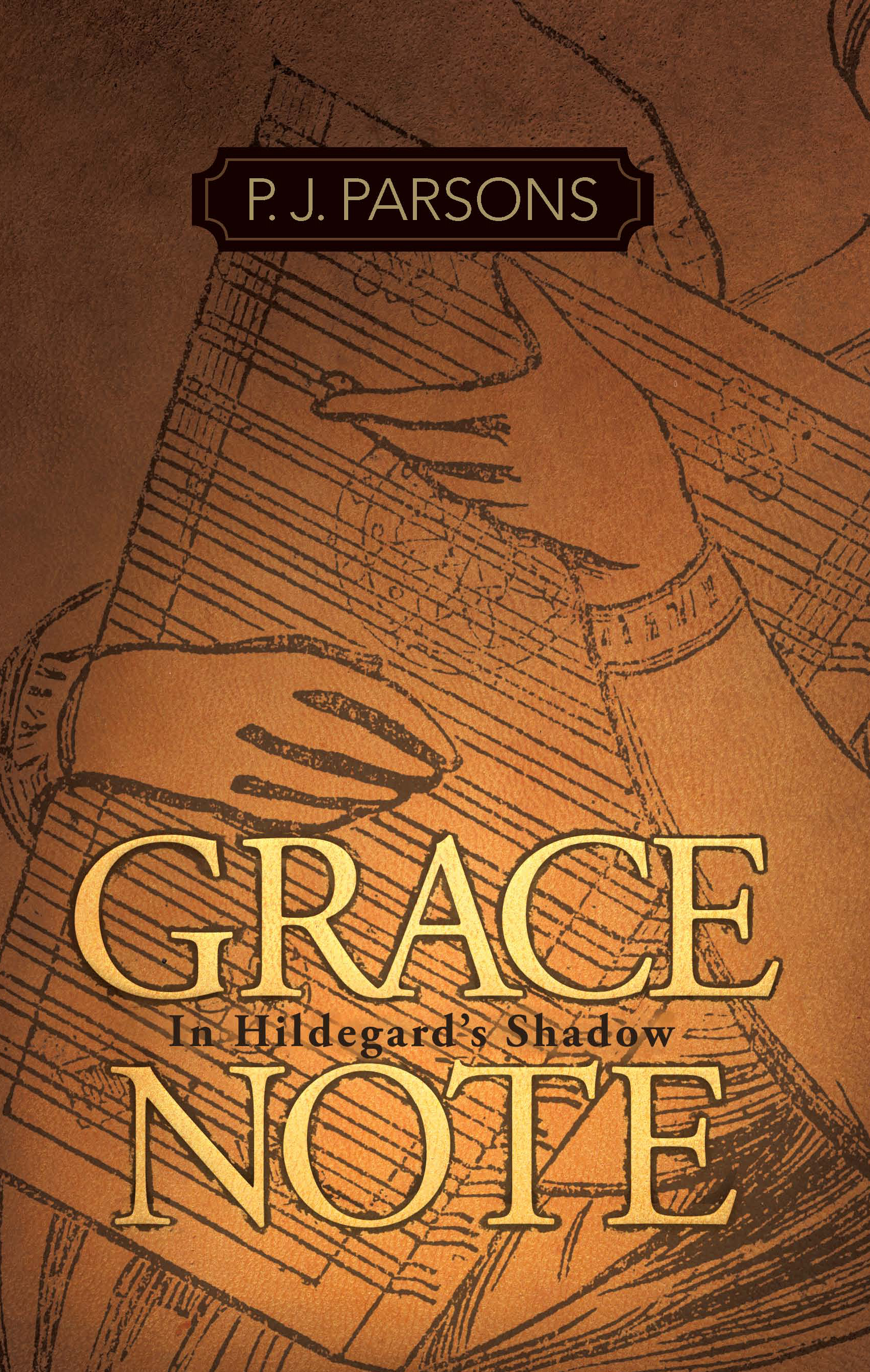
An award winner? Just wish the publisher had given it a cover I like more than this one!

What’s the point of giving awards for books?  It used to be – back in the day as they say – that book awards recognized truly gifted authors whose work has or is destined to make a difference.  Of course, that presupposes that those judging for the awards have the capability to distinguish the very best – whatever that might be at any given point in time.

These days, however, in addition to these long-standing, prestigious awards (at least they’re prestigious in some circles), there is an absolute glut of awards and contests for writers.

The Science Fiction & Fantasy Writers of America posted a terrific description of awards and award scams here.  They differentiate among outright scams, contest mills, award mills, fake contests etc.  The list is long and very dispiriting.  But why would a writer enter a contest anyway?

If your book is published by a traditional publisher, that traditional publisher just might decide to enter your book in an appropriate award contest.  Or not.  If your book is independently published, then watch out.  You are going to be vulnerable to every possible attempt to get you to enter a contest.  Why would you even consider that, anyway?

In a word: publicity. This is the promise.  Your book will be read by others who might, just might, like it. Or at least they might – just might – actually read it. They might like it enough that you might win an award.  And that award will mean publicity (not the New York Times kind of publicity, though).

Lots of other people have researched these contests, so I thought I’d take a slightly different tack.  I hypothesized that if a book award is so credible, then the books awarded must be of high quality.

I took a random sample (albeit a convenience sample for all of you researchers out there), to get a bit of anecdotal evidence to support or discredit my thesis.

I started with the 2012 Independent Publisher Book Awards which bills themselves as the “World’s largest international and regional book awards competition” and selected their first-place winner in the popular fiction category, Vertical, by Rex Pickett (Loose Gravel Press — Pickett is co-owner).  Surfing over to Amazon, I read inside the book, as I would do if I were at a book store trying to decide whether or not I wanted to read the book.  In case you didn’t pick it up – and I certainly did not – Pickett’s first book was Sideways, which later morphed into the film Sideways.  So, I read.  My conclusion:  I’m ordering this book.  He writes in an accessible and entertaining way: this just might be my summer schlock reading for this year.

Next on my list was the Writer’s Digest Award for self-published authors.  They charge $100 to enter and offer the following:  chance to win $3,000 in cash, national exposure for your work, the opportunity to catch the attention of prospective editors and publishers, and a paid trip to the ever-popular Writer’s Digest Conference in New York City![1] Well, after more online research than I care to mention, I could not identify even one of their winners.  I’m sure they’re listed somewhere, but I can’t seem to find them – or at least I’m not willing to do spend any more time on it.  Onward!

The Amazon Breakthrough Novel Award is a highly visible award for self-published authors.  Their prize is a publishing contract with Penguin with whom they are partnered.  I selected Bill Warrington’s Last Chance: A Novel by James King which won in 2010.  A multi-generational saga, the book is not really my personal cup of tea.  I started to read it, and it’s as good as any “coming-of-age” “road-trip” novel, so it’s mainstream.  Just not my thing.  But the reader reviews on the site are really quite good.  Given the number of their finalists who are published on their own Createspace, though, I have a few questions.

At this point I’m beginning to think that the high-profile of these awards really do have some substance to them.  Obviously, there will always be scams, but in the grand scheme of things if you do your research, entering a contest like this just might get you what you’re looking for: recognition and a bit of publicity — a bit.  But beware; there are more scams than there are legitimate contests.

I have a few suggestions to authors who are interested in entering their work in book contests:

  1. Before doing anything, sit down and decide what your objective is.  If it’s to get onto the NYT best-seller list, you might be a wee bit unrealistic.  If you want publicity, it’s possible.  If you’d like a bit more exposure, you’ll likely get it.  At least your work will be read by someone.
  2. Decide how much money you’re willing or able to cough up.  Many of these contests, even some of the more credible, do charge for entries.
  3. Do an online search for contests that fit your particular genre, just as you would when seeking a compatible publisher.
  4. Select four or five that impress you the most and research them.  Look at what bloggers or independent writers are saying apart from what is on the web site.
  5. Read the contest’s web site very carefully.  Look at every bit of the fine print.  Then go back to the blog I linked to above from the Science Fiction Writers and check to make sure that none of the red flags are there.
  6. Make a decision on one or two contests.
  7. Read the entry requirements carefully.
  8. Follow the instructions to the letter – and make sure your entry is in before the deadline.
  9. Then wait.

Oh…it might be worthwhile to make a note of contests you enter.  See my opening sentence! And what’s my conclusion about that contest?  Still don’t know what to think.  I’ll let you know.

Posted in Book publishers, Self-Publishing

Holding self-published writers to account for quality

At the same time as I was contemplating what to do with my book that has reverted to me from a [now-defunct] publisher, I was preparing for my spring semester of teaching at MSVU.

One of the courses I’m currently teaching is related to my original area of specialization in communication: namely health communication.  I’ve written a lot in that area – including some four or five books – and had included a magazine health feature writing assignment for the undergraduate students in the course (there are also some Masters-level students who will do an analysis and critique rather than write a piece).  Since it’s been some years since I personally did medical feature writing, I thought that I’d update my reference materials so that I might be able to offer to the students a selection of recommended resources.  To that end, I began my book search where I usually begin: Amazon.  To my surprise, the up-to-date offerings are slim.  Of course, that always makes me see a trade literature gap; which makes me consider how to fill that gap; which makes me wonder if I have the expertise to write such a book…but I digress.

As I made my way through the list in search of what might be a useful book, I came upon one titled Popular Health & Medical Writing for Magazines.  I thought, well, that sounds just like what the students might need, so I ordered a copy to review it.  I evidently was remiss in my usual vetting of online book offerings.

I usually “look inside” reviewing the title page, table of contents, copyright page to see who published it and author bio to check for credentials.  I failed in my due diligence.  Published by iUniverse, the book turns out to be one of many (and I do mean many) books that this author has self-published.  Now, I’d be the last one to dismiss a book simply because it was self-published – many very worthy books have been published by the authors themselves over the years and I have dabbled in it myself as I’ve revealed in earlier posts – but when I began to look closely at the credentials of this “popular science journalist”  (as per the book description and her web site which I have sadly subsequently perused), I was hard-pressed to find those credentials that would lead me to recommend her work.

Her other books include such things as How to write plays, monologues, or skits from life stories, social issues, current events: For all ages, How to start personal history and genealogy journalism businesses: Genealogy course templates…, Creating family newsletters and time capsules: How to publish multi-media genealogy periodicals or gift booklets, and Middle eastern honor killings in the USA (a novel, I believe), among many others.  In fact, at the top of the author’s web site it says that she has published 80 paperback books, and half way down the front page it says 65+.  Okay, I guess that could mean 80.  Hmm…

I have no quibble with writers having wide interests – I suffer from that myself, so can identify – but I think that there needs to be some area of expertise that can be identified if we look closely.  And for someone to be writing a book about how to write health and medical pieces for popular media – well, let’s just say that I expect to be able to see that they have a grasp both of medical science and of journalism.  That was not evident – and I’m very sad to report that the self-published book that I paid for is bewildering at best.

Why I didn’t look at the first chapter title and get a clue is beyond me: “Making medical language specialists; Turning medical transcribers into medical writers and editors.”  The idea that all you need to be a medical writer or editor is to have experience as a transcriptionist made me see red.  Then sandwiched between a chapter titled “What to emphasize in medical writing…” and “Writing the self-help article” is a chapter titled “Writing about DNA and gene hunters.”  This made me begin to question both the framework and the agenda of the book.  Then the last chapter in this medical writing primer puzzled me even more: “Medical writing about pets: Care, food, travel, adventures, history, genres…”  What the h***?

So, I decided to actually read the book.  If I thought that the framework didn’t make a lot of sense, the individual chapters had something of a flight of ideas as well.  Then when I came upon this particular piece of advice: “…medical writers can also sell (or represent) the product discussed in the research and writing…” I slammed the book shut, realizing that there was a serious dearth of ethical considerations among the pearls of wisdom.   This led me to consider the following question:  Should I write a review on Amazon to save other bona fide budding medical writers from buying this book?  Or should I just let it go?

I had a sense that I didn’t want to hurt the writer’s feelings.  Where did that thought come from?  If self-publishing is to be thought of as a legitimate route to authorship, then writers need to be held to the same standards and measured by the same yardsticks as those published via the more traditional routes.  In these days of “everyone is a writer” and “everyone is a publisher” we do need some quality controls and if writers themselves are not prepared to do this, then writing and publishing is doomed to mediocrity or worse.

Clearly, the self-publishing model as it stands now is in serious need of reconsideration.  The problem is that the really well-written and edited self-published books do hold their own against anything that a more traditional publisher can produce.  Sadly, there is no way to figure this out unless you do what I did – and you buy it.  By then it’s too late.

So, it’s back to the drawing board to find another book for my students.

Posted in Publishing, Writing

Setting priorities: A writer’s lament

Lately, it seems that I’ve been spending far more time on creating blog entries (mostly on The Discerning Travelers) and trying to figure out Pinterest (in fairness, I’m once again teaching a course on Social Media to our graduate students this spring and need to keep up), than I have been doing real writing.  I seem to have a notion that there is real writing and there is – other stuff.  But what, precisely is real writing and why do I think it has to be my priority?

…just as I was considering this question, I opened up my email and found a message from one of my publishers.  This is a publisher that I haven’t heard from in some two years – nope, not even a royalty statement – that is unless you count an email from someone in the office there suggesting that I pay them for the 100 books they sent to me that I did not order.  When I told them that I would send them back to them when they sent me a royalty statement (because, as I mentioned casually to them, they were in breach of contract), I never heard from them again.  Until today.

It seems that the company is being liquidated.  Further, it seems that the authors were aware of this; the publisher herself is ill.  Funny about that – I’m one of their authors and I didn’t know.  So, what this means it that all rights to the book revert to me and I can do with it what I want.  This raises a few important questions for an author.

First, I’m wondering what, if anything, I ought to do.  I immediately sent them an email asking for a specific confirmation of the revision of all rights and for all of the electronic files related to the work.  Which begs the second question…

What should I do with the files when I get them?   What I am certainly not going to do is to buy their copies that are currently housed in a warehouse at the University of Toronto Press which distributes for them.  I was never all that happy with the quality of the actual physical book in any case.  So, if I do anything with it, I do it myself.  Which leads to the next question…

Is the book still current enough for it to be made available on other terms?  Since it is a memoir, it isn’t really out of date, and if a bit of effort were put into marketing (that was never done by the publisher in the first place – I did it all myself), it could re-emerge as both a physical book and as an e-book.

And all of this leads me to the final, and perhaps more philosophical question:  Why did I even proceed with having it published by a traditional publisher in the first place?  I could have done as good a job on my own, had as much reach on my own and kept control. This is a problem with many small publishing houses – they don’t have the resources needed to do a really professional job.  I’ve reflected on the models of publishing before, and now I’m more convinced than ever that we do need to find a new model that captures the best of the traditional approach to publishing while at the same time manages to put the author front and center, rather than the publisher.  The author needs to be in the driver’s seat in my view.

So, does all of this have any relevance to the question of real writing and the priority it need or need not have in a writer’s life?  It does insofar as it takes me back to a piece of writing that, by all accounts, seems like real writing.  And it gives me yet another reason to procrastinate from finishing the novel that languishes among the electronic files on my computer in a file titled…well, I’m not going to tell you yet.

Suddenly, my priority focus, for better or for worse, is on a book that I thought had been put to bed.  Now I just have to decide if I should tuck it in and turn off the lights, or wake it up and have a party.