It’s not the first time this has happened, and it’s not likely to be the last. I find myself on an absorbing trip (because I love to travel and even write about it), and the next thing I know, the experience and the locale inspire a story. In my view, travel is one of the most inspiring experiences for writers. But that’s just me.
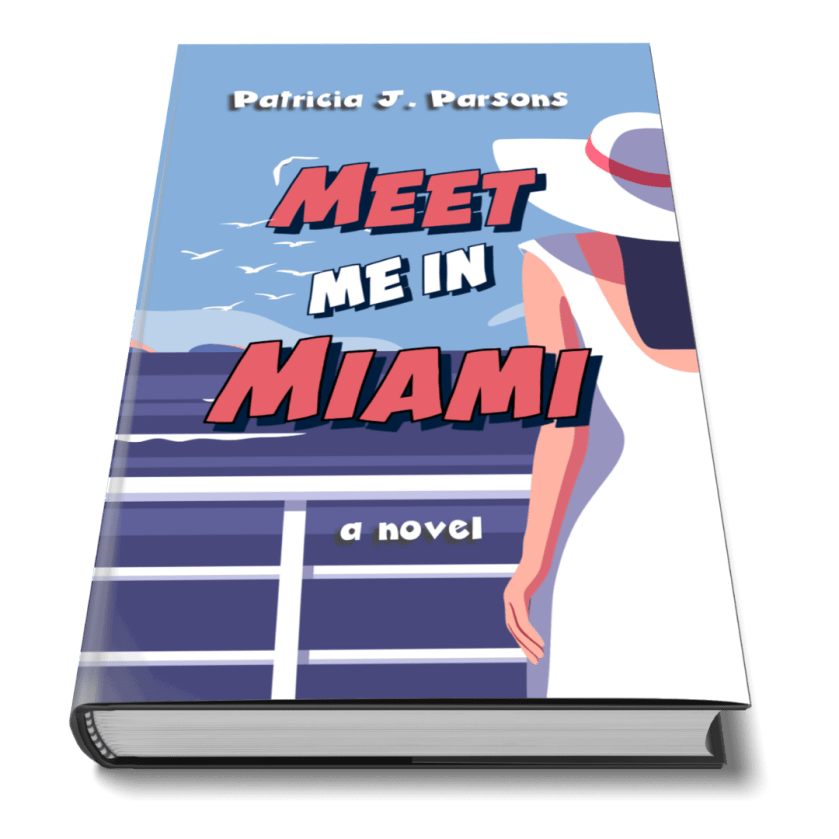
Two summers ago, a ten-day cross-island trip in Newfoundland inspired a book that seems to have started a new series. We Came From Away: That Summer on “The Rock” was inspired by a combination of that trip experience and the fact that my mother turned 100 years old that year. (She’s now 102!). Then, last year, my husband and I spent a month travelling in Brazil on a cruise up the Brazilian coast, into the Amazon River, and onto Miami. It seemed that the characters in We CAme From Away hadn’t finished with me yet. Now there’s a sequel: Meet Me in Miami.
February 1 seems like a great day for some armchair travel to a tropical location, doesn’t it? So, I’m inviting you along for some of that travel. Here’s the new book launching today.
What travels from your past might inspire a story … and a book?
Here’s what it’s about:
Life may not offer do-overs, but it might offer second chances.
Dr. Claire Barrett has it all. At least it seems that way to everyone but Claire. A successful doctor with two almost grown and successful children, an international reputation as one of the world’s finest pediatric surgeons, Claire at age fifty is as beautiful, stylish and driven as ever. She prides herself in making the best decisions to have gotten her where she is today. She did it all herself and from her home base in St. John’s, Newfoundland. But there is one decision that rankles. She should never have allowed Peter O’Brien to get away. She should never have agreed to the divorce. Was it her only mistake? Now she has a plan to fix that. She will win him back.
Eliza Houlihan Cohen, a New Yorker by way of Canada’s east coast, is a successful cookbook author. After years of putting up with her philandering husband Jake and his whining mother, she has finally broken free. And now that she’s met Dr. Peter O’Brien, she wonders if she might take another chance on love.
Eliza hates Miami, but when Peter asks her to take a cruise with him, ending in Miami, and she asks her daughter Izzy to meet her there for a holiday, Eliza decides she can cope. By the time her cruise through the Amazon reaches Miami, Eliza will wish she had never laid eyes on Peter’s ex-wife, Claire. The question is, though, will she feel the same about Peter?
Vanity, conceit and a single-minded pursuit of career goals, though, will only take you so far in this life. There comes a time when you must face the fact that everything is not about you.
It’s available from Amazon (which the cover above is linked to) or any other online retailer you like.
And … if you haven’t read We Came From Away yet …
Nora Houlihan’s children have been long gone from their family home in Newfoundland. Now, she is about to turn 100 and wants her children and grandchildren to find out what they’ve been missing on her beloved island. So, she arranges for her “come-from-away” family members to take a cross-island tour before her birthday party. By the time they are finished, they will be forever changed—and nothing in the family will ever be the same.
They say you can choose your friends, but you can’t choose your family. The question is this. If you could pick your family, would YOU choose yours?