Let me begin by telling you what I did last month. I removed everyone from my Facebook ‘friends’ list except close family. “Why in the world would a writer do such a thing?” you ask. And it is no small thing to rid oneself of ‘friends.’ It takes time, so you really do need to be committed to the task and why you’re doing it.
I’m sick of Facebook. Every time I open my news feed, there among the interesting updates from pages that I’ve liked is the constant stream of narcissistic stream of consciousness from my so-called friends. And I’d bet my next (day job) pay check that not one of those people gives a rat’s a## about what I’m doing, either. But it’s not just that. I often have to bite my cyber-tongue when I see posts.

Here are some of the things that I wanted to write but didn’t over the past few months:
- “Get over it.” I cannot tell you how many times as a response to so many different status updates that I wanted to say this to someone.
- “If you post one more ultra-left-wing piece of propaganda, I’ll tell the world what I really think of your politics.” Ooh, this one could really get me into cyber-trouble.
- “I don’t actually care what you’re making for dinner tonight.” Need I say more?
So, you’ve probably come to the conclusion that I’m not really that interested in my ‘friends.’ If so, you’d be right, because a Facebook friend is not a friend. A friend doesn’t need to keep in touch on Facebook with public posts of anything and everything. But if I’ve sabotaged my Facebook presence, am I not endangering potential book sales? Isn’t this the fear of writers who are on Facebook?
I’m a ‘fan’ of a number of writers and their fan pages on Facebook. It appears to me that the only writers on Facebook who have a real and compelling presence are those who had a name before they put up their Facebook pages. In other words, if you’re already a best-selling writer and you put up a fan page on FB, your fans will, indeed, flock to you. However, if you are an unknown writer (as are the majority of writers on Facebook), Facebook is probably a great time suck.
I’ve been trying to find some hard data on the extent to which Facebook really helps writers build their ‘brand’ and sell books to those readers who might actually enjoy/need them. Despite the fact that everyone and his or her dog seems to be writing about the need to build your ‘platform,’ these exhortations are long on rhetoric and short on hard data.
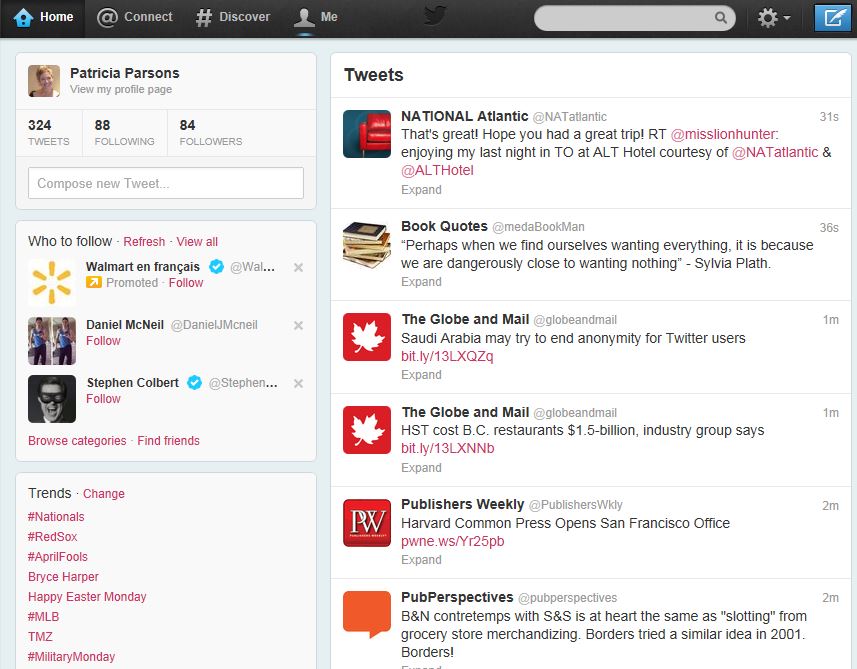
The truth is these days that publishers don’t seem to understand that one of their roles is to actually help the author to build an audience for a book they believe in. Rather than taking a lead in the marketing arena, traditional publisher today will often not even touch a book if the writer doesn’t already have a’ platform.’ Of course the platform consists largely of a presence in cyberspace comprising (but not limited to) a Facebook page, a LinkedIn profile, a Twitter feed, a blog etc. The strength of the platform is a function not only of this presence, but presumably some kind of engagement. That means that you have thousands of Twitter followers who actually read and reply or retweet your messages. You have thousands of Facebook fans or friends who post to your wall telling you how distraught they are that your new book won’t be out for another month or two. You have thousands of blog followers who regularly post pithy comments to which you respond diligently, or who click ‘like’ and you go immediately to their blog and tell them that you’re happy they stopped by.
If you think about it, we could be spending twice as much time ‘engaging’ with people who might or might not buy and/or read our books than actually writing.
So, back to the hard data. Where exactly is it? I need evidence people!
Earlier this year Fauzia Burk, president of a digital publicity and marketing firm specializing in creating awareness for books and authors wrote a piece for the Huffington Post titled: Does Social Media Sell Books?. Burk interviewed a best-selling author’s agent – an author who is not and has never been active on Facebook or any other piece of the platform. Surely the agent would have some data. Nope.
 Here’s what this agent said, “…it’s critical that no matter how active an author is online, the conversation about them and/or their book must be picked up and carried on by others for it to truly have an impact on sales. It can’t be ONLY about the author talking (blogging/tweeting)…” and later, “…For nonfiction authors with a specific expertise, being out there in the community that has interest in that expertise will most likely be effective in selling their book.”[1]
Most likely be effective? Most likely? I’m shouting now. This is not the data I’m looking for. It’s something that seems like a good idea, but the return-on-investment (of time in this instance) just doesn’t seem to have legs.
I’ve moved my attention from Facebook which annoys me no end, to Twitter. I only have so much time in the day. And to tell you the truth, I’d rather be writing on my blogs or working on those two new books that I’ve plunged into than check out photos of someone’s cat hanging upside down from a Christmas tree. But that’s just me.


