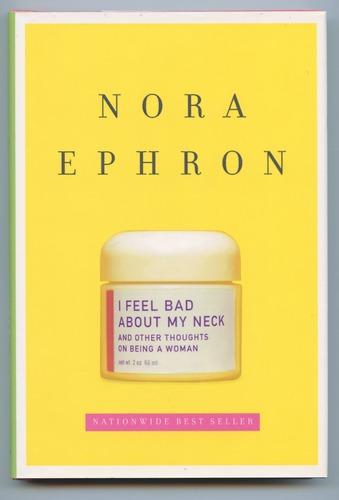
I am a woman who would rather poke her eyes out with a red-hot poker than spend an evening with a bunch of women. The ubiquity of magazine articles extolling the virtues of our ‘girlfriends’ have never resonated with me. My girlfriend preference is for the arms-length, mentor type. And one of those women whose work has inspired (and I daresay influenced me) died last week. I’m talking of course about Nora Ephron.
I don’t think that her influence on me was in my conscious mind until I read about her death and thought, “We’ve lost a good one.” Then I started thinking.
In all of my writing (of the non-academic type), my protagonists (whether fictional or real) are strong women, feminist types, ahead of their times or just plain wise. Although she may have been best known to the masses as a screenwriter, it wasn’t her movies that inspired me – it was her journalistic career and her books.
I first read Heartburn in 1983 or ’84, soon after it was published. Relating a seriously funny take on the break-up of a perfect marriage, the book resonated with me partly because I had escaped a (less-than-perfect) marriage myself only a few years earlier, and I found her witticisms so spot-on that she captivated me for the long-term. When I think about some of her most valuable pieces of advice over the years, I’m almost alarmed how much I agree with her.
When she said, “I am continually fascinated at the difficulty intelligent people have in distinguishing what is controversial from what is merely offensive,” I found myself nodding in agreement.
And then there was advice for living: “Oh, how I regret not having worn a bikini for the entire year I was twenty-six. If anyone young is reading this, go, right this minute, put on a bikini, and don’t take it off until you’re thirty-four.” Yes, I should have done that.
But of course, she also said, “Above all, be the heroine of your life, not the victim.”
Amen. And I don’t feel bad about my neck. Yet. Sigh.
My "first" novel published by the now defunct Carlton Press, New York
It’s time for me to begin to come clean about a part of my publishing backstory that I have yet to explore. That is the story about my relationship with editors and publishers. Apart from my periodic arguments with editors about comma placement or the use of the singular verb after “one of” (I lost that argument – seems that there are several different rules none of which I was privy to prior to meeting this particularly particular editor), my relationships have been based on a serious skepticism (on my part) about their ability to recognize a quality book or predict whether or not a book will sell. If an editor loves a submitted manuscript, he or she might go ahead and publish. That doesn’t mean anyone else will like it! I am also skeptical about their ability to actually sell a book. I’ll start at the beginning.
If you visit my web site that gives you chapter and verse on my books and other assorted writing through the years, you’ll see that my work has been published by a variety of publishers – different countries, different sizes, different missions – and even different publishing models.
Two of my co-authored books were actually published by the same publisher – and it’s that publisher that has me thinking about my journey through the publishing business over the past twenty-plus years. I’m thinking about it now because I have a book at this publisher again – a book that is half way through the review process, with positive signs all around, when the editor who is enthusiastically responsible for the project resigns to take up a new (and presumably more lucrative) position with another publisher. I can’t blame him, but I was informed about his imminent departure only two weeks in advance, and that was weeks before Christmas. I’ve heard nothing from the publisher since. Hello! Author out here! Anybody listening? If the percentage that an author receives from book sales is any indicator, I’d have to say that authors who are not famous (i.e. do not have name beginning with, let’s say for example “O”) are the lowest on the totem pole. Apart from how hard this is on one’s (my) ego, it just seems wrong to me.
So…back to the backstory. My first book was published by a small non-fiction, trade-book publisher in Toronto – that has since gone bankrupt. This isn’t surprising – happens to publishing houses all the time. Let that be a cautionary note to authors. But I’ve told that story before.
Since then, I’ve offered my books to a variety of publishers, many of which have actually offered contracts and eventually published them. But I’ve also ventured into self-publishing. Oh, yes. Self-publishing.
Before self-publishing had any kind of credibility (one of my assumptions here is that it has risen a notch or two on the cred barometer in recent years,) it was referred to strictly as ‘vanity publishing.’ Presumably it was vain for an author to pay to have his or her book published. I’ve never been sure why it isn’t ‘vanity recording’ when a musician pays to have a CD recorded and subsequently distributed, but I digress.
According to him, a man by the name of Jonathan Clifford coined the phrase vanity publishing around 1960.[1] Clifford’s lifetime crusade was for honesty in the vanity publishing world. It is true that over the years, authors who could not get – or did not try to get – mainstream publishers (more about that breed later) would pay to have their work produced, and those vanity publishers would suggest to the authors that they could, perhaps, just maybe, probably get rich. That was the problem. As Clifford says:
If you cannot find a mainstream publisher to publish your work at their expense, you must look on the whole process of publishing not as money invested to make you a return, but as money spent on a pleasurable hobby which you have enjoyed and which has provided you with well-manufactured copies of your book. If you do also manage to make a small profit, then that should be looked upon as an unforeseen and unexpected bonus![2]
Today, the notion of the vanity press (versus other self-publishing options) seems to be tied into the issue of promises made by these entities – promises that they cannot possibly keep – and into their lack of editing. So, the term self-publishing has arisen and seems to have taken on a less pejorative connotation.
Self-publishing, from the author’s point of view though, is exactly the same as vanity publishing. The author pays. And any author who thinks a publisher, regardless of whether they make you pay or they pay you, can predict much less guarantee sales success of your book, is naïve in the extreme. Unless you have a name that is widely recognized, there is no way to predict sales. This is where my personal skepticism begins to creep into the relationship between author and publisher. But, what seems like a hundred years ago now, I did take up with one of those vanity publishers two years after my first non-fiction book was published by a ‘real’ publisher.
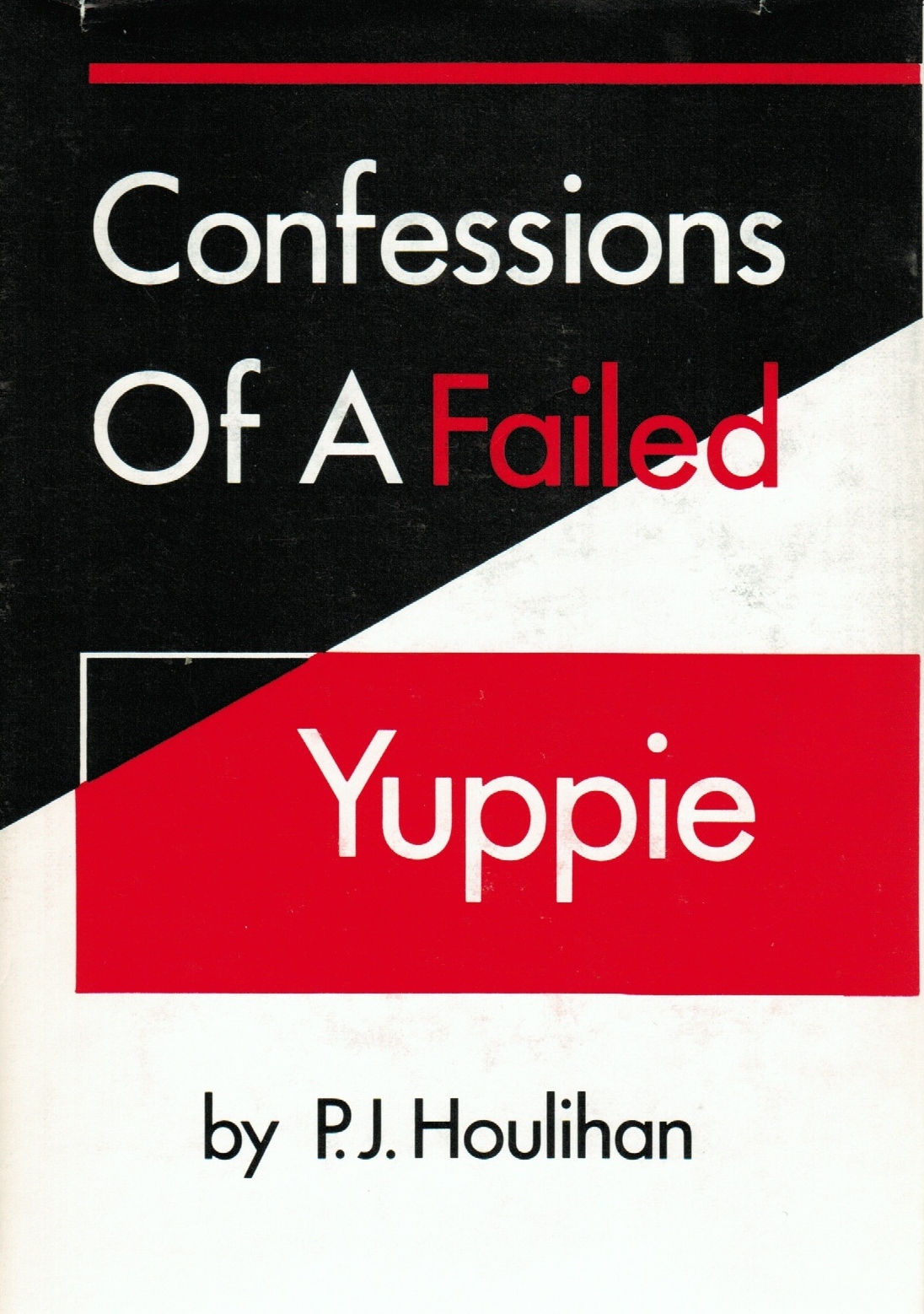
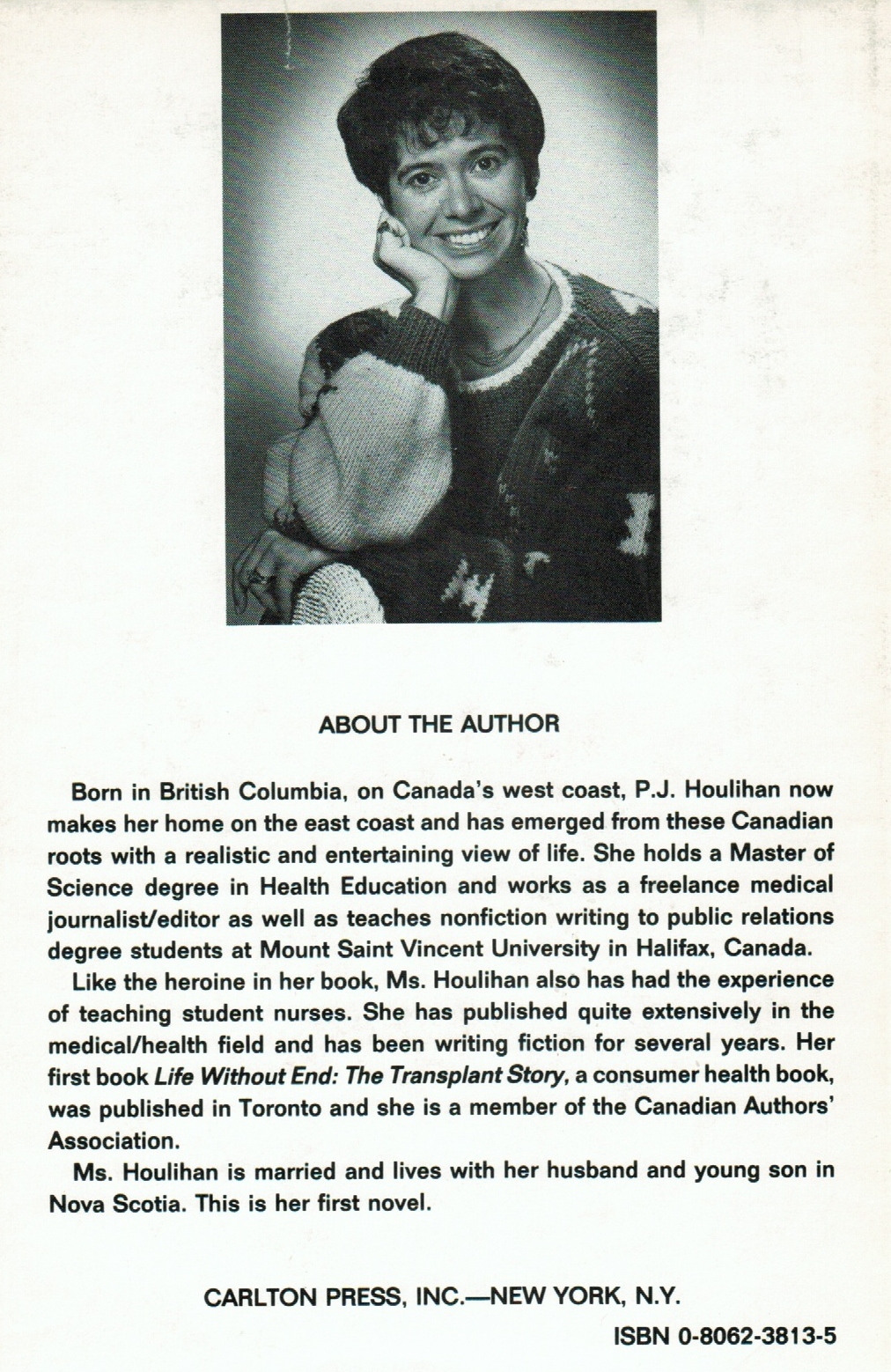
The book was called Confessions of Failed Yuppie. Yup. And it was funny. Without benefit of even a modicum of editing (not one syllable was altered nor one typo corrected), this vanity press took my substantial fee and provided me with two cartons of the 130-page, hard-covered books. I was thrilled. But something kept me from mentioning its provenance to anyone– although I’m not sure anyone would have cared. Many of my friends read the book and told me that they were amused. I even still get a small check every year from the Public Lending Right Commission because there are copies of it in libraries across the country. Anyone want to read it? [Side note: literary blogger Donigan Merrit tells the story in his blog entry dated September 8, 2011 that his first job out of undergrad was as a copy-editor for Carlton Press. It never occurred to me that they employed any!]
So, what’s wrong with this kind of model? What makes a vanity-published book, or a self-published book less worthy than a book published via the more traditional publishers? In a word, quality – but not necessarily quality of the content, story, theme or writing. Quality of the editing. Vanity publishers never offered editors. That’s where today’s self-publishing models differ from their predecessors. Today’s self-publishers often offer editing services – but you’ll have to pay for them.
Next week…Adventures in self-publishing.
Want a laugh? Here’s the back cover of Confessions of a Failed Yuppie. Remember that it was 1991…
I’m not a literary writer in the artistic sense of the word. I don’t write literary novels or short stories. I write both fiction and non-fiction stories (and make no mistake, the non-fiction is based on story-telling in its best sense) that result from an active process of looking for ideas. Oh, once in a while I stumble on something, or I end up using an idea in a very different way than the way I started out; but on balance, finding ideas is for me a very proactive process. And although I am not part of the high-brow literati, I can still appreciate that those who are might be able to articulate an idea in a different way – not better or worse, but differently.
Emily Dickinson, a literary-minded writer in her own right of course, put it this way: “Not knowing when the dawn will come, I open every door.” I wish I had written that – I didn’t but I identify with the concept. I open every door to see where those doors might lead.
The idea of inspiration, and what it is, has shown up here before; being open to inspiration is a kind of internal process. There is clearly a relationship between the ethereal notion of being inspired to create something – whether it’s a piece of choreography, a new theory, a strategic plan or a new book – and the idea upon which that creation will be based, but in my view they are not exactly the same thing. So, finding ideas is an external process – or at least requires interaction with the external world.
Being open to inspiration requires a certain frame of mind that makes that mind a fertile place for that idea generator to take root and grow. The question now is not how to keep your mind open, but how to find that genesis.
So, where does an idea for a creation come from? I’ve gleaned ideas from any number of places over the years. Some of these have included the following:
Long conversations over wine (this is essential) with my husband and sometime collaborator. Never underestimate the power of those meandering conversations with someone whose ideas you respect. Putting your two heads together even without the goal of finding a writing idea often results in transformative ideas.
Newspaper articles. This is a no-brainer for writers no matter what kind of writing you do. It might be that headline story (you’ve heard of the ripped-from-the-headlines type stories), but my experience tells me that more often the idea is likely to come from a small piece, the piece that you might easily have overlooked. I’m currently working on a contemporary piece that is based on a ten-line article in a newspaper. This is when you take up your trusty scissors or those newspaper cutters that should be beside your reading chair at all times, cut it out and paste it in your journal. Or if you re reading electronically, use a select and paste tool (but I do need to point out that often these ten-line gems of stories that fill up column inches often don’t make it to the electronic version).
Interviews with both celebrity types and every day people. Sometimes you’ll be watching someone being interviewed on television, or hear it on the radio while you’re driving your car and one line might get you thinking. You need to have a way to capture those lines – a journal if you’re not driving, a voice recorder if you are.
Conversations overheard. Everyone expects writers to be slightly odd, so eavesdropping isn’t as far off the radar as you might think. If you take public transit for example, you are awash in a sea of possible writing ideas. I’ve sat on the subway in Toronto more than a few times and overheard snippets of conversation that seem to evoke a sense of character or even a story. (I don’t live in Toronto and never take public transit at home – so I really feel I’m missing out on that one!). And what about listening to other parents when you’re waiting for your children at school? Or at the school concert? Or audience members around you at the ballet, the theater or even the movie? The hockey rink? On a beach while on vacation? At a bar?
Online conversations “overheard.” This is a bit more controversial, but nevertheless full of juicy material. If you lurk around on social media sites, people might think that you are spying, but practically everyone does it to one extent or another. Reading posts on forums without actually participating in the conversation is the definition of lurking and it has its controversial side – but it can be for the greater good. For example, if you are interested in women’s health issues and you lurk around a social network focused on these issues, you might very well be inspired to write an article or book that will help people. So, it’s not all bad!
And finally, my personal favorite…
Academic articles. For anyone who happens to read academic articles, you’d be surprised how often one of them can contain the germ of a story. I once read an article in a medical journal back in my medical writing days about how Edgar Allan Poe died (or what wasn’t known about it to be more specific), and that ignited an idea.
These are just a few places where ideas spring forth. Ideas come from everywhere and often coalesce to form that big idea that eventually becomes the genesis for a story. It then takes on a life of its own as the settings, characters and plots take over the writing. Ask a writer where his or her idea actually had its genesis, and sometimes it’s hard to pinpoint. But for me, I can usually tell where the germ actually comes from.
And when it comes to my historical fiction work, the idea is usually as a result of an unanswered question from history.
GRACE NOTE began to take shape many years ago. In the late 1990’s, there was a resurgence of interest in a little-known Roman Catholic mystic who lived in 12th century Germany. Her name was Hildegard of Bingen.
Hildegard was born in 1098 and when she was about fourteen years old (the historical dating is inconsistent) she was tithed to the church and walled up in a hut attached to a Benedictine monastery, proclaimed dead to the world, to live her life as an anchorite. Of course, history tells us that she didn’t stay walled up forever, rather went forward and accomplished a great many things in her career as a nun and abbess. She has been proclaimed a feminist (!), physician, mystic, teacher, and very prominently, a composer, often referred to as the very first female composer to live. The problem is that there isn’t hard evidence of the actual authorship of her music and in 1998 an article appeared in the journal Early Music provocatively suggesting that there is no evidence that she accomplished so much. That’s where my story began. And GRACE NOTE is the outcome of the idea genesis followed up by lots of research on what is known and what is not known.
 I am a woman who would rather poke her eyes out with a red-hot poker than spend an evening with a bunch of women. The ubiquity of magazine articles extolling the virtues of our ‘girlfriends’ have never resonated with me. My girlfriend preference is for the arms-length, mentor type. And one of those women whose work has inspired (and I daresay influenced me) died last week. I’m talking of course about Nora Ephron.