Posted in Backstory, Book launches, Book promotion

Making old manuscripts live again

An old manuscript gets a 21st century makeover.

Earlier this week Jennifer Alsever wrote a piece for CNN Money called “Guerrilla Marketing for Books.”  A cautionary tale for would-be authors, it tells the story of shrinking promotional budgets at traditional publishing houses and the lengths to which authors now must go to get their books to stand out from the ever-increasing numbers of both traditionally and self-published books.  The truth is, it has been ever thus – unless you are a big-name author.

One tactic mentioned in the story is of an author who commissioned a jewelry artist to make necklaces that are featured on her book’s cover as well as a new perfume based on one of her fictional characters. The amount of work and money involved for an author in doing this is staggering to consider.  This, however, reminded me of an event in the provenance of one of my recent ‘new’ books Confessions of a Failed Yuppie.  Stick with me for a few minutes!

If you’ve been reading Backstory for a few years or even months, you might have realized that the “backstory” I’m trying to tell is the anchor of my own experience in writing and publishing.  More than that, though, my objective is to explore the issues that are important to all of us who are more than passingly interested in reading – and writing.  Sometimes I rant about things that have annoyed me; sometimes I tell you a story of my experience.  Sometimes I tell you a real backstory to my writing: what inspired it, how it developed, what happened next.  This post is one of those true backstories.

In the early 1990’s I was on a rant about the Yuppie lifestyle.  So I decided to write a book about it – but rather than a non-fiction examination of the phenomenon, which would have been more akin to my writing experience at the time, I decided to write a novel – a satire of sorts.  I felt strongly, though, that I wanted it published no matter what, so I did what self-publishing authors did at that time, I sent it to a vanity publisher.  (For the working definition of a vanity publisher, you might want to surf back to last week’s post: The confusing world of 21st century publishing jargon: A glossary for writers).

In due course, a box full of hard-cover copies of Yuppie arrived on my doorstep.  What to do with them?  Those were the days before book promotion through online networking channels was de rigeur.  Indeed, there were no social media channels.  Just imagine such a world!  I decided that the first order of business would be to have a book launch.  But before the launch, I’d need some “merchandise.”

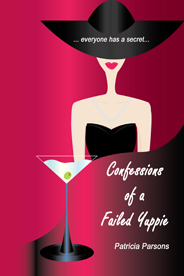
The old Yuppie cover and the mug: "I confess: I'm a failed yuppie" with a "reject" stamp!
The old Yuppie cover and the mug: “I confess: I’m a failed yuppie” with a “reject” stamp!

I created a design for the front of T-shirts and for mugs and had dozens of these pieces of paraphernalia created – all at my own expense, of course – and had them available on the day of the pary.  I also had a poster-sized blow-up of the cover of the book so that it could be the focal point of the party, next to the book-shaped cake that adorned the dining room table.  I then created a guest list and sent out invitations.

As parties go, the event was a great success.  We had door prizes of T-shirts that the guests obligingly sported and everyone went home with a signed copy of the book.

As the weeks went by, a number of the guests told me that they had enjoyed the book and when was I going to write another one?

The book, naturally enough, never sold.  Getting a self-published book reviewed in those days was not next to impossible, it was completely impossible.  And since there were no social networks available to promote it, short of taking out advertisements at great expense (I did that once) and going door-to-door with a pile of books (which didn’t sit well with my personality), the book would languish with thousands of others.  And so it did.  Until last year.

Writers have lots of finished and unfinished manuscripts hiding on their hard drives or taking up space in filing cabinets.  I know that most of us should toss most of it, but sometimes a manuscript draws us back and that’s how I felt about Yuppie.

So, I took out the hard-cover copy with its tattered edges and began to write rewrite the book.  It’s now a 21st century Yuppie story, and taking advantage of the digital advances, I decided to make it available once again.

Two decades in the making, Confessions of a Failed Yuppie lives again, and it starts with a definition of Yuppie:


“YUPPIE”: A Definition

Acronym for Young Urban Professional, usually occurring in a married pair (often male/female but not necessarily). Categorized as upper middle class or at least moving in that direction, ambitious, well-educated.  Characterized by excessive concerns about appearances.  Lightly narcissistic.  May have money or at least leverage.  But not necessarily. Normal habitat is the urban condo, sometimes the single-family dwelling of dubious heritage in a downtown area with a postage stamp for a yard, for which a bidding war took place prior to acquisition.  Yuppies with children often move to larger, more impressive dwellings.  Diet consists mainly of cocktails, organic kale and the latest gastronomic fad.  Would not be caught dead in a North-American-produced automobile brand.  Skis in winter, does hot yoga, plays squash (it’s making a come-back), and quietly brags all year round. Widely thought to have become extinct in the early 1990’s.  Not so much.

Maybe you’d like to read the rest.  Or not.

Posted in Backstory, Book promotion

Do I really need a Facebook presence? Or does any author, for that matter…

Let me begin by telling you what I did last month.  I removed everyone from my Facebook ‘friends’ list except close family.  “Why in the world would a writer do such a thing?” you ask.   And it is no small thing to rid oneself of ‘friends.’  It takes time, so you really do need to be committed to the task and why you’re doing it.

I’m sick of Facebook.  Every time I open my news feed, there among the interesting updates from pages that I’ve liked is the constant stream of narcissistic stream of consciousness from my so-called friends.  And I’d bet my next (day job) pay check that not one of those people gives a rat’s a## about what I’m doing, either.  But it’s not just that.  I often have to bite my cyber-tongue when I see posts.

Sad little Facebook fan page...
Sad little Facebook fan page…

Here are some of the things that I wanted to write but didn’t over the past few months:

  • “Get over it.”  I cannot tell you how many times as a response to so many different status updates that I wanted to say this to someone.
  • “If you post one more ultra-left-wing piece of propaganda, I’ll tell the world what I really think of your politics.”  Ooh, this one could really get me into cyber-trouble.
  • “I don’t actually care what you’re making for dinner tonight.”  Need I say more?

So, you’ve probably come to the conclusion that I’m not really that interested in my ‘friends.’  If so, you’d be right, because a Facebook friend is not a friend.  A friend doesn’t need to keep in touch on Facebook with public posts of anything and everything.  But if I’ve sabotaged my Facebook presence, am I not endangering potential book sales?  Isn’t this the fear of writers who are on Facebook?

I’m a ‘fan’ of a number of writers and their fan pages on Facebook.  It appears to me that the only writers on Facebook who have a real and compelling presence are those who had a name before they put up their Facebook pages.  In other words, if you’re already a best-selling writer and you put up a fan page on FB, your fans will, indeed, flock to you.  However, if you are an unknown writer (as are the majority of writers on Facebook), Facebook is probably a great time suck.

I’ve been trying to find some hard data on the extent to which Facebook really helps writers build their ‘brand’ and sell books to those readers who might actually enjoy/need them.  Despite the fact that everyone and his or her dog seems to be writing about the need to build your ‘platform,’ these exhortations are long on rhetoric and short on hard data.

Sad little Twitter feed!

The truth is these days that publishers don’t seem to understand that one of their roles is to actually help the author to build an audience for a book they believe in.  Rather than taking a lead in the marketing arena, traditional publisher today will often not even touch a book if the writer doesn’t already have a’ platform.’ Of course the platform consists largely of a presence in cyberspace comprising (but not limited to) a Facebook page, a LinkedIn profile, a Twitter feed, a blog etc.  The strength of the platform is a function not only of this presence, but presumably some kind of engagement.  That means that you have thousands of Twitter followers who actually read and reply or retweet your messages.  You have thousands of Facebook fans or friends who post to your wall telling you how distraught they are that your new book won’t be out for another month or two.  You have thousands of blog followers who regularly post pithy comments to which you respond diligently, or who click ‘like’ and you go immediately to their blog and tell them that you’re happy they stopped by.

If you think about it, we could be spending twice as much time ‘engaging’ with people who might or might not buy and/or read our books than actually writing.

So, back to the hard data.  Where exactly is it?  I need evidence people!

Earlier this year Fauzia Burk, president of a digital publicity and marketing firm specializing in creating awareness for books and authors wrote a piece for the Huffington Post titled: Does Social Media Sell Books?.  Burk interviewed a best-selling author’s agent – an author who is not and has never been active on Facebook or any other piece of the platform.  Surely the agent would have some data.  Nope.

?????????????Here’s what this agent said, “…it’s critical that no matter how active an author is online, the conversation about them and/or their book must be picked up and carried on by others for it to truly have an impact on sales. It can’t be ONLY about the author talking (blogging/tweeting)…” and later, “…For nonfiction authors with a specific expertise, being out there in the community that has interest in that expertise will most likely be effective in selling their book.”[1]

Most likely be effective?  Most likely?  I’m shouting now.  This is not the data I’m looking for.  It’s something that seems like a good idea, but the return-on-investment (of time in this instance) just doesn’t seem to have legs.

I’ve moved my attention from Facebook which annoys me no end, to Twitter.  I only have so much time in the day.  And to tell you the truth, I’d rather be writing on my blogs or working on those two new books that I’ve plunged into than check out photos of someone’s cat hanging upside down from a Christmas tree.  But that’s just me.

Posted in Book contests, Book promotion, Self-Publishing

Writers’ contests: The good, the bad & the very ugly (& a few tips)

I opened my email the other day to find a note from the Next Generation Indie Book AwardsCongratulations, it read, …your book has been named a Finalist in the GENERAL FICTION/NOVEL (Over 80,000 words) category…

Oh, I thought.  What’s that?  Did I enter that contest?  Immediately my skeptic kicked in until I remembered, yes, I did enter this contest many months ago when I was fixated on book marketing.  But now I found myself researching it again just to see if there was any legitimacy to it, and for that matter, any legitimacy to any of the contests designed to part independently and small-press published authors from their money (most have entry fees).

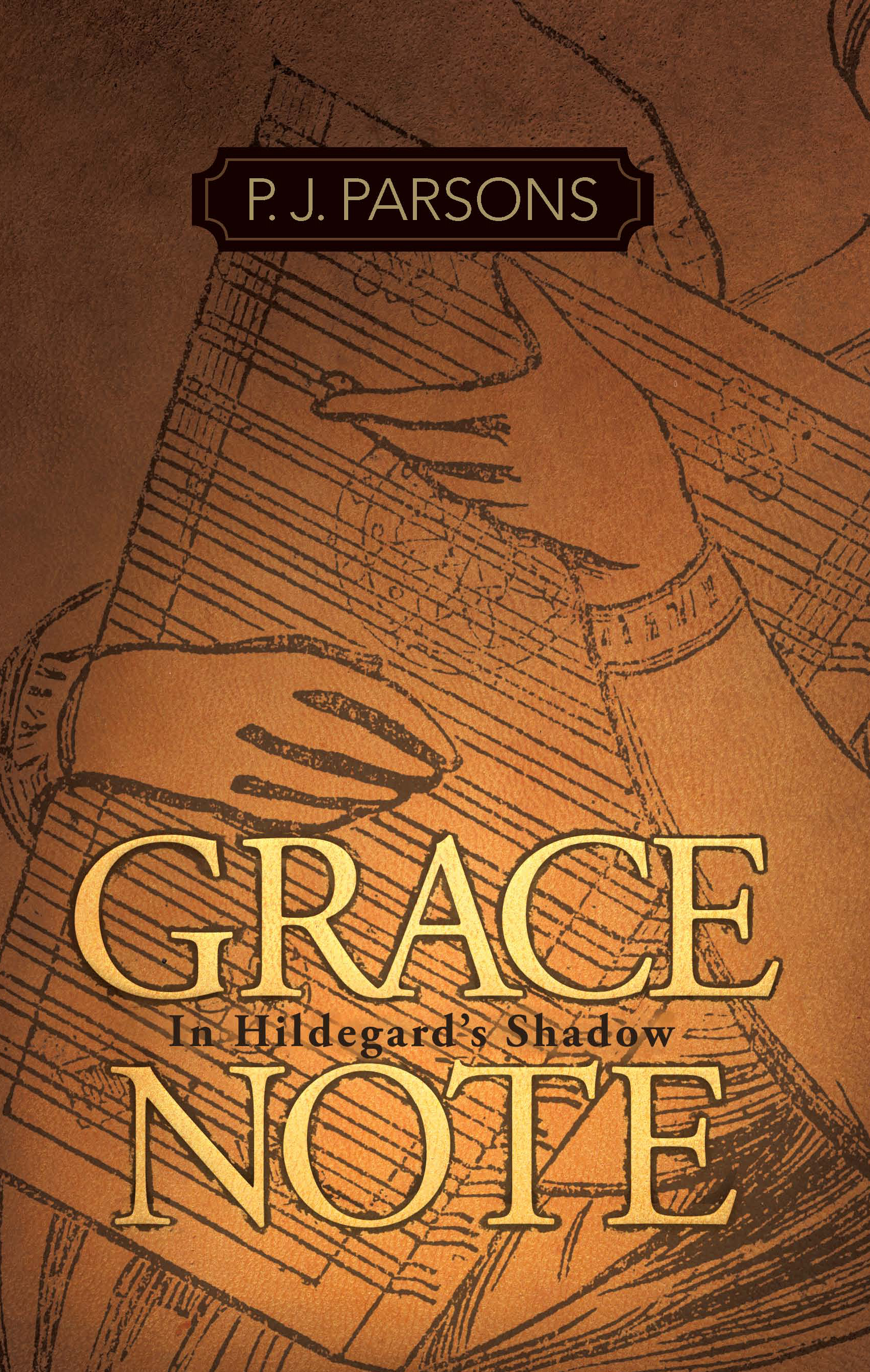
An award winner? Just wish the publisher had given it a cover I like more than this one!

What’s the point of giving awards for books?  It used to be – back in the day as they say – that book awards recognized truly gifted authors whose work has or is destined to make a difference.  Of course, that presupposes that those judging for the awards have the capability to distinguish the very best – whatever that might be at any given point in time.

These days, however, in addition to these long-standing, prestigious awards (at least they’re prestigious in some circles), there is an absolute glut of awards and contests for writers.

The Science Fiction & Fantasy Writers of America posted a terrific description of awards and award scams here.  They differentiate among outright scams, contest mills, award mills, fake contests etc.  The list is long and very dispiriting.  But why would a writer enter a contest anyway?

If your book is published by a traditional publisher, that traditional publisher just might decide to enter your book in an appropriate award contest.  Or not.  If your book is independently published, then watch out.  You are going to be vulnerable to every possible attempt to get you to enter a contest.  Why would you even consider that, anyway?

In a word: publicity. This is the promise.  Your book will be read by others who might, just might, like it. Or at least they might – just might – actually read it. They might like it enough that you might win an award.  And that award will mean publicity (not the New York Times kind of publicity, though).

Lots of other people have researched these contests, so I thought I’d take a slightly different tack.  I hypothesized that if a book award is so credible, then the books awarded must be of high quality.

I took a random sample (albeit a convenience sample for all of you researchers out there), to get a bit of anecdotal evidence to support or discredit my thesis.

I started with the 2012 Independent Publisher Book Awards which bills themselves as the “World’s largest international and regional book awards competition” and selected their first-place winner in the popular fiction category, Vertical, by Rex Pickett (Loose Gravel Press — Pickett is co-owner).  Surfing over to Amazon, I read inside the book, as I would do if I were at a book store trying to decide whether or not I wanted to read the book.  In case you didn’t pick it up – and I certainly did not – Pickett’s first book was Sideways, which later morphed into the film Sideways.  So, I read.  My conclusion:  I’m ordering this book.  He writes in an accessible and entertaining way: this just might be my summer schlock reading for this year.

Next on my list was the Writer’s Digest Award for self-published authors.  They charge $100 to enter and offer the following:  chance to win $3,000 in cash, national exposure for your work, the opportunity to catch the attention of prospective editors and publishers, and a paid trip to the ever-popular Writer’s Digest Conference in New York City![1] Well, after more online research than I care to mention, I could not identify even one of their winners.  I’m sure they’re listed somewhere, but I can’t seem to find them – or at least I’m not willing to do spend any more time on it.  Onward!

The Amazon Breakthrough Novel Award is a highly visible award for self-published authors.  Their prize is a publishing contract with Penguin with whom they are partnered.  I selected Bill Warrington’s Last Chance: A Novel by James King which won in 2010.  A multi-generational saga, the book is not really my personal cup of tea.  I started to read it, and it’s as good as any “coming-of-age” “road-trip” novel, so it’s mainstream.  Just not my thing.  But the reader reviews on the site are really quite good.  Given the number of their finalists who are published on their own Createspace, though, I have a few questions.

At this point I’m beginning to think that the high-profile of these awards really do have some substance to them.  Obviously, there will always be scams, but in the grand scheme of things if you do your research, entering a contest like this just might get you what you’re looking for: recognition and a bit of publicity — a bit.  But beware; there are more scams than there are legitimate contests.

I have a few suggestions to authors who are interested in entering their work in book contests:

  1. Before doing anything, sit down and decide what your objective is.  If it’s to get onto the NYT best-seller list, you might be a wee bit unrealistic.  If you want publicity, it’s possible.  If you’d like a bit more exposure, you’ll likely get it.  At least your work will be read by someone.
  2. Decide how much money you’re willing or able to cough up.  Many of these contests, even some of the more credible, do charge for entries.
  3. Do an online search for contests that fit your particular genre, just as you would when seeking a compatible publisher.
  4. Select four or five that impress you the most and research them.  Look at what bloggers or independent writers are saying apart from what is on the web site.
  5. Read the contest’s web site very carefully.  Look at every bit of the fine print.  Then go back to the blog I linked to above from the Science Fiction Writers and check to make sure that none of the red flags are there.
  6. Make a decision on one or two contests.
  7. Read the entry requirements carefully.
  8. Follow the instructions to the letter – and make sure your entry is in before the deadline.
  9. Then wait.

Oh…it might be worthwhile to make a note of contests you enter.  See my opening sentence! And what’s my conclusion about that contest?  Still don’t know what to think.  I’ll let you know.