Posted in Backstory, Books, Ideas generation

What I Learned from Pippi Longstocking

You might have to be of a certain age to remember her. Pippi Longstocking was a great friend of mine as a child. Of course, like any aspiring writer, many of my friends lived between the covers of the books I cherished. Pippi was one such friend—and a friend who taught me a lot about myself, who entertained me, and who, perhaps most importantly, inspired me, even though some of that inspiration wouldn’t find its way into the pages of my own books for many years.
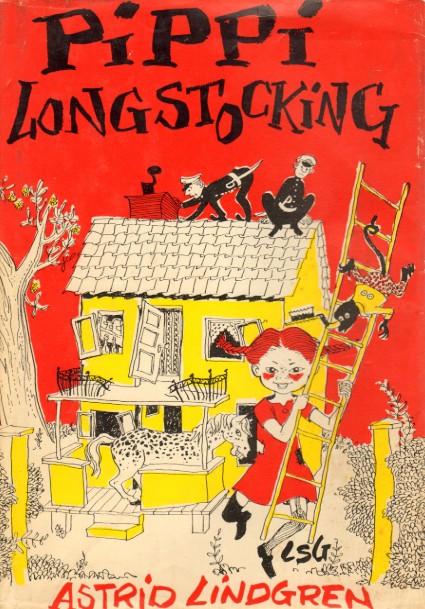
Published several decades even before my own birth, Pippi was the title character in Swedish writer Astrid Lindgren’s series of books. Pippi was a nine-year-old girl with superhuman physical strength, extraordinarily unconventional, fiercely independent and a particular disdain for pompous adults. In today’s terms, she would probably have been called quirky. She was a character unlike any ever created before her and Lindgren herself has said, “Everything great that has ever happened in this world happened first in somebody’s imagination.” But the truth is that even imagination needs to be fed.

Here are some key lessons I learned from Pippi.

  • Unique characters are compelling characters. Pippi is extraordinary—a strong, independent girl who defies societal norms. Her quirky traits, like her incredible physical strength and her freckled face, make her unforgettable. Writers can take inspiration from this by giving their characters unexpected qualities or contradictions that set them apart.
  • Showing the reader rather than telling the reader leads to a more engaged reader. Lindgren doesn’t simply describe Pippi as adventurous or generous; she shows it through Pippi’s actions—like hosting wild tea parties, standing up to bullies, and sharing her wealth with friends. Writers can aim to reveal character traits through behaviour and dialogue rather than exposition.
  • You can address serious themes with humour. This has been key for me in recent years. In Pippi’s world, the tone of the story may be funny, but there is always a serious theme: loneliness, loss, and societal expectations. My own recent fiction has been, on the surface, satirical and funny. However, the themes are much more profound for readers who care to look.
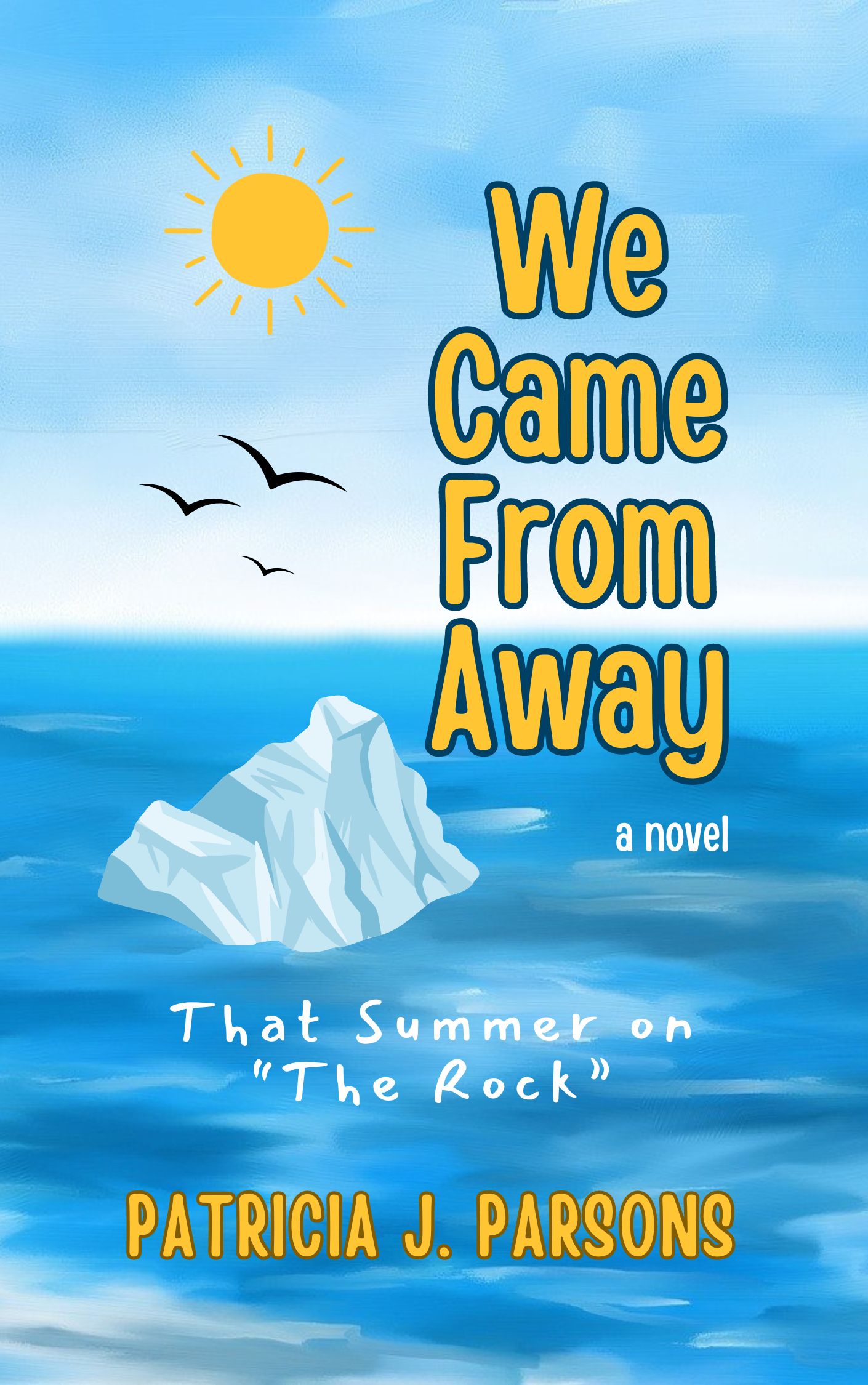
  • The setting can be a character. Pippi’s home, Villa Villekulla, mirrors her personality: colourful, chaotic, and full of surprises. I have learned to make the setting an extension of a character in some instances and a character on its own in others. When I wrote We Came from Away, I left little doubt but that the island of Newfoundland is a character unto itself.

I still have a copy of Pippi Longstocking on my bookshelf—in hardback. And I still cherish it. What’s your favourite childhood book?
Posted in Ideas generation, Writing, Writing craft

Travel: A Writer’s Greatest Inspiration

My travel obsession started when I was in grade four. An impressionable nine-year-old, I loved school and always paid close attention to my teacher, making me both a nerd and an A-student. Imagine my fascination when my teacher returned from Christmas break after a trip to Hawaii with slides! I could not even imagine how far Hawaii might be, but I knew I’d visit someday. It was at that moment that I started clipping travel advertisements from magazines.

Travel with my family generally involved a road trip from wherever we were living at the time (my father was an army officer, and I was an army brat) to visit my grandmother in the summer. By the time I was in high school, I was familiar with most of the eastern part of Canada and the northeastern part of the US, but I’d never even been on an airplane. When I was twenty, all that changed.

Fast forward to today when I can look at a map of the world and start chiming off all the places I’ve been: all over Canada and the US, England, Scotland, Ireland, France, Spain, Italy, Portugal, Turkey, Croatia, Monte Negro, Morocco, Venezuela, Peru, Ecuador, Chile, Brazil, Japan, China, Tahiti, Samoa, Fiji, Australia, so many Caribbean islands…and the list goes on. And yes, I’ve now been to Hawaii twice.

Last year, my husband and I spent an in-depth time in a part of Canada that I hadn’t had much chance to visit. We did a cross-island tour of Newfoundland. That tour is now the basis for a forthcoming book.

I’m just back from Brazil (Rio, Sao Paulo, Salvador, Recife and the Amazon River!), and I’m already inspired by that trip. (This is Copacabana Beach from our hotel in Rio.)

I already have a book idea that will be set in the Amazon. But setting a book in a specific place isn’t the only way travel inspires me. There are so many layers of richness that travel experiences can add to whatever you’re writing, whether nonfiction, fiction, short or long form.

As I mentioned, we know that travel exposes you to diverse landscapes, cultures, and cities that can serve as compelling settings for your writing. Whether it’s the bustling streets of Sao Paulo, the Amazon rainforest, or the historic towns of Europe (or even a city you can drive to in under an hour), each place has its own unique atmosphere and character that can spark your imagination and provide a vivid backdrop for your stories.

Travel also allows you to explore different cultures, allowing you to gain firsthand insights into customs, traditions, and ways of life. This cultural exposure can lend authenticity and depth to your writing, enabling you to portray characters and settings with greater nuance and realism.

Travel often involves stepping outside your comfort zone—sometimes just eating a bug—and encountering new challenges. These experiences can prompt personal growth, self-reflection, and transformation. Drawing from your own travel experiences can infuse your writing with authenticity and emotional depth.

No one can argue that travelling doesn’t expose you to new people who might be local residents or could even be fellow travellers. Each of them has a unique story if you only listen. Paying attention to these interactions provides a wealth of material for character development, dialogue, and plot inspiration.

As I mentioned, I’m just back from the Amazon River. There is no doubt in my mind that travel experiences that involve exploring new landscapes, from mountains and rainforests to oceans and deserts, can inspire in so many ways. Last summer in Newfoundland, I was inspired by the majestic fjords and the Tablelands of Gros Morne National Park, not to mention the puffins in Bonavista. Nature’s beauty can evoke powerful emotions and sensory impressions that can be expressed in your writing, whether through descriptive passages or thematic exploration.

Of course, travel often involves visiting historical sites. If you’ve ever travelled in Europe, you’ll probably have heard the familiar lament, “Not another church!” Well, sometimes it does get to be a bit much, but visiting historical sites and architectural marvels can spark curiosity about the past and inspire historical fiction or imaginative reinterpretations of historical events. Learning about local history can add depth and authenticity to your storytelling. Last summer in L’Anse aux Meadows, the site of the first European visitors to North America (the Vikings—over a thousand years ago), I could almost feel the thrum of history. And yes, the experience features in an upcoming book.

In general, travel provides a break from routine and everyday obligations. Travel can offer you a space for your creativity to flourish.

Remember, travel doesn’t have to mean getting on a plane and going a long distance from home. If you live in a city, I’d bet there are parts you’ve never visited. If you live in a rural area, get in the car and go into the city. And when you get there, open your eyes, ears, mind and heart. Then go home and write!

Posted in Ideas generation, Writing, Writing craft

Five Tips for Generating New Writing Ideas

if you’d prefer to see me talk about this, scroll to the bottom and click to the video at Write. Fix.Repeat.

People often say that there are no new ideas, only regenerated ideas- that everything is some kind of a rehash of what’s already been done. I don’t see it this way. What’s more, if you don’t have any new and innovative ideas or are not interested in the mental gymnastics of attracting new ideas, you should stop writing. No one wants to read the same old thing over and over again.

Okay, you might use familiar frameworks (mysteries often have similar frameworks), but your story doesn’t’ have to be in any way the same as someone else’s. So, if you’re having trouble with new ideas, let me help you turn on the faucet.

  1. Pay attention to details around you. Be a keen observer. Listen to people talking. Stop walking down the street, gazing into your phone.
  2. Check on what’s trending on social media and make notes. Don’t get caught falling down an SM rabbit hole, though. This misstep can be a time suck. Be focused. Pass right on by anything that doesn’t ‘grab you sufficiently to compel you to write a note about it.
  3. Read feature stories in the news. The odder, the better. Don’t just stick to the main news stories. (I’m making the reasonable assumption that writers read the news daily.)
  4. Journal about what you see and hear. Then play “what if” with yourself in your journal.
  5. Go on an “artist date” with yourself. Plan what writer Julia Cameron[1] calls an “artist date.” Go to an art gallery, a fabric store, a museum, a free concert. Eat at a restaurant that serves ethnic food you’ve never eaten, 

Writing prompts: Best left for writing practice (not idea generation).

Here’s a link to “Inspiration Snips,” video writing prompts for all you visuals out there.

Watch this topic on Write. Fix. Repeat.

[1] Julia Cameron. 1992. The Artist’s Way: A Spiritual Path to Higher Creativity. Tarcher Perigree.