Posted in Writing books, Writing craft

“Write what you know” – An outdated concept?

I just finished reading B.S. Shapiro’s extraordinary novel The Art Forger.  Not to give it away (because you really ought to read it), it’s the story of an aspiring artist who makes her living wage doing reproductions of famous artwork that are sold as that – copies.  She does “copies” not forgeries – which is all about the intent of the piece.

I picked the book up in the first place because it is at least partly about Edgar Degas’ work, and I’ve been 20,000 words into a manuscript that revolves around Degas’ ballerina sculptures for several years now, having put it on the back burner while I finished other pieces of writing for publication (and in the meantime noting that I’m not the only writer of historical fiction who has found this an interesting subject).  To say that I’m a devotee of Degas’ work might be stretching it a bit, but I am a fan, and I find some of the unanswered questions about historical characters too tantalizing to ignore (remember my book about Edgar Allan Poe?).

"More than a century and a half have passed since Edgar Allan Poe died, alone in Baltimore in 1849, and still no one really knows how - or even why he was in that city. But Bridget knows, and this is her story."
“More than a century and a half have passed since Edgar Allan Poe died, alone in Baltimore in 1849, and still no one really knows how – or even why he was in that city. But Bridget knows, and this is her story.”

Anyway, as I read the book, I felt myself becoming very educated about the fine points of both the art and the science of oil painting.  I relied on the author of this fictional piece to have done her homework: I wanted to believe in the details that so made the story feel authentic and rich.  But I always kept in the back of my mind that this is a work of fiction…so the question always becomes: where is the line between fiction and fact drawn in these kinds of tales, and does it matter?

Most authors whose  fictional work touches on real people, places and things take great pride in doing their homework, and there is usually a note in the book somewhere indicating the aforementioned line: where researched facts give over to the imagination of the writer. So what, you might reasonably ask, does this have to do with the question of whether or not we should take heed of the old adage: “Write what you know”?  It occurs to me that in these days of the World Wide Web, we can “know” a great deal more than we used to!

There was a time when research was much more difficult.  If you’re as old as I am, you might remember slogging to the library to comb through page after page of real reference guides, real books, and real documents.  I have to say that I think back on those days with fondness; I truly enjoyed those hours spent among the great tomes crammed with information just aching to get out.  The trouble was just how long it took to actually find that information that would provide those all-important nuggets that add depth and breadth to a piece of writing.

The truth is that today, we can become semi-experts in many topics if we know how to do the research.

Writing in the New York Times earlier this year, Ben Yagoda, author of How to Not Write Bad: The Most Common Writing Errors and the Best Ways to Avoid Them and a faculty member in the English Department at the University of Delaware, clarifies for us as follows:

“Writers who are intimately familiar with their subject produce more knowing, more confident and, as a result, stronger results…the idea is to investigate the subject till you can write about it with complete confidence and authority. Being a serial expert is actually one of the cool things about the very enterprise of writing…”[1] 

And therein lays the wonder of these days of information overload: for writers, this overload is among the most essential tools in our toolboxes.

The trick, as with all tools, is to become an expert at using it!

As my own writing segued from non-fiction into fiction, I’ve been forever grateful for the research skill I was able to hone through the years.  For any of us who are writing fiction with a basis in fact, those skills are crucial to the authentic voice we all seek.


[1] Ben Yagoda.  Should we write what we know?  The New York Times online, July 22, 2013, http://opinionator.blogs.nytimes.com/2013/07/22/should-we-write-what-we-know/?_r=0
Posted in Book publishers, Writing books

Author photos & bios: Do you care?

Before we went away for Christmas, I cleaned off a few shelves in my office.  One of them was the shelf on which I keep copies of my own books.  Making the obvious decision that to keep more than one copy of any book on that shelf was using up prime real estate, I piled the extra copies on the floor.  When the pile fell over, I noticed the photos on the backs of many of them: I noticed that I seemed to have used the same head shot for several.  This started me wondering if they were at all important (and if I should have one more professional one taken).

I want to start this discussion by finding out if any of my fellow readers & writers have given much thought to these photos and the accompanying bio.  So…before I continue to write, I offer my completely unscientific poll to any reader inclined to weigh in before I tell you the back story of those author photos on my covers.

[This poll refers only to non-fiction selections: I’ll get to the fiction one in due course!]

Posted in Writing books, Writing craft

Finding my point of view

“What’s your point of view?’

Whenever you hear that question directed toward you, what do you think? For anyone who isn’t a writer, it’s simple. The question is asking if you have an opinion, a perspective, a personal take on something. When a writer is faced with that question, it takes on a whole new meaning – and it’s something that I’ve been thinking a lot about lately as I consider my next major writing project.

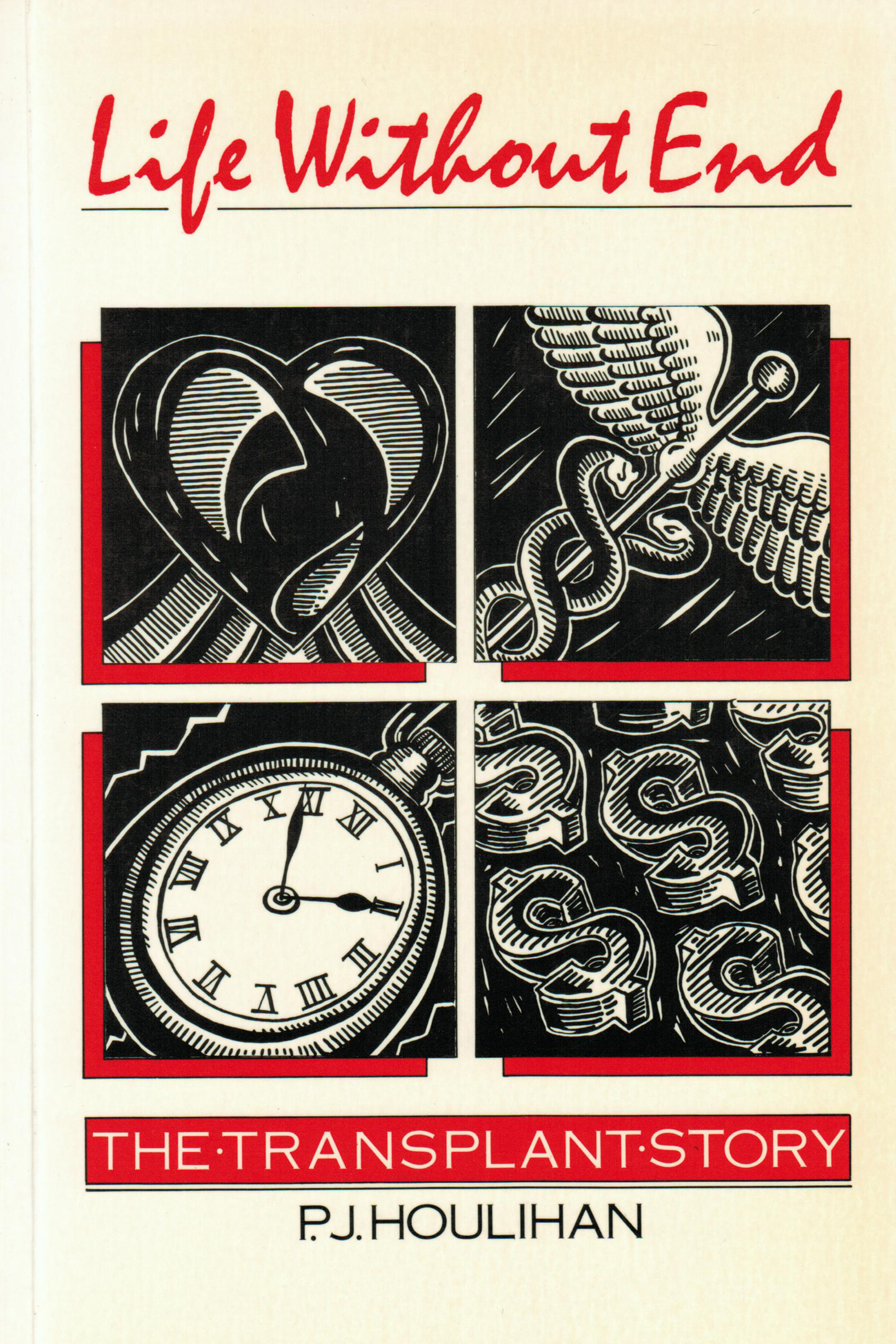
For many years as a non-fiction writer, it was fairly straightforward: my writer’s point of view was my bias. When I wrote my first-ever-published book way back in the dark ages, it was about the ethics and politics of organ transplantation.

My point of view, or my bias, was clear from the outset. The book began with a section called “A Parable.” My story-within-a-story was about a Transplant Surgeon who presents himself to St. Peter at the Pearly Gates. St. Peter tells the Transplant Surgeon that an unusual situation has developed: God would like a few one-on-one personal words with him before a decision about granting him access to heaven is made. God has a few questions for the Transplant Surgeon.

life without end
My First Book

“Who decides if a person needs an organ?” God says.

“Well, I do,” says the Transplant Surgeon.

“Who decides which person gets the organ when there are not enough to go around?”

“Well, I do.”

“Who decides if someone’s life should be saved with this organ?”

“Well, I do.”

“Who decides when technology has been stretched to its limit?” This is God’s final question.

The Transplant Surgeon is becoming increasingly uncomfortable.

Finally God says, “I am afraid that I am going to have to find another place for you other than Heaven…I just can’t afford the competition.”

…and with that, the author’s point of view is clear and sets the stage for the pages that follow.

It is true that a non-fiction author can try to be objective (that’s the purview of the journalist, I think, although objectivity in reporting these days is a bit difficult to find), but usually there is a purpose to the writing and that purpose as articulated from the outset sets up the bias. If I want to write a story about what happened on September 11, 2001, I have to decide on a “slant.” Will I tell a survivor’s story? A firefighter’s story? A victim’s story? My selection of that viewpoint will dictate the kind of research that I’ll have to do and eventually the bias that the story will hold. But, the story is still circumscribed by the facts – even if I choose which ones I’ll use. The same is not true for fiction.

Fiction writers have a lot more leeway. I don’t have to be reined in by facts when I write fiction. I can choose the ones I want to incorporate and even change ones that need changing to fit the story. There’s something a bit freeing about that, don’t you think? The problem when beginning to tell a story, however, is that a writer has to make a decision about point of view. The decision has to be deliberate, and then the voice has to be consistently used throughout the story if it is to hold any plausibility for the reader.

We all learned about the difference between first and third-person story telling when we were in fourth grade or thereabout. But there are other considerations. Here’s my current dilemma.

I have an idea for my next historical novel. The inspiration came from a picture of an object that I think would be interesting to follow through an historical journey. I could take on the role of narrator myself with an omniscient viewpoint and tell the story through generations. Or I could make it a first-person account; however, since I plan for it to cover several centuries, the first person will have to change from one character to another since people inevitably have to die. Or will it? What about first-person, inanimate-object perspective? Inanimate objects can endure through the ages and we’ve often said, “If only [it] could speak.” Well, why can’t it speak and be that narrator for us?

Obviously, this is not a new idea. Others have done it before. What I’m not entirely sure about, though, is if it works. Can a reader suspend his or her disbelief long enough to really believe that this object is telling a story? Does the inanimate narrator have to break through that fourth wall and speak directly to the reader? If so, is there anything wrong with that?

As you can see, the selection of point of view is an important one. It’s almost as if I can’t even complete the research until I know how my head is viewing the material. If I’m going to be a character (a person) in the story, I’ll have to think about the material in one way. On the other hand, if I’m going to be that object (if anyone asks, I might tell you what the object is), I’ll be thinking about the material I uncover quite differently. It’s time I decided.