Posted in Writing craft, Writing Nonfiction

5 Tips for Tightening Your Writing

Seventeenth-century philosopher Blaise Pascal once wrote the following:

I would have written a shorter letter, but I did not have the time.

Clearly, he had an innate sense that tight writing takes time―and is preferable in many ways. The concept of “writing tightly” is one that all writers have to come to terms with at some point in a writing career. The reason this is so important is simple: tight writing is more likely to be published.

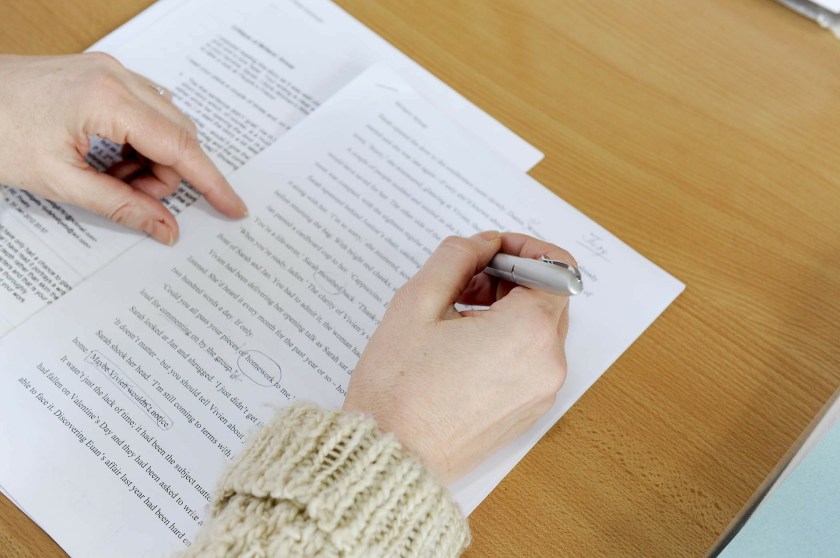
When an editor tells you that you need to tighten your writing, what does that mean? If you think it means to trim your narrative of all unnecessary words and phrases, then you’d be right.

Tight writing is important because it compels the reader through your copy, whether it’s your book, feature article, blog post, or advertising copy. Loose, wordy writing slows the forward motion of the story and bores readers.

In this week’s video, I explain my five tips.

Tips summarized:

  1. Use fewer prepositional phrases.
  2. Eliminate filler words.
  3. Use strong stand-alone words instead of weak words padded by adverbs.
  4. Remove redundancies.
  5. Read everything you write out loud and listen to it carefully.

Some extra resources for you:

Common Redundancies in the English Languagehttps://www.thoughtco.com/common-redundancies-in-english-1692776

Linda Alley. Why Tight Writing is Not Just for Journalists. https://medium.com/@linda_44105/why-tight-writing-is-not-just-for-journalists-bd037d907447

Posted in Ideas generation, Writing, Writing craft

Five Tips for Generating New Writing Ideas

if you’d prefer to see me talk about this, scroll to the bottom and click to the video at Write. Fix.Repeat.

People often say that there are no new ideas, only regenerated ideas- that everything is some kind of a rehash of what’s already been done. I don’t see it this way. What’s more, if you don’t have any new and innovative ideas or are not interested in the mental gymnastics of attracting new ideas, you should stop writing. No one wants to read the same old thing over and over again.

Okay, you might use familiar frameworks (mysteries often have similar frameworks), but your story doesn’t’ have to be in any way the same as someone else’s. So, if you’re having trouble with new ideas, let me help you turn on the faucet.

  1. Pay attention to details around you. Be a keen observer. Listen to people talking. Stop walking down the street, gazing into your phone.
  2. Check on what’s trending on social media and make notes. Don’t get caught falling down an SM rabbit hole, though. This misstep can be a time suck. Be focused. Pass right on by anything that doesn’t ‘grab you sufficiently to compel you to write a note about it.
  3. Read feature stories in the news. The odder, the better. Don’t just stick to the main news stories. (I’m making the reasonable assumption that writers read the news daily.)
  4. Journal about what you see and hear. Then play “what if” with yourself in your journal.
  5. Go on an “artist date” with yourself. Plan what writer Julia Cameron[1] calls an “artist date.” Go to an art gallery, a fabric store, a museum, a free concert. Eat at a restaurant that serves ethnic food you’ve never eaten, 

Writing prompts: Best left for writing practice (not idea generation).

Here’s a link to “Inspiration Snips,” video writing prompts for all you visuals out there.

Watch this topic on Write. Fix. Repeat.

[1] Julia Cameron. 1992. The Artist’s Way: A Spiritual Path to Higher Creativity. Tarcher Perigree.

Posted in Books, Writing craft

Five Essential Books Every Writer Should Own

For most of my life, I’ve believed you could learn just about anything short of brain surgery from a good book. (My husband, a doctor, says you could probably learn a lot, even about brain surgery with the right book, too!). When you consider the rise of such book series’ as “Books for Dummies,” it seems clear that you can distill even the most complicated material into essential elements that just about anyone could understand. This observation is probably more accurate for writing than anything else.

Most of us who write these days don’t hold MFA degrees in fiction writing or journalism degrees if we’re nonfiction writers―and neither did most well-read writers throughout history. That doesn’t mean that you don’t have to learn about your craft. I believe it’s important to continually learn and improve even as your writing career achieves success. But, where to begin?

Courses, in-person and online, are often terrific ways to learn your craft. However, the most accessible place to start is with a growing library of your favourite writing reference books. And it’s not good enough that these books sit on your shelf to impress your dinner party guests. They should be read again and again, highlighted, underlined, dog-eared.

There are many well-crafted writing books that both inspire and instruct. There are also increasing h=numbers of books penned by writers who probably know little more about writing than you do. How can you decide which ones to choose to begin your collection?

I have five tips for five of what I consider to be essential writing reference books, most of which have stood the test of time.

Here they are…