It’s time for me to begin to come clean about a part of my publishing backstory that I have yet to explore. That is the story about my relationship with editors and publishers. Apart from my periodic arguments with editors about comma placement or the use of the singular verb after “one of” (I lost that argument – seems that there are several different rules none of which I was privy to prior to meeting this particularly particular editor), my relationships have been based on a serious skepticism (on my part) about their ability to recognize a quality book or predict whether or not a book will sell. If an editor loves a submitted manuscript, he or she might go ahead and publish. That doesn’t mean anyone else will like it! I am also skeptical about their ability to actually sell a book. I’ll start at the beginning.
If you visit my web site that gives you chapter and verse on my books and other assorted writing through the years, you’ll see that my work has been published by a variety of publishers – different countries, different sizes, different missions – and even different publishing models.
Two of my co-authored books were actually published by the same publisher – and it’s that publisher that has me thinking about my journey through the publishing business over the past twenty-plus years. I’m thinking about it now because I have a book at this publisher again – a book that is half way through the review process, with positive signs all around, when the editor who is enthusiastically responsible for the project resigns to take up a new (and presumably more lucrative) position with another publisher. I can’t blame him, but I was informed about his imminent departure only two weeks in advance, and that was weeks before Christmas. I’ve heard nothing from the publisher since. Hello! Author out here! Anybody listening? If the percentage that an author receives from book sales is any indicator, I’d have to say that authors who are not famous (i.e. do not have name beginning with, let’s say for example “O”) are the lowest on the totem pole. Apart from how hard this is on one’s (my) ego, it just seems wrong to me.
So…back to the backstory. My first book was published by a small non-fiction, trade-book publisher in Toronto – that has since gone bankrupt. This isn’t surprising – happens to publishing houses all the time. Let that be a cautionary note to authors. But I’ve told that story before.
Since then, I’ve offered my books to a variety of publishers, many of which have actually offered contracts and eventually published them. But I’ve also ventured into self-publishing. Oh, yes. Self-publishing.
Before self-publishing had any kind of credibility (one of my assumptions here is that it has risen a notch or two on the cred barometer in recent years,) it was referred to strictly as ‘vanity publishing.’ Presumably it was vain for an author to pay to have his or her book published. I’ve never been sure why it isn’t ‘vanity recording’ when a musician pays to have a CD recorded and subsequently distributed, but I digress.
According to him, a man by the name of Jonathan Clifford coined the phrase vanity publishing around 1960.[1] Clifford’s lifetime crusade was for honesty in the vanity publishing world. It is true that over the years, authors who could not get – or did not try to get – mainstream publishers (more about that breed later) would pay to have their work produced, and those vanity publishers would suggest to the authors that they could, perhaps, just maybe, probably get rich. That was the problem. As Clifford says:
If you cannot find a mainstream publisher to publish your work at their expense, you must look on the whole process of publishing not as money invested to make you a return, but as money spent on a pleasurable hobby which you have enjoyed and which has provided you with well-manufactured copies of your book. If you do also manage to make a small profit, then that should be looked upon as an unforeseen and unexpected bonus![2]
Today, the notion of the vanity press (versus other self-publishing options) seems to be tied into the issue of promises made by these entities – promises that they cannot possibly keep – and into their lack of editing. So, the term self-publishing has arisen and seems to have taken on a less pejorative connotation.
Self-publishing, from the author’s point of view though, is exactly the same as vanity publishing. The author pays. And any author who thinks a publisher, regardless of whether they make you pay or they pay you, can predict much less guarantee sales success of your book, is naïve in the extreme. Unless you have a name that is widely recognized, there is no way to predict sales. This is where my personal skepticism begins to creep into the relationship between author and publisher. But, what seems like a hundred years ago now, I did take up with one of those vanity publishers two years after my first non-fiction book was published by a ‘real’ publisher.
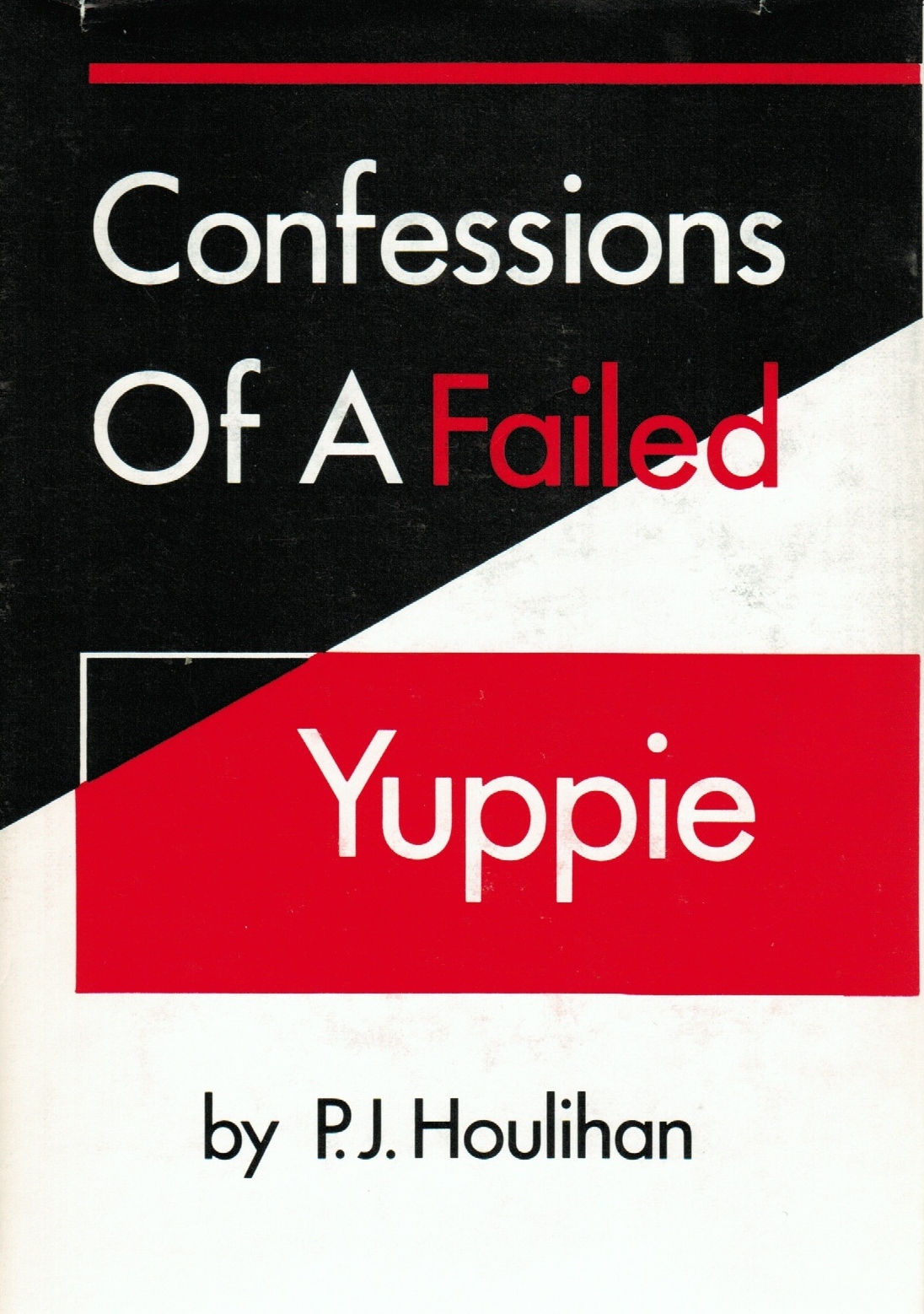
The book was called Confessions of Failed Yuppie. Yup. And it was funny. Without benefit of even a modicum of editing (not one syllable was altered nor one typo corrected), this vanity press took my substantial fee and provided me with two cartons of the 130-page, hard-covered books. I was thrilled. But something kept me from mentioning its provenance to anyone– although I’m not sure anyone would have cared. Many of my friends read the book and told me that they were amused. I even still get a small check every year from the Public Lending Right Commission because there are copies of it in libraries across the country. Anyone want to read it? [Side note: literary blogger Donigan Merrit tells the story in his blog entry dated September 8, 2011 that his first job out of undergrad was as a copy-editor for Carlton Press. It never occurred to me that they employed any!]
So, what’s wrong with this kind of model? What makes a vanity-published book, or a self-published book less worthy than a book published via the more traditional publishers? In a word, quality – but not necessarily quality of the content, story, theme or writing. Quality of the editing. Vanity publishers never offered editors. That’s where today’s self-publishing models differ from their predecessors. Today’s self-publishers often offer editing services – but you’ll have to pay for them.
Next week…Adventures in self-publishing.
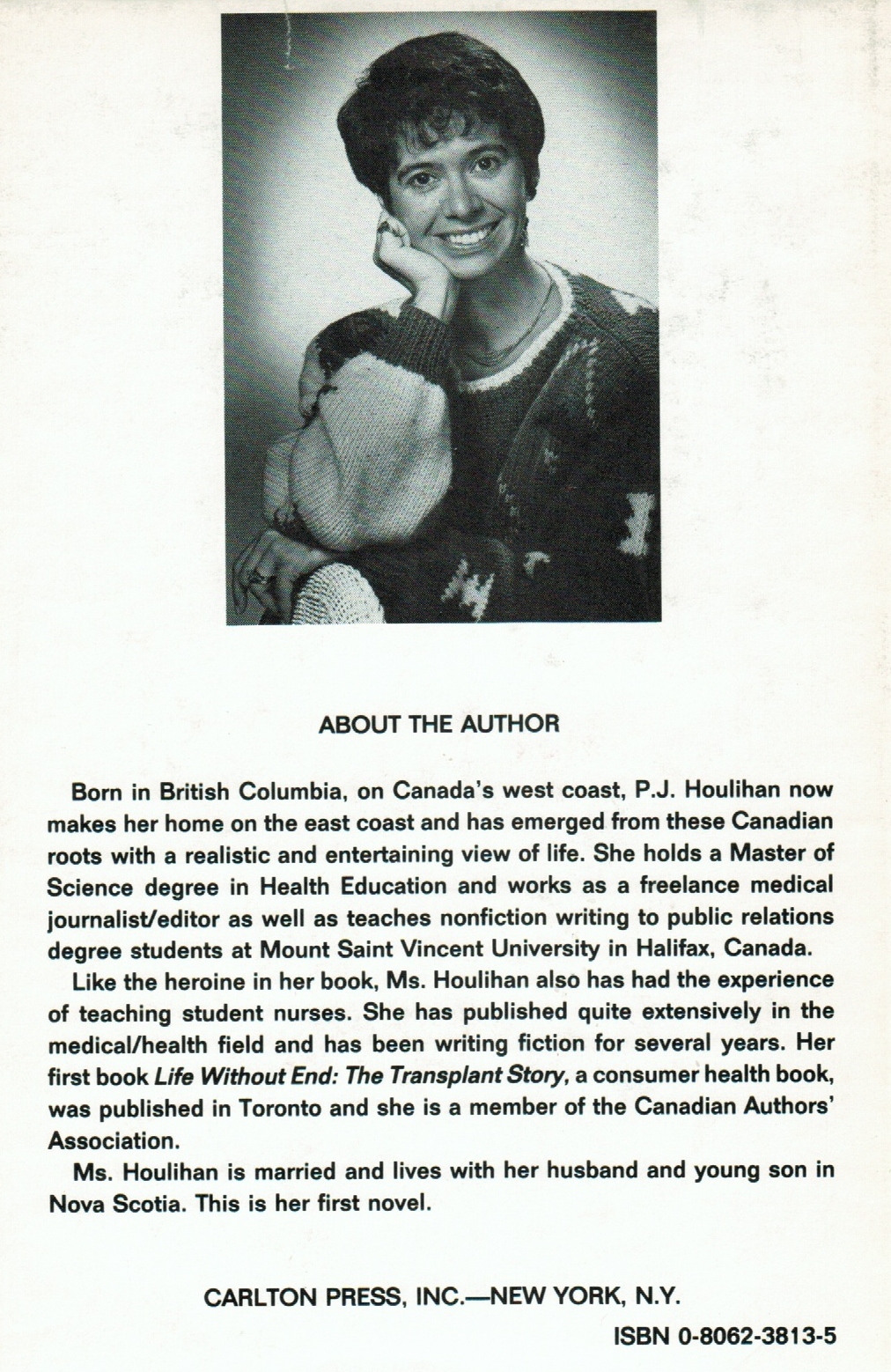
Want a laugh? Here’s the back cover of Confessions of a Failed Yuppie. Remember that it was 1991…
[1] Vanity Publishing: Advice & Warning. http://www.vanitypublishing.info/
[2] http://www.vanitypublishing.info/ [accessed January 24, 2012]




 Patricia J. Parsons