Posted in Book launches, Ethics

The Book I Was Probably Always Supposed to Write

One thing I’ve always considered to be important for writers is to be able to use their previous knowledge and skills in their writing. For me, that began with transferring my nonfiction research skills to historical fiction. Over the years, however, I’ve followed my bliss more or less and written whatever story crept into my mind. My new book is no different in that respect, but it has an added element of past knowledge, namely, my background in ethics. (Bet you didn’t see that one coming!)

When my novel We Came From Away was named a finalist for the 2025 Stephen Leacock Medal for Literary Humour earlier this year, some of my former students probably thought it was a clerical error. After decades of teaching ethics and corporate communication, I was about as funny as a midterm exam.

My new novel, though? This is the book they always suspected was hiding in me.

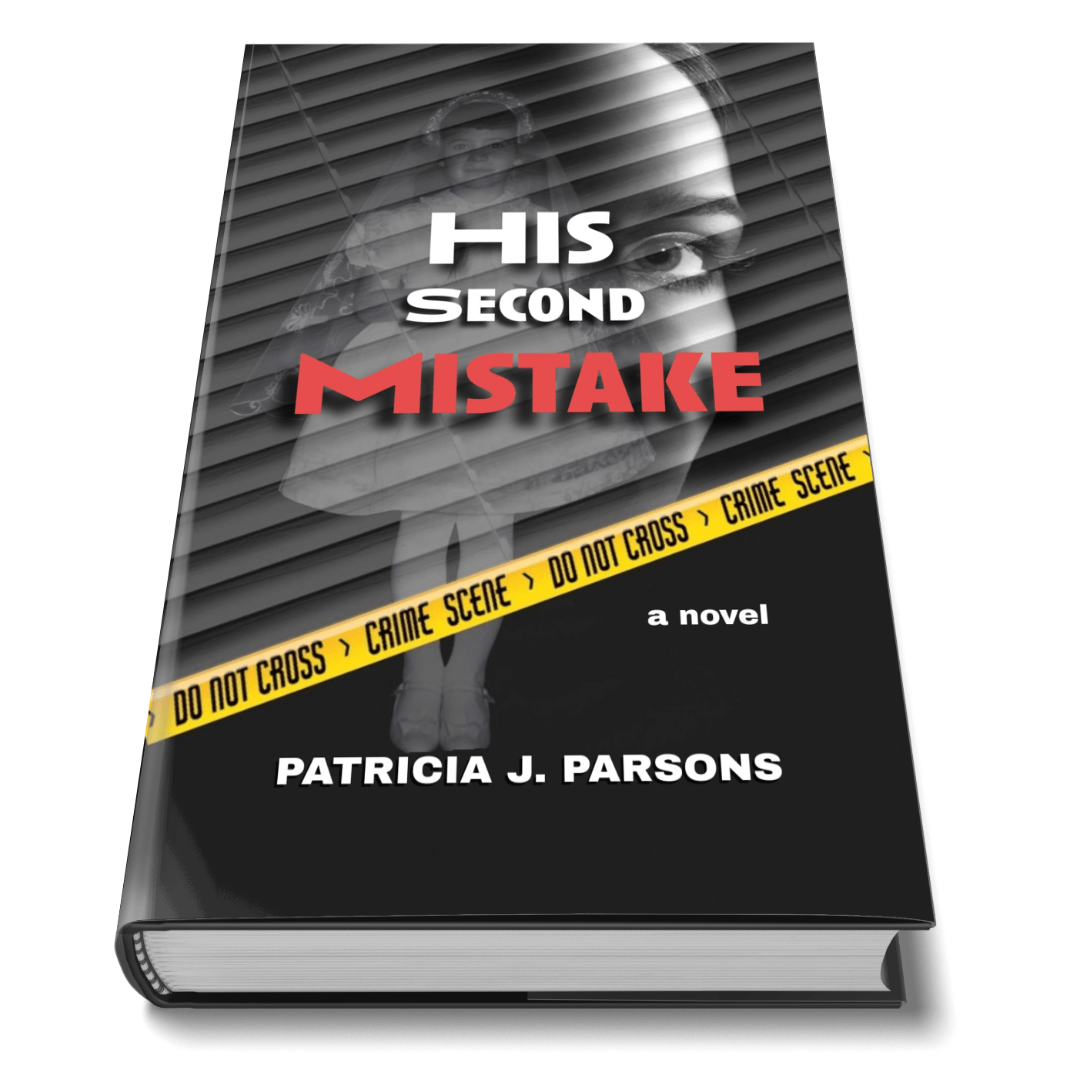
Edgy, baffling, intellectually unsettling, my new novel, His Second Mistake, challenges everything you ever thought you believed about what is good, what is evil and whether good is right and evil is bad.
The story:

Rachel Underwood has it all—wealth, influence, and a gleaming reputation as one of Toronto’s most admired crisis managers and philanthropists. But beneath the charm lies a lethal secret. Driven by her abiding sense of justice, Rachel is also a killer, methodically hunting men who abuse women and evade accountability.

Detective Hannah Novak, eager to prove herself in homicide, finds her own sense of justice tested when a string of suspicious deaths points to a woman’s hand—and to someone dangerously close to her.

What follows is a tense and deeply personal game of cat and mouse between two women bound by friendship, loyalty, and lies. As the truth edges closer, each must decide how far she’s willing to go—and what price she’s willing to pay—for justice.

His Second Mistake is a gripping, disquieting exploration of power, betrayal, and the ethics of vengeance—where right and wrong blur, and friendship may be the deadliest weapon of all.

Posted in Ethics, Self-Publishing

Ethical issues in self-publishing: Why you should care

It’s probably safe to say that most of us don’t think about ethics on a daily basis―at least not consciously. But every once in a while, we see, read or hear something that makes us think that something is not quite “right.” Something about it makes us feel that it’s just wrong. That something might be perfectly legal but still doesn’t feel right. That’s your internal ethical compass telling you to look at the issue more closely. The problem is, often, when we ought to see something as not quite right, we don’t even notice. Self-publishing comes to mind.

Writers have been self-publishing for many years. Mark Twain, Edgar Allen Poe, Beatrix Potter and Virginia Wolff come immediately to mind, giving self-publishing what should be a kind of positive cache. However, the image of self-publishing has, over the years, diminished in the eyes of many―the media, literary critics and even many readers are among those who often carry a negative prejudice toward self-published works and their authors. This bad reputation is not always unjustified. There are myriad ethical transgressions perpetrated by self-publishers every day. These are the activities and people who give everyone a bad name.

Historical novelist Jane Steen in her article, “Opinion: Why We Need to Talk About Ethics in Self-publishing,” suggested we should be concerned about ethics because “we owe it to our readers,” but perhaps even more importantly,” We owe it to ourselves. Our indie career is not just about the books we write. It’s about the person we are” because improving the image of self-published works is essential to broader acceptance and in the end, it has to be said, success as an author. 

My personal experience and observations suggest that a few key areas have contributed to negative perceptions and are ethical minefields for indie authors. They are behaviours to be avoided at all costs.  

  1. Writing 5-star reviews for crappy books:  It is beyond irritating to buy a well-reviewed book only to find it riddled with stylistic errors (grammar, punctuation, sentence structure etc.) at a minimum and just plain awful at the worst. Some indie authors write these reviews for others to ensure glowing reviews for their own publications. This is dishonest and, therefore, unethical. Don’t do it.
  2. Asking friends and family to write glowing reviews for your books: This is hardly a third-party endorsement. These individuals are biased and likely want you to succeed, so their reviews are not objective. Readers are looking for objective, honest recommendations. This is unethical. Don’t do it.
  3. Buying reviews: Since the surge in self-published books, a whole industry has grown up for paid book reviews. You can find thousands of review writers more than willing to write and post (for a fee, of course) glowing reviews for you. Traditionally published authors can also use this disingenuous practice. Any way you look at it, it is a dirty practice and should be avoided at all costs. Dishonest. Unethical. Don’t do it.
  4. Flooding the ebook stores with appallingly poor, ill-conceived ebooks: There is another cottage industry that has grown up around the notion of simply writing ebooks on anything you can think of merely to generate income. This practice is one of the most insidious ways that the reputation of all self-published authors is dragged through the mud. Unless you are an expert on your subject matter, step away from the computer with that brilliant idea for an ebook. 
  5. Over-inflating your wonderfulness and success: This is so problematic in the self-publishing industry. Every time someone sells themselves to me as “best-selling” or “award-winning,” I get out Mr. Google and have a look. That award should have been from a credible, well-known organization, and you had better have had a best-seller on the New York Times (or equivalent) best-sellers list, or you’re padding. This is dishonest. Unethical. Don’t do it. (If you want to see how even being on these lists can be dishonest, read “Here’s How You Buy Your Way Onto The New York Times Bestsellers List.”)

There have been several bloggers who have suggested codes of conduct for self-published authors. They are worth reading and are among the following list of pieces you should read if you care about your reputation as a self-published author.

Some Resources for You

The Mystery of the Book Sales Spike http://www.wsj.com/articles/SB10001424127887323864304578316143623600544

Opinion: Why We Need to Talk About Ethics in Self-publishing http://www.selfpublishingadvice.org/opinion-ethics/

Here’s How You Buy Your Way Onto The New York Times Bestsellers List http://www.forbes.com/sites/jeffbercovici/2013/02/22/heres-how-you-buy-your-way-onto-the-new-york-times-bestsellers-list/

Ethical Author http://www.selfpublishingadvice.org/alli-campaigns/ethical-author/

Ethics in Self-Publishing : An Indie Author’s Manifesto http://martinfhengst.com/publishing-authors-manifesto/

Code of Ethics for Self Published Authors vs. Hell http://houseoflit.org/?page_id=222

8 Issues In Author Ethics http://thoughtcatalog.com/porter-anderson/2014/08/8-issues-in-author-ethics/

Posted in Writing, Writing craft

5 tips for writers to make better use of their blogs

You have a blog, don’t you? If you don’t, you might consider starting one―but probably not for the reasons you think.

I can’t remember what I was thinking when I started this writing blog in 2011―ten years ago. My writing life was at a different point then, and the objectives I had at the time no longer make sense. Yet, I continue to write. I took a hiatus for a while when my career and life didn’t give me much extra time, but I always come back to it. I use it for lots of things, although lately, I seem to be focusing on giving writing advice. This focus is merely an evolution reflecting both me and my career.

My first blog post was called A book’s backstory…or a writer’s backstory? And this is, of course, the reason why this blog is called Backstory. In that post, I considered whether I’d focus on my own backstory (a slice of the writer’s life kind of thing) or my books’ backstories (my process and plans). In the end, I didn’t have to make a decision. It simply evolved. And you don’t have to make a decision either. You just need to blog.

There’s a tendency for writers to feel one of two ways about a blog. Either they think a blog is simply a tool for selling books, or they think it’s a waste of time. I believe that it is neither and that there are good reasons for you to consider blogging.  Chief among them is that a blog is a space where you can build your reputation as a writer while connecting with readers through a feedback loop. Lots of great ideas come from readers, you know.

Consider spending five minutes watching the video linked below for my details on the tips.

  1. I suggest that you begin with an objective or two. Even if you’ve been blogging for a while, are you really sure why you’re doing it? Are you sure about what you’re trying to accomplish? This is where you begin. Then it can evolve.
  2. Consider using your blog for writing practice. We all need to practice our writing, and not all our writing belongs in long-form material.
  3. Use your blog to write about interesting finds from your research that didn’t make it into a book or article. You might even find, through writing, this becomes the basis for a new piece.
  4. Conduct an annual review of your blog. This is something I should have done from the beginning. I do it now. I answer a couple of questions: Am I still focused on my objectives, or have I steered off into another territory? Is that where I really want to be?
  5. Do not turn your blog into a selling tool. Like your website in general, avoid, at all costs, the temptation to use your blog to bludgeon readers with a sales pitch for your books. Of course, you can mention your books. After all, that’s why many of your blog readers are following you. But don’t’ short-change them by promoting your books in every blog post.

Obviously, there’s a downside to blogging: it takes time. However, I think this is time well spent if your blog is focused and stays on point. You need to write something every day, and it doesn’t have to be on a major project. Perhaps your blog is a way for you to get in that writing, even between projects. Keep in mind that a blog can also be a good way to grow your audience, but it will be time better spent if you focus on what it can do for your writing rather than your sales.

Oh, and make sure it’s well-written and looks professional.