The point of view you choose for writing your book will have a significant impact on both how you shape the narrative and how your readers engage with your story. There’s lots of noise in online writers’ groups about which point of view is the best point of view. Know this: no one point of view is objectively better than another point of view. However, there may be better points of view to take in a specific story.
I’ve written a lot of nonfiction—in third person—and, more recently, fiction, most of which has been from a first-person point of view. (I’m not even going near second-person for narrative writing.)
We can debate until the cows come home whether first or third person is a better point of view for readers, and you will never have an answer. In this video, I’m sharing some tips on writing effectively in first person.
In first-person POV, the narrator is a character within the story, narrating events using pronouns like “I,” “me,” and “my.” First-person can offer intimate access to the narrator’s thoughts, feelings, and experiences, creating a strong sense of immediacy and personal connection with the reader. However, as the writer, the limited perspective offered by the first person can be problematic for you as you tell the story. To do it well, you have to stay in the narrator’s head, thus limiting the information that you, as the writer, might want to reveal. Remember, you can only convey through the character what the character—narrator—knows. You have to use other devices, such as dialogue with others, to tease out the story as others see it. Examples of popular and classic books written in first-person POV include The Hunger Games, The Catcher in the Rye, The Bell Jar, The Great Gatsby, To Kill a Mockingbird, Wuthering Heights, Rebecca, Jane Eyre, and The Handmaid’s Tale, to name a few.
Here are some of the things I’ve learned about first-person storytelling.
Whenever you hear that question directed toward you, what do you think? For anyone who isn’t a writer, it’s simple. The question is asking if you have an opinion, a perspective, a personal take on something. When a writer is faced with that question, it takes on a whole new meaning – and it’s something that I’ve been thinking a lot about lately as I consider my next major writing project.
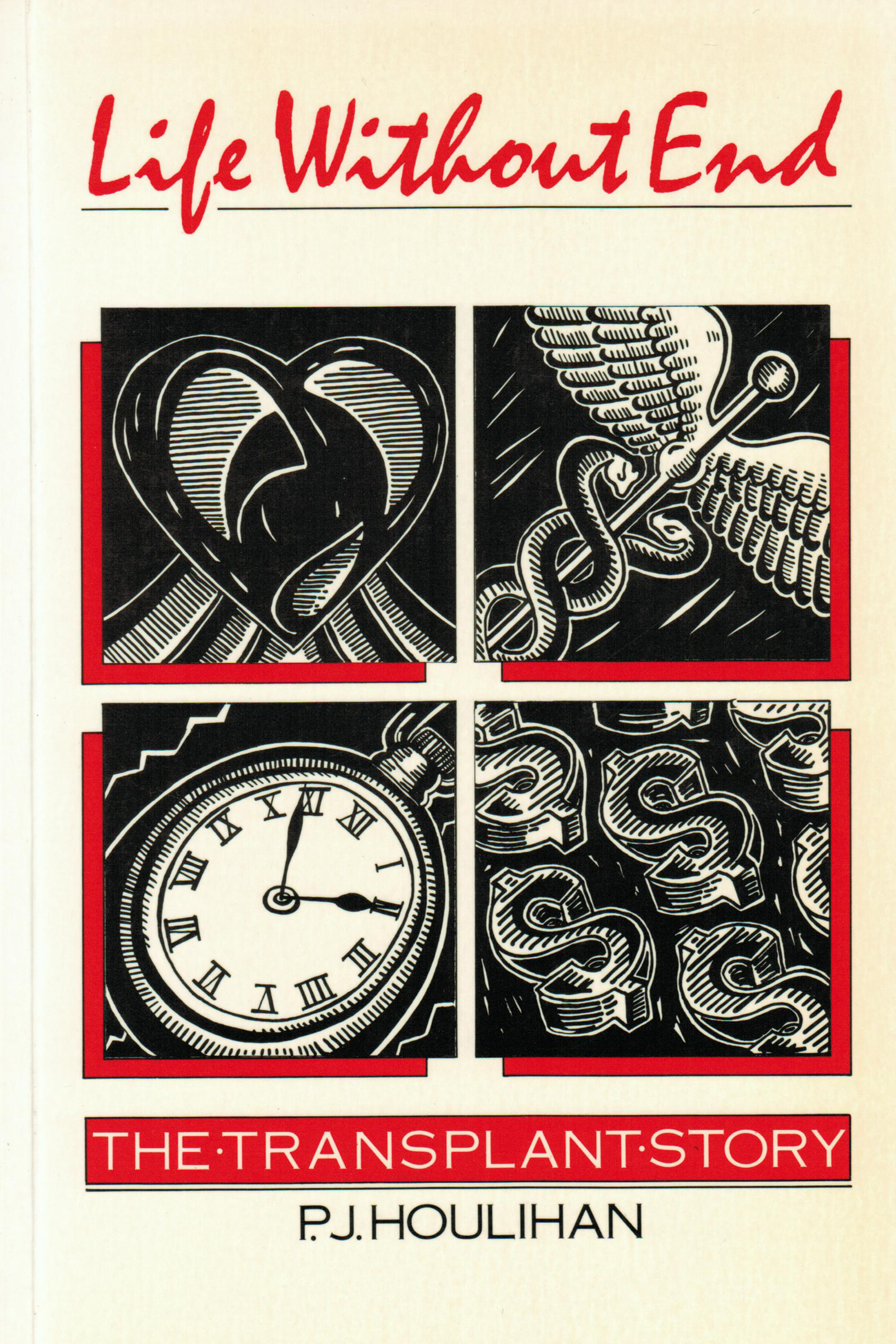
For many years as a non-fiction writer, it was fairly straightforward: my writer’s point of view was my bias. When I wrote my first-ever-published book way back in the dark ages, it was about the ethics and politics of organ transplantation.
My point of view, or my bias, was clear from the outset. The book began with a section called “A Parable.” My story-within-a-story was about a Transplant Surgeon who presents himself to St. Peter at the Pearly Gates. St. Peter tells the Transplant Surgeon that an unusual situation has developed: God would like a few one-on-one personal words with him before a decision about granting him access to heaven is made. God has a few questions for the Transplant Surgeon.
My First Book
“Who decides if a person needs an organ?” God says.
“Well, I do,” says the Transplant Surgeon.
“Who decides which person gets the organ when there are not enough to go around?”
“Well, I do.”
“Who decides if someone’s life should be saved with this organ?”
“Well, I do.”
“Who decides when technology has been stretched to its limit?” This is God’s final question.
The Transplant Surgeon is becoming increasingly uncomfortable.
Finally God says, “I am afraid that I am going to have to find another place for you other than Heaven…I just can’t afford the competition.”
…and with that, the author’s point of view is clear and sets the stage for the pages that follow.
It is true that a non-fiction author can try to be objective (that’s the purview of the journalist, I think, although objectivity in reporting these days is a bit difficult to find), but usually there is a purpose to the writing and that purpose as articulated from the outset sets up the bias. If I want to write a story about what happened on September 11, 2001, I have to decide on a “slant.” Will I tell a survivor’s story? A firefighter’s story? A victim’s story? My selection of that viewpoint will dictate the kind of research that I’ll have to do and eventually the bias that the story will hold. But, the story is still circumscribed by the facts – even if I choose which ones I’ll use. The same is not true for fiction.
Fiction writers have a lot more leeway. I don’t have to be reined in by facts when I write fiction. I can choose the ones I want to incorporate and even change ones that need changing to fit the story. There’s something a bit freeing about that, don’t you think? The problem when beginning to tell a story, however, is that a writer has to make a decision about point of view. The decision has to be deliberate, and then the voice has to be consistently used throughout the story if it is to hold any plausibility for the reader.
We all learned about the difference between first and third-person story telling when we were in fourth grade or thereabout. But there are other considerations. Here’s my current dilemma.
I have an idea for my next historical novel. The inspiration came from a picture of an object that I think would be interesting to follow through an historical journey. I could take on the role of narrator myself with an omniscient viewpoint and tell the story through generations. Or I could make it a first-person account; however, since I plan for it to cover several centuries, the first person will have to change from one character to another since people inevitably have to die. Or will it? What about first-person, inanimate-object perspective? Inanimate objects can endure through the ages and we’ve often said, “If only [it] could speak.” Well, why can’t it speak and be that narrator for us?
Obviously, this is not a new idea. Others have done it before. What I’m not entirely sure about, though, is if it works. Can a reader suspend his or her disbelief long enough to really believe that this object is telling a story? Does the inanimate narrator have to break through that fourth wall and speak directly to the reader? If so, is there anything wrong with that?
As you can see, the selection of point of view is an important one. It’s almost as if I can’t even complete the research until I know how my head is viewing the material. If I’m going to be a character (a person) in the story, I’ll have to think about the material in one way. On the other hand, if I’m going to be that object (if anyone asks, I might tell you what the object is), I’ll be thinking about the material I uncover quite differently. It’s time I decided.
 Patricia J. Parsons