Posted in Reading, Writing craft

The beauty of a deadline… (OK, don’t shoot me!)

A few weeks ago I picked up a book that I didn’t realize was about deadlines.  Okay, I now recognize that Chris Baty’s entertaining little book No Plot? No Problem isn’t supposed to be about deadlines, but it is.  Baty, the creator of the National Novel Writing Month says this in the first chapter:

Deadlines are the dynamos of the modern age.  They’ve built every city, won every contest, and helped all of us to pay our taxes reasonably close to on time…a deadline is…optimism in its most ass-kicking form…a potent force… (p. 26)

…and it occurs to me that I’ve been sympathetic to this point of view for many years.  Just ask my students!

A deadline changes everything about any project that you plan to implement.  It moves you past the planning stage and drops you head first into the implementation phase, forcing you to consider milestones along the way.  And when the deadline is imposed by an external force (like your boss or your professor or your editor) those deadlines take on even greater importance.  Or do they?

I have about a dozen writing projects on the go right now.  Some of them are actually academic (low on the priority list at this point in my career), some of them are creative, and some of them are strictly personal.  The one project that gets done every week is my contribution to the travel blog I write with my husband.  Why?  Because I have a self-imposed deadline.  I made a personal commitment to a certain number of posts at certain intervals when we started on this project (which will become a book in due course) last fall, and I have neither looked back nor shirked my deadlines since.  The truth is that I have never missed an externally-imposed writing deadline, and now it occurs to me that when I have actually taken the time to create personal deadlines, my work has progressed faster and more efficiently than the more organic, artistic approach to work schedules that seem to be common among the ‘creatives’ of the world.

Case in point: I had almost forgotten, but a number of years ago I decided that I’d take a foray into screen-writing.  I think it’s because I see plot and dialogue as a kind of film running through my head when I write narrative, so I thought I might capitalize on that tendency.  I registered for a script-writing course, and set about learning the nuts and bolts of the process (not to mention learning about the paranoia that seems to run rampant through the film industry: no one wanted to share their ideas for fear of them being stolen – this never seems to happen in the world of books!).  After the course was finished, I had a notion of script framework, ideas and scraps of dialogue, but not much else.  So, I did what I always do, I bought a book on script-writing.

In fact, I bought several, but the one that really got me to a different level is not Robert McKee’s classic (and wonderful)  book titled Story; rather it is a small book called How to Write  Movie in 21 Days by Viki King.  I followed her framework for getting to a finished 90-minute script in 21 days and it worked.  I have the proof of it sitting in a drawer just waiting for a producer/director to snatch up Something I’m Supposed to Do.  But I had not noticed that her admonitions about deadlines really got inside my head.  In fact she says, “…your deadline…is your friend.  Focus to reach your deadline.  Make it your priority.  Sleep, food and phone are secondary to the deadline…” Okay, this was published in 1988.  These days she would have had to add a list of social networking sites to avoid – but I digress.

The bottom line is that if I impose a deadline on myself, I get it done.  It’s time I stopped flailing about trying to get the parts of my new novel (actually novels, and articles, and blog posts) perfect, and just get them finished.  There will always be time for editing later – with an editing deadline, of course!

Novelist Rita Mae Brown said: “A deadline is negative inspiration.  Still, it’s better than no inspiration at all.”

Posted in Book publishers, Self-Publishing

Holding self-published writers to account for quality

At the same time as I was contemplating what to do with my book that has reverted to me from a [now-defunct] publisher, I was preparing for my spring semester of teaching at MSVU.

One of the courses I’m currently teaching is related to my original area of specialization in communication: namely health communication.  I’ve written a lot in that area – including some four or five books – and had included a magazine health feature writing assignment for the undergraduate students in the course (there are also some Masters-level students who will do an analysis and critique rather than write a piece).  Since it’s been some years since I personally did medical feature writing, I thought that I’d update my reference materials so that I might be able to offer to the students a selection of recommended resources.  To that end, I began my book search where I usually begin: Amazon.  To my surprise, the up-to-date offerings are slim.  Of course, that always makes me see a trade literature gap; which makes me consider how to fill that gap; which makes me wonder if I have the expertise to write such a book…but I digress.

As I made my way through the list in search of what might be a useful book, I came upon one titled Popular Health & Medical Writing for Magazines.  I thought, well, that sounds just like what the students might need, so I ordered a copy to review it.  I evidently was remiss in my usual vetting of online book offerings.

I usually “look inside” reviewing the title page, table of contents, copyright page to see who published it and author bio to check for credentials.  I failed in my due diligence.  Published by iUniverse, the book turns out to be one of many (and I do mean many) books that this author has self-published.  Now, I’d be the last one to dismiss a book simply because it was self-published – many very worthy books have been published by the authors themselves over the years and I have dabbled in it myself as I’ve revealed in earlier posts – but when I began to look closely at the credentials of this “popular science journalist”  (as per the book description and her web site which I have sadly subsequently perused), I was hard-pressed to find those credentials that would lead me to recommend her work.

Her other books include such things as How to write plays, monologues, or skits from life stories, social issues, current events: For all ages, How to start personal history and genealogy journalism businesses: Genealogy course templates…, Creating family newsletters and time capsules: How to publish multi-media genealogy periodicals or gift booklets, and Middle eastern honor killings in the USA (a novel, I believe), among many others.  In fact, at the top of the author’s web site it says that she has published 80 paperback books, and half way down the front page it says 65+.  Okay, I guess that could mean 80.  Hmm…

I have no quibble with writers having wide interests – I suffer from that myself, so can identify – but I think that there needs to be some area of expertise that can be identified if we look closely.  And for someone to be writing a book about how to write health and medical pieces for popular media – well, let’s just say that I expect to be able to see that they have a grasp both of medical science and of journalism.  That was not evident – and I’m very sad to report that the self-published book that I paid for is bewildering at best.

Why I didn’t look at the first chapter title and get a clue is beyond me: “Making medical language specialists; Turning medical transcribers into medical writers and editors.”  The idea that all you need to be a medical writer or editor is to have experience as a transcriptionist made me see red.  Then sandwiched between a chapter titled “What to emphasize in medical writing…” and “Writing the self-help article” is a chapter titled “Writing about DNA and gene hunters.”  This made me begin to question both the framework and the agenda of the book.  Then the last chapter in this medical writing primer puzzled me even more: “Medical writing about pets: Care, food, travel, adventures, history, genres…”  What the h***?

So, I decided to actually read the book.  If I thought that the framework didn’t make a lot of sense, the individual chapters had something of a flight of ideas as well.  Then when I came upon this particular piece of advice: “…medical writers can also sell (or represent) the product discussed in the research and writing…” I slammed the book shut, realizing that there was a serious dearth of ethical considerations among the pearls of wisdom.   This led me to consider the following question:  Should I write a review on Amazon to save other bona fide budding medical writers from buying this book?  Or should I just let it go?

I had a sense that I didn’t want to hurt the writer’s feelings.  Where did that thought come from?  If self-publishing is to be thought of as a legitimate route to authorship, then writers need to be held to the same standards and measured by the same yardsticks as those published via the more traditional routes.  In these days of “everyone is a writer” and “everyone is a publisher” we do need some quality controls and if writers themselves are not prepared to do this, then writing and publishing is doomed to mediocrity or worse.

Clearly, the self-publishing model as it stands now is in serious need of reconsideration.  The problem is that the really well-written and edited self-published books do hold their own against anything that a more traditional publisher can produce.  Sadly, there is no way to figure this out unless you do what I did – and you buy it.  By then it’s too late.

So, it’s back to the drawing board to find another book for my students.

Posted in Publishing, Writing

Setting priorities: A writer’s lament

Lately, it seems that I’ve been spending far more time on creating blog entries (mostly on The Discerning Travelers) and trying to figure out Pinterest (in fairness, I’m once again teaching a course on Social Media to our graduate students this spring and need to keep up), than I have been doing real writing.  I seem to have a notion that there is real writing and there is – other stuff.  But what, precisely is real writing and why do I think it has to be my priority?

…just as I was considering this question, I opened up my email and found a message from one of my publishers.  This is a publisher that I haven’t heard from in some two years – nope, not even a royalty statement – that is unless you count an email from someone in the office there suggesting that I pay them for the 100 books they sent to me that I did not order.  When I told them that I would send them back to them when they sent me a royalty statement (because, as I mentioned casually to them, they were in breach of contract), I never heard from them again.  Until today.

It seems that the company is being liquidated.  Further, it seems that the authors were aware of this; the publisher herself is ill.  Funny about that – I’m one of their authors and I didn’t know.  So, what this means it that all rights to the book revert to me and I can do with it what I want.  This raises a few important questions for an author.

First, I’m wondering what, if anything, I ought to do.  I immediately sent them an email asking for a specific confirmation of the revision of all rights and for all of the electronic files related to the work.  Which begs the second question…

What should I do with the files when I get them?   What I am certainly not going to do is to buy their copies that are currently housed in a warehouse at the University of Toronto Press which distributes for them.  I was never all that happy with the quality of the actual physical book in any case.  So, if I do anything with it, I do it myself.  Which leads to the next question…

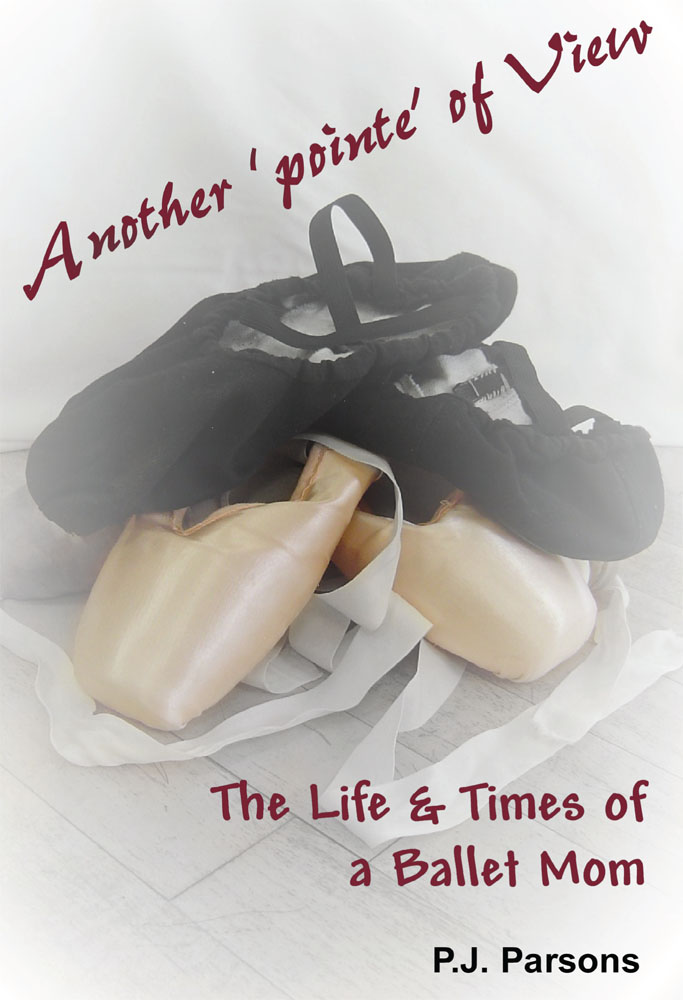
Is the book still current enough for it to be made available on other terms?  Since it is a memoir, it isn’t really out of date, and if a bit of effort were put into marketing (that was never done by the publisher in the first place – I did it all myself), it could re-emerge as both a physical book and as an e-book.

And all of this leads me to the final, and perhaps more philosophical question:  Why did I even proceed with having it published by a traditional publisher in the first place?  I could have done as good a job on my own, had as much reach on my own and kept control. This is a problem with many small publishing houses – they don’t have the resources needed to do a really professional job.  I’ve reflected on the models of publishing before, and now I’m more convinced than ever that we do need to find a new model that captures the best of the traditional approach to publishing while at the same time manages to put the author front and center, rather than the publisher.  The author needs to be in the driver’s seat in my view.

So, does all of this have any relevance to the question of real writing and the priority it need or need not have in a writer’s life?  It does insofar as it takes me back to a piece of writing that, by all accounts, seems like real writing.  And it gives me yet another reason to procrastinate from finishing the novel that languishes among the electronic files on my computer in a file titled…well, I’m not going to tell you yet.

Suddenly, my priority focus, for better or for worse, is on a book that I thought had been put to bed.  Now I just have to decide if I should tuck it in and turn off the lights, or wake it up and have a party.