Posted in Nonfiction Writing, Writing, Writing craft

People Drive Stories: Tips for Creating Compelling Characters in Fiction and Narrative Nonfiction

Earlier this week, one of my regular viewers on my YouTube channel WRITE. FIX. REPEAT. asked me if I’d consider doing a video on creating compelling characters. As readers, we know that the people who populate the pages of novels, memoirs and other forms of narrative nonfiction are the life and breath of the story. As writers, even if a story’s plot idea inspires us, we know that it will be the characters who will need to inhabit our imaginations and tell their stories. At least, that’s how it is for me.

Characters are crucial for engaging storytelling. And it doesn’t matter if you’re writing fiction or narrative nonfiction. People make your stories come alive.

You know this when you’re reading a novel, but it’s important to remember that there are characters (even if they’re real people, they’re still characters) in narrative nonfiction.

For example, a few years ago, my husband (who happens to be a medical doctor) wrote a book called Life is Terminal: A Doctor’s Common Sense Guide for Making it to the End.
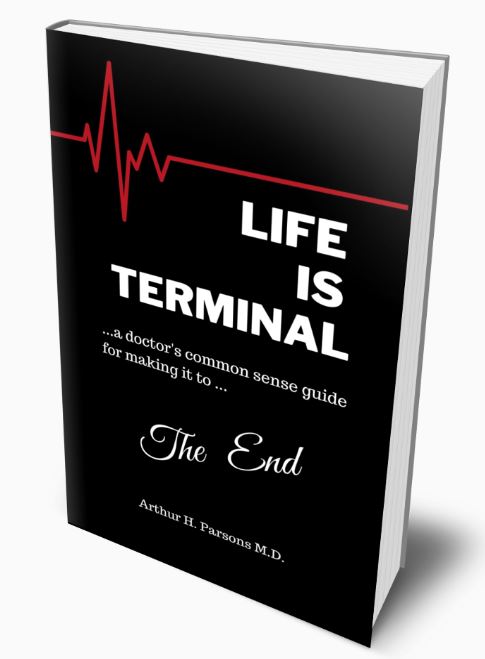
Although this title makes it sound like it’s completely prescriptive nonfiction (which it primarily is), it also has a narrative component. Woven throughout the book is a series of connected stories about a family doctor from the beginning of his practice to the end, illustrating how the ideas and concepts in the book evolved. Creating a character, even in this kind of nonfiction, is key to connecting with readers.

After my viewer asked me about developing characters, my first thought was that I didn’t really create them. Rather, they talk to me and create the stories in my novels. But that’s not entirely fair. At some point, there are actual approaches writers take, either consciously or not, to make characters more engaging.

I have five tips to help you create dynamic, real people in the pages of your stories.

First, give characters depth and complexity. Characters, like real people, need multifaceted personalities. You probably already know this. So, how can you make this happen? Try to avoid stereotypes and clichés. Give your characters a mix of strengths, weaknesses, quirks, fears, and desires.

We can illustrate different sides of our characters’ personalities through their actions, dialogue, and inner thoughts. Consider their backstory and motivations; what drives them to act the way they do? Creating a character’s backstory is one of the ways to ferret out motivations. Try a writing exercise: write in first person from each character’s POV and let them tell their own backstory. Of course, this is for your eyes only! We all know it’s unnecessary (and not appropriate) to spill a character’s entire backstory for the reader.

I also think it’s important to craft characters who are relatable and human. Characters should jump off the page (or screen) and into the minds of the readers. Readers connect with characters they can empathize with. Writing teachers often talk about endowing characters with relatable traits. What exactly makes a character’s traits relatable? In the main, these are personality traits that the audience might share and thus understand. And this goes for demonstrating emotion as well. It’s important to show their vulnerabilities and struggles.

Even in extraordinary circumstances, let them react in ways that feel authentic and understandable. As the story progresses, so should the characters.

There’s always been a question about creating a visual reality for each character. How much should you describe? I believe we need to create a visual reality for our characters by incorporating memorable visuals and details, but we need to be mindful of overdoing this kind of description.

Use clear descriptions to bring your characters to life. Highlight distinctive physical attributes, mannerisms, and unique characteristics (but don’t think you need to describe every detail—leave some things to the readers’ imaginations).

But characters don’t connect with readers—or readers don’t connect with characters—unless those characters compellingly demonstrate their individual motivations and goals. Characters aren’t that interesting unless they have reasons for their actions to drive the plot forward. The main question you should be able to answer: What does your character want? What obstacles stand in their way? Their desires and conflicts should be integral to the storyline, creating tension and intrigue.

Finally, but very important, characters talk. We give our characters a voice by using dialogue to create authenticity. Dialogue is a powerful tool for revealing character traits and relationships. We need to pay attention to creating distinctive speech patterns, vocabulary, and tone. Dialogue should feel natural and serve to deepen characterization. Avoid exposition-heavy conversations (characters should not constantly talk about things just so you can convey information to the reader); instead, use dialogue to show relationships, conflicts, and emotions.

Remember that compelling characters are the heart of any great narrative—they drive the story forward and keep readers invested in the outcome. What are your best tips for creating characters?

Posted in Ideas generation, Writing, Writing craft

Travel: A Writer’s Greatest Inspiration

My travel obsession started when I was in grade four. An impressionable nine-year-old, I loved school and always paid close attention to my teacher, making me both a nerd and an A-student. Imagine my fascination when my teacher returned from Christmas break after a trip to Hawaii with slides! I could not even imagine how far Hawaii might be, but I knew I’d visit someday. It was at that moment that I started clipping travel advertisements from magazines.

Travel with my family generally involved a road trip from wherever we were living at the time (my father was an army officer, and I was an army brat) to visit my grandmother in the summer. By the time I was in high school, I was familiar with most of the eastern part of Canada and the northeastern part of the US, but I’d never even been on an airplane. When I was twenty, all that changed.

Fast forward to today when I can look at a map of the world and start chiming off all the places I’ve been: all over Canada and the US, England, Scotland, Ireland, France, Spain, Italy, Portugal, Turkey, Croatia, Monte Negro, Morocco, Venezuela, Peru, Ecuador, Chile, Brazil, Japan, China, Tahiti, Samoa, Fiji, Australia, so many Caribbean islands…and the list goes on. And yes, I’ve now been to Hawaii twice.

Last year, my husband and I spent an in-depth time in a part of Canada that I hadn’t had much chance to visit. We did a cross-island tour of Newfoundland. That tour is now the basis for a forthcoming book.

I’m just back from Brazil (Rio, Sao Paulo, Salvador, Recife and the Amazon River!), and I’m already inspired by that trip. (This is Copacabana Beach from our hotel in Rio.)

I already have a book idea that will be set in the Amazon. But setting a book in a specific place isn’t the only way travel inspires me. There are so many layers of richness that travel experiences can add to whatever you’re writing, whether nonfiction, fiction, short or long form.

As I mentioned, we know that travel exposes you to diverse landscapes, cultures, and cities that can serve as compelling settings for your writing. Whether it’s the bustling streets of Sao Paulo, the Amazon rainforest, or the historic towns of Europe (or even a city you can drive to in under an hour), each place has its own unique atmosphere and character that can spark your imagination and provide a vivid backdrop for your stories.

Travel also allows you to explore different cultures, allowing you to gain firsthand insights into customs, traditions, and ways of life. This cultural exposure can lend authenticity and depth to your writing, enabling you to portray characters and settings with greater nuance and realism.

Travel often involves stepping outside your comfort zone—sometimes just eating a bug—and encountering new challenges. These experiences can prompt personal growth, self-reflection, and transformation. Drawing from your own travel experiences can infuse your writing with authenticity and emotional depth.

No one can argue that travelling doesn’t expose you to new people who might be local residents or could even be fellow travellers. Each of them has a unique story if you only listen. Paying attention to these interactions provides a wealth of material for character development, dialogue, and plot inspiration.

As I mentioned, I’m just back from the Amazon River. There is no doubt in my mind that travel experiences that involve exploring new landscapes, from mountains and rainforests to oceans and deserts, can inspire in so many ways. Last summer in Newfoundland, I was inspired by the majestic fjords and the Tablelands of Gros Morne National Park, not to mention the puffins in Bonavista. Nature’s beauty can evoke powerful emotions and sensory impressions that can be expressed in your writing, whether through descriptive passages or thematic exploration.

Of course, travel often involves visiting historical sites. If you’ve ever travelled in Europe, you’ll probably have heard the familiar lament, “Not another church!” Well, sometimes it does get to be a bit much, but visiting historical sites and architectural marvels can spark curiosity about the past and inspire historical fiction or imaginative reinterpretations of historical events. Learning about local history can add depth and authenticity to your storytelling. Last summer in L’Anse aux Meadows, the site of the first European visitors to North America (the Vikings—over a thousand years ago), I could almost feel the thrum of history. And yes, the experience features in an upcoming book.

In general, travel provides a break from routine and everyday obligations. Travel can offer you a space for your creativity to flourish.

Remember, travel doesn’t have to mean getting on a plane and going a long distance from home. If you live in a city, I’d bet there are parts you’ve never visited. If you live in a rural area, get in the car and go into the city. And when you get there, open your eyes, ears, mind and heart. Then go home and write!

Posted in Writing craft

Online Learning for Writers

It was probably the early 2000s. I was still a full-time university professor, and there was a newfangled thing in town: online learning. For as long as I can remember, the university where I taught had been at the forefront of what they called “distance education.” It was what we called “correspondence courses” in the early years. In the simplest of definitions, correspondence courses were those courses where the teacher and students communicated by mail―the old-fashioned kind. Picture it for a moment.

You are an aspiring writer living in a small town, miles from any place where you might be able to find even an evening course to learn something bout writing. You pick up a copy of Writer’s Digest magazine at your local newsstand, and as you’re flipping through those real pages, you come across an advertisement for a correspondence course.

An old advertisement from Writer’s Digest

You write to the company advertising the course, enclose your cheque to cover the course cost, and they send you course materials that contain instructions. When you’ve finished the first section of the course and completed the assignment, you put that assignment in an envelope and mail it to your instructor. Then you wait. (Not unlike waiting for an agent to get back to you, right? Perhaps it was good training after all!). The instructor grades your assignment and mails it back to you. Then you complete the next section, and the process presents itself until the end of the course. As I was writing this, I remembered that I had actually done this back in the early days of my writing career.

It was a novel-writing course, and the company promised to connect me with a fiction-writing teacher. The company sent me a binder full of materials, and I corresponded with the teacher, who critiqued my work all along the way. Slow but effective, in my view. Fast-forward to the twenty-first century and all our digital, online tools.

When my university began its foray into online learning, I was first in line in my department to begin the process of creating courses for online delivery. Courses designed to be presented in person don’t translate directly onto online learning platforms without significant alterations to how the content is chunked and presented. That’s why so many kids had so much difficulty with their schoolwork when their in-classroom learning suddenly moved online in the early days of the COVID-19 pandemic. I felt for them, knowing what I did about the differences between in-class and distance teaching and learning. However, a well-developed online course can be an excellent way to learn. And aspiring writers can learn so much from a really good online course. It doesn’t matter where you live anymore. You can find rich resources for online learning.

The online self-publishing space Kindlepreneur publishes a list of good online courses for writers every year. This year’s list, 16 Best Online Courses for Writers in 2022 [Free & Paid], includes courses for beginning writers, people who aspire to write children’s books, memoir writers, bloggers and much more.

Never let it be said that you can’t access or afford a course that might help you realize your potential to become a better writer. There are lots available.

And if you’ve ever considered writing a nonfiction book, you’ll need to write a book proposal. You might try this course…(you didn’t think I’d forget to plug my own course, did you??)

Of course, for my blog readers, I’ve created a special price that expires on June 17. Use the coupon code MAY2022BLOGREADER at this URL:

https://www.udemy.com/course/writingabookproposal/?

Coupon Code=MAY2022BLOGREADER

Some Resources:

Free Online Writing Courses. https://www.tckpublishing.com/free-online-writing-courses/

16 Best Online Courses for Writers in 2022 [Free & Paid] https://kindlepreneur.com/best-online-writing-courses/

A History of Correspondence Course Programs https://courses.dcs.wisc.edu/wp/ilinstructors/2019/07/25/a-history-of-correspondence-course-programs/#:~:text=The%20first%20known%20reference%20to,shorthand%20through%20weekly%20mailed%20lessons

Photo credit: https://www.writersdigest.com/there-are-no-rules/throwbackthursday-old-school-ads-writers-digest