Writers have been using journals of one kind or another for as long as there have been writers. Among them, Victor Hugo, Virginia Woolf, Sylvia Plath, Ernest Hemingway and J.K. Rowling who famously wrote out the first draft of her first Harry Potter book in a journal in a café in Scotland while on government benefits to help support her child – they all used them.
You have a journal, right? Or perhaps you have two? Or three or more? If you call yourself a writer, you keep a journal of one kind or another. (It could even be electronic these days but many modern writers, otherwise technologically savvy, still keep hand-written journals.)
So, you have that journal but are you using it to its fullest capacity?
Here are five ways to use those journals:
To practice your writing. Just like athletes and musicians, writers need to practice. You need…
Anyone who knows me knows that I was an accidental academic.
When I took my first part-time university teaching position so many years ago,
I had no intention of making it permanent. I didn’t see myself starting off as
a lowly assistant professor making my way up the academic ladder to associate
professor and finally the ultimate academic goal: Full Professor. But that’s
what happened. You know the old saying… “If you want to make God laugh, tell
her your plans…” Well, God must be laughing. Anyway, that happened, but that
part of my life is also over. And I find myself back where it all began: teaching
writing.
Yes, that first course I taught all those years ago was a
writing course. You see, I had already begun to carve out a path for myself as
a writer. I had published numerous magazine articles mostly in my specialty
area of health and medicine, and I had also already published my first book –
also in my specialty area. So, teaching writing seemed natural to me. And it
still does. However, my venue has changed.
This past year I finally pulled together thirty years of writing
and publishing experience to share it with the world. I thought I’d be able to
be a mentor to newbie writers just starting out. But something happened.
In the intervening years between when I first established
myself as a writer, and today, the writing and publishing industry has
undergone nothing short of a transformation. Everyone can be published today. No
one seems to need a publisher. Or even an editor. And so many writers are part
of an online writing community that oozes self-congratulation and disingenuous positivity
about everyone’s writing – all because you never know what someone else might
say about your writing. You pat my back and I’ll pat yours, or something
like that.
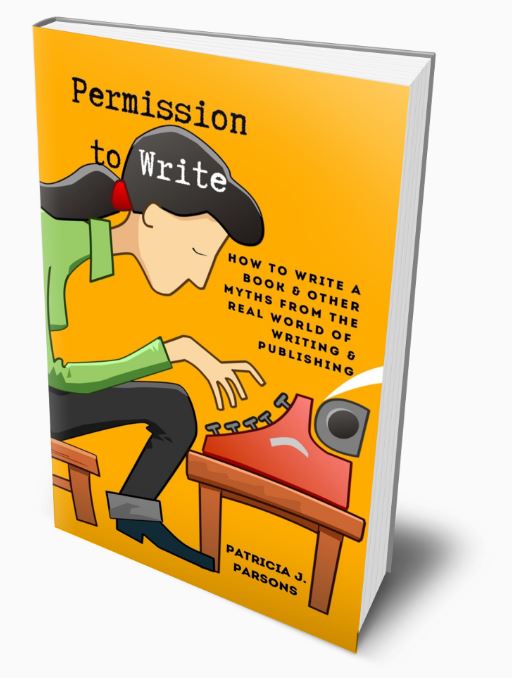
The upshot of this whole project was a book that seeks not only to provide a bit of mentoring to new writers but also to provide a foundation in reality and to disabuse writers these days of some of the myths about fame and fortune as a writer. The book is Permission to Write: How to Write a Book and Other Myths from the Real World of Writing and Publishing. I’ve also decided to share additional materials through the medium of video.
Thus, I’ve begun a 10-part series to accompany the book. The first episode “Want to be a rich and famous writer? Don’t give up your day job” is already up and running.
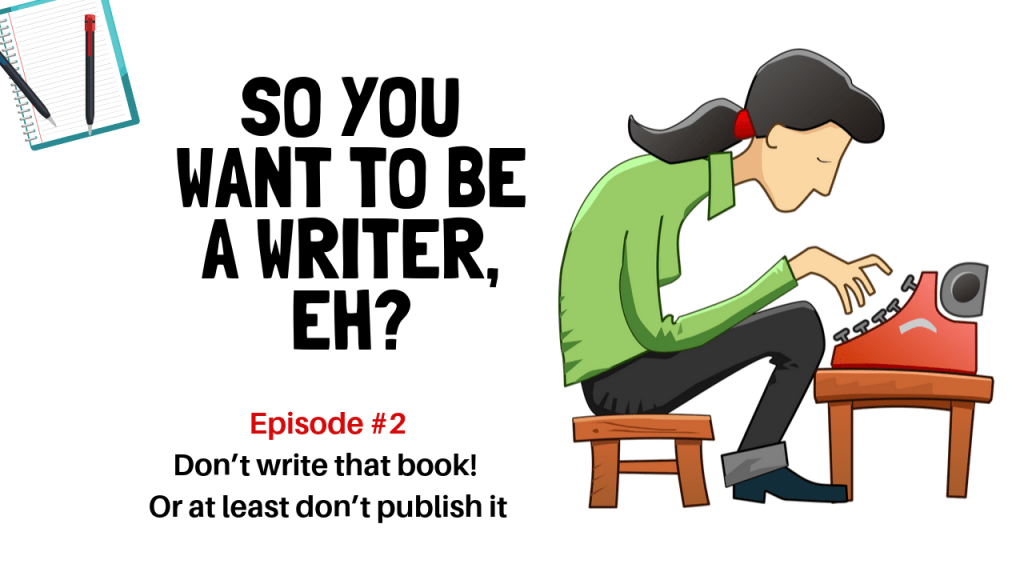
Today episode number two launches: “Don’t write that book! Or at least don’t publish it.”
So you can see that I don’t necessarily paint a rosy picture for wannabe writers. However, serious wannabe writers will get through them and still want to write that book. Those are the writers I aim to help.
The videos are posted on the Moonlight Press YouTube channel. Let your friends who “wanna write a book” know.



 Patricia J. Parsons