Backstory Blog

Posted in Book trailers, Books, Writing, Writing books

When a story takes over – a writer hangs on for the ride

In modern parlance, I’m what might be called a “plotter” when it comes to my writing. This is in contrast to those of you who are called “pantsers,” although I’m not sure why anyone would accept that slightly dubious moniker. Anyway, plotters plan things – characters, timelines, settings and, yes, plots. Pantsers go “by the seat of their pants” evidently. I plan.

I think my planning comes from my background as a nonfiction writer. To sell a nonfiction book to a publisher, a writer has to learn to write a dynamic book proposal. An, what is a book proposal except for a big, detailed plan? That’s what it is. So, when it comes to fiction, my tendency is to take the same approach. Up to a point.

I have a new book out this past week. I think it’s the best book I’ve ever written – but, as my mother used to say, “Self-praise is no recommendation.” Thanks, Mom. The thing about this new book is that I started out with a plan, but something or someone took over. I think it might have been Charlie. Let me introduce you to her in a minute. First, I want to talk about this writing process.

I started this book with a thin outline and an idea for a character. This character would make a discovery that would take her on a journey of discovery. I just didn’t know at the time that it would be a journey of self-discovery – for both her and for me. Charlie was supposed to be a kind of wise-cracking, sarcastic thirty-something with a penchant for seeing humour everywhere she went. Sort of like Jenn, the main character in my novel Plan B. I suppose the universe must be telling me that I need to diversify my contemporary women’s characters a bit because Charlie is not much like Jenn!

(When I write historical fiction, characters don’t seem to be wise-cracking, sarcastic women – but I suppose that’s an idea!)

As I began writing this book, it took on a whole different dimension – a whole different kind of disposition. It felt different to me as I was writing, and it looked very different when the story was out there in front of me.

Here’s what happened.

The book is The Year I Made 12 Dresses: The almost-but-not-quite-true story.

A struggling writer, an enigmatic shop clerk, an old sewing machine and an inspirational journey of discovery – where every dress is more than it appears to be.

After her mother’s unexpected death, struggling writer Charlotte (Charlie) Hudson moves into her family house after her older, mostly absent sister Evelyn instructs her to empty the family home of objects and memories to ready it for sale.

When Charlie stumbles on a dusty old sewing machine hidden away among the clutter of detritus in the basement, she has no idea of the journey it will take her on, or of the secrets it might reveal about her mother, her family and herself. If only she will let it.

With the help of an enigmatic fabric-guru named Al, Charlie discovers how little she really knows about anyone – especially herself.

So that’s it. And here’s the trailer…

Posted in Plagiarism, Writing, Writing Nonfiction

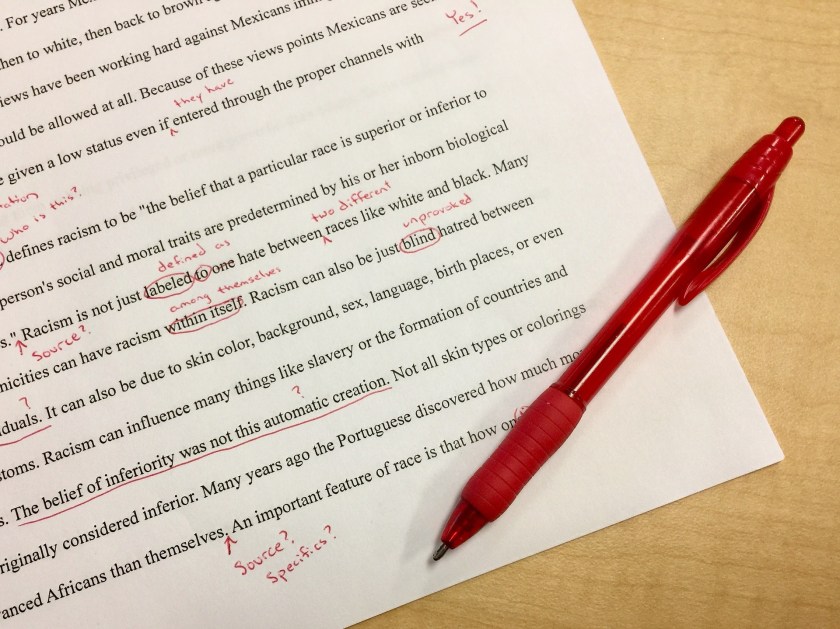
Self-plagiarism: A writer’s guide

Some years ago, I wrote a blog piece on self-plagiarism, a concept that seems to be largely unknown in circles of wannabe writers these days.

It seemed important at that time because I was still teaching full-time at a university, and a former student contacted me to ask for advice. She had been taught over and over again while she was student about the perils of plagiarism. According to how she told it, now that she was out in the work world, she was routinely asked to do what she believed to be plagiarizing. I wondered whether or not she was really defining plagiarism accurately, or perhaps there was a different crime that needed consideration. It turned out that it was a situation more akin to “self-plagiarism.”

Just to back up a bit: I was an accidental academic. I never intended to have a 26-year career that took me all the way up the academic ladder to full Professor. I was hired part-time while I was still mostly a writer as an instructor assigned to teach news and feature writing to undergraduates in a corporate communication program. Part of my mantra at the time – and one that continues in my world even today – is this: Recycle your research.

I have always held the belief that you never know when you’ll be able to re-package material for a different audience, in a different genre, with a different purpose. Why reinvent the wheel each time for each project? Is this plagiarism? Self-plagiarism? Does it even matter? In a word, yes. But let’s start with the basics.

Oxford University provides one of the most unambiguous definitions of plagiarism in general. This is what they say:

Plagiarism is presenting someone else’s work or ideas as your own, with or without their consent, by incorporating it into your work without full acknowledgement. All published and unpublished material, whether in manuscript, printed or electronic form, is covered under this definition. Plagiarism may be intentional or reckless, or unintentional.”

https://www.ox.ac.uk/students/academic/guidance/skills/plagiarism?wssl=1

Note the essential characteristic of plagiarism:

  • It is presenting as if it were your own, work created by someone else.
  • It might be with or without their consent. (If you have consent, you have to say so.)
  • You fail to acknowledge the work as not your own.
  • It might come from published work, but it could also be from unpublished work. It is still not yours.
  • It doesn’t matter if the work is in print or electronic form.
  • Even if you do it unknowingly, it’s still plagiarism.

So, you, the writer, look at this and say, “I never do this. I would never do this.” Then you turn around and recycle a piece you wrote on a blog somewhere and provide it to another blogger who believes it’s original. Or you lift a passage you particularly like from one of your books and put it into a new book.

“Well, I wrote it,” you say. That doesn’t matter. If the blog (or the reader) expects previously unpublished work, if you provide previously published material without telling them, you are still plagiarising. It’s just that this kind of plagiarism is self-plagiarism.

Dr. Ben Mudrak, writing in American Journal Experts Scholar, defines self-plagiarism this way:

“…any attempt to take any of your own previously published text, papers, or research results and make it appear brand new…”[1]

So, does this mean that my mantra about recycling your research to use in new and fresh ways, results in self-plagiarism? Not exactly, but it could.

To avoid self-plagiarism on my part, here’s what I said on that original blog post all those years ago:

“… strictly speaking, self-plagiarism is different from plagiarism by definition. Self-plagiarism in practice means passing off your own previous work as if it were new and original to the situation. So, if we accept this as the definition of self-plagiarism, then we have to accept that when new and original work is expected, it is not okay to use what you’ve written previously…[this] doesn’t preclude you from reusing your research. And ethically, I believe that this is where that black line has to be drawn...

Reusing research that you’ve used before – even using your own writing as a reference – seems to be completely acceptable. However, writing what is supposed to be – and is understood by your readers to be – an original piece (whether it’s for a magazine, a newspaper, a blog, an academic journal or a book) without referencing material that was actually written previously is in my view lying. You are essentially passing it off as original when it clearly isn’t…”

These days, writers who are trying to make a name for themselves look for opportunities to write for online magazines, book blogs or other kinds of platforms. It’s tempting to try to use the same piece for a variety of platforms, but it does constitute self-plagiarism unless you acknowledge its provenance.

Worse still, though, is the practice of newbie writers reusing old passages from their previously self-published work as if it were something new and fresh. Traditional publishers are likely to find these transgressions. Self-published authors have no third-party plagiarism checker. But beware. Readers these days are likely to find you out anyway…and tell the rest of the world in a review. You might want to avoid that.

And it’s just wrong, anyway.


[1] B. Mudrak. Self-Plagiarism: How to Define it and Why You Should Avoid It. AJE Scholar. https://www.aje.com/arc/self-plagiarism-how-to-define-it-and-why-to-avoid-it/

Posted in Uncategorized

Who’s on first: Understanding who’s who in book editing

There’s a lot of misunderstanding among new writers about the editing process and the specific responsibilities of specific types of professional editors.

I’ve tried to clear a bit of the fog over on the Moonlight Press blog today…

Patricia J. Parsons's avatarMoonlight Press

by Patricia J. Parsons

Writers write. Editors edit. It’s that simple. Right? Well, not really. Let’s take a trip through the writing-editing process from the beginning of an idea to when a book makes its way into a reader’s hands.

An idea forms in a writer’s head and that writer takes a unique, individualized approach to percolating the idea until it gets to a point of forming a story. Then the writer sits down in front of a computer (or less often, with a pen and paper) and begins to put words on the page. Those words accumulate through the writing process until, sometime down the line, a book is finished. Then what? The editing process begins, and it begins with the writer.

The first draft of anything is shit, or so said Ernest Hemingway. That means regardless of how experienced you are as a writer, you never publish…

View original post 606 more words