Anyone who knows me personally or knows my work also knows that I’ve been writing nonfiction for over thirty years. I started my career as a health and medical writer. After moving into medical communication and working as an academic and consultant, my writing focused on communications. I occasionally was able to mesh health and communication in my writing. Some of you still use my textbooks – I know this because I still get royalty cheques!
Now, as a recovering academic, I spend the bulk of my writing time writing fiction. Today, I launch my latest novel, “The Inscrutable Life of Frannie Phillips.”
I never really intended to write this book. In fact, when I finished The Year I Made 12 Dresses that launched six months into the pandemic, I thought I was finished with the main character, Charlotte (Charlie) Hudson. Not so much. Have you ever had a character whisper into your ear? Keep talking in your head? Generally, bug you until you had to write about her again? That’s where Kat’s Kosmic Blues came in. But it seemed she wasn’t finished there.
So, today, I launch The Inscrutable Life of Frannie Phillips and here’s my little launch party where I tell you about writing this book…
I started my writing career over thirty years ago. I began with a writing passion that had burned brightly since I was a teeny-bopper (does anyone use that word anymore?). I remember being twelve years old and wondered why a kid my age couldn’t write a book. Of course, anyone can write anything. As a writer matures, though, the question becomes not whether I can write but whether I should write. My answer was always a resounding yes. I had to write. What’s next, then?
For everyone who writes, there comes a time when we begin to think about getting what we write published. I started as a freelance health and medical writer because my educational background led me in that direction. But I wanted to do more. So, I wrote a book.
What did I know about writing a book? I did a lot of research. In those days, that research involved lots of writing books. There was no internet to browse, no other writers to connect with online. I was on my own. So, I read a lot of books and writing magazines, and I took a few courses. I learned a lot by trial and error. After my first book was picked up by a publisher and finally made it to trade paperback, I started teaching writing.
Along the way, I had also picked up a graduate degree in strategic health communication (like you do!). I began consulting in corporate communications alongside my writing, which led a corporate communication program at a local university to ask me to teach. I started teaching print media, essentially a writing and design course for print communication tools. That began an unexpected twenty-six-year academic career, ending up as a full Professor of Communication Studies. All along the way, I never stopped writing―both as a job requirement and for myself.
Most of my books were published by traditional publishers. Still, along the way, I took several forays into self-publishing, even publishing teaching materials that eventually became a book that I sold to a large American textbook publisher. Now, I write only for myself―women’s and historical fiction. (and the odd writing reference book when I have time_.
Over the years, I’ve learned a lot from a lot of people―readers, editors, students, book authors, YouTube video presenters, among them. Now, it’s time to give back.
I’ve also learned one more thing: time is a precious commodity. So, I thought, what if I could provide bite-sized pieces of writing advice to budding writers―and others who want a fresh perspective―in a format they could easily access?
Born from that idea is my newly launched series on YouTube. Write. Fix. Repeat. Making you a better writer, five tips at a time.
I’ve just uploaded the first episode based on a blog post I did last year on the five characteristics of great writing. I thought it might be a good way to get started.
If you’d like five tips a week, subscribe and come along with me on this journey. I guarantee we’ll all learn something―especially me!
Anyone who knows me knows that I was an accidental academic.
When I took my first part-time university teaching position so many years ago,
I had no intention of making it permanent. I didn’t see myself starting off as
a lowly assistant professor making my way up the academic ladder to associate
professor and finally the ultimate academic goal: Full Professor. But that’s
what happened. You know the old saying… “If you want to make God laugh, tell
her your plans…” Well, God must be laughing. Anyway, that happened, but that
part of my life is also over. And I find myself back where it all began: teaching
writing.
Yes, that first course I taught all those years ago was a
writing course. You see, I had already begun to carve out a path for myself as
a writer. I had published numerous magazine articles mostly in my specialty
area of health and medicine, and I had also already published my first book –
also in my specialty area. So, teaching writing seemed natural to me. And it
still does. However, my venue has changed.
This past year I finally pulled together thirty years of writing
and publishing experience to share it with the world. I thought I’d be able to
be a mentor to newbie writers just starting out. But something happened.
In the intervening years between when I first established
myself as a writer, and today, the writing and publishing industry has
undergone nothing short of a transformation. Everyone can be published today. No
one seems to need a publisher. Or even an editor. And so many writers are part
of an online writing community that oozes self-congratulation and disingenuous positivity
about everyone’s writing – all because you never know what someone else might
say about your writing. You pat my back and I’ll pat yours, or something
like that.
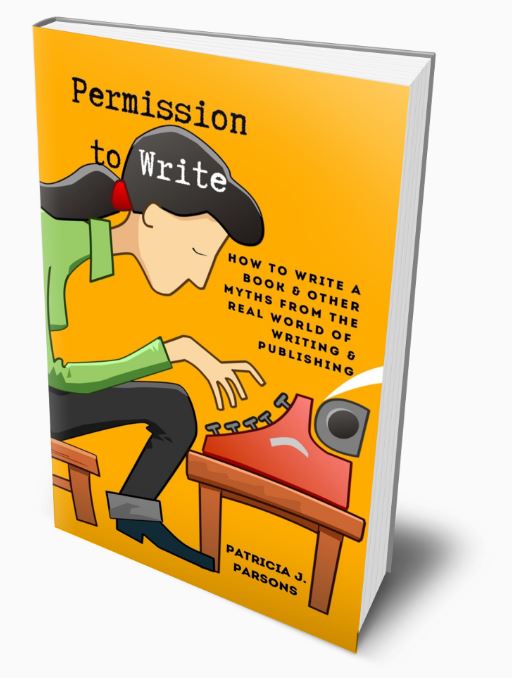
The upshot of this whole project was a book that seeks not only to provide a bit of mentoring to new writers but also to provide a foundation in reality and to disabuse writers these days of some of the myths about fame and fortune as a writer. The book is Permission to Write: How to Write a Book and Other Myths from the Real World of Writing and Publishing. I’ve also decided to share additional materials through the medium of video.
Thus, I’ve begun a 10-part series to accompany the book. The first episode “Want to be a rich and famous writer? Don’t give up your day job” is already up and running.
Today episode number two launches: “Don’t write that book! Or at least don’t publish it.”
So you can see that I don’t necessarily paint a rosy picture for wannabe writers. However, serious wannabe writers will get through them and still want to write that book. Those are the writers I aim to help.
The videos are posted on the Moonlight Press YouTube channel. Let your friends who “wanna write a book” know.