Posted in Backstory, Writing, Writing craft

One writer’s New Year’s promise – to herself

Happy New Year 2015And so that time of year upon us again.  You know the one – where news organizations begin publishing their greatest stories of the year lists, the weather networks offer us a list of the ten worst storms of the year gone by, and the rest of us tally up what we’ve done, and more precisely, what we are planning to do.  I have never been a person to make New Year’s resolutions.

First, as a professor for the bulk of my working life, New Year’s has always been the first Wednesday after Labor Day – the first day of classes on my particular campus.  Now that was the time for making a new start.  But January 1?  Not so much.

This year I’ve been thinking about what the word resolution really means.  Who knew that it had so many different nuances of meaning?

According to the Oxford English dictionary[1] it can mean (among other more specific things) any of the following:

  • “A firm decision to do or not to do something;”
  • “The action of solving a problem or contentious matter;”
  • “The process of reducing or separating something into constituent parts or components.”
  • To resolve to do something means to “Decide firmly on a course of action.”[2]

Clearly, when people say they are making New Year’s resolutions, they mean they are making a firm decision to either do something, or refrain from doing something.  A firm decision.  I’m thinking that making a decision is not necessarily enough to actually get you to act on that resolution.  Perhaps we need something more.

That got me thinking about making promises.  What does a promise have that a resolution doesn’t?  Back to the Oxford English dictionary I went.

  • A promise is “A declaration or assurance that one will do something or that a particular thing will happen;” which seems to me to be a synonym for what a New Year’s resolution is, but…
  • To make a promise means to “assure someone that one will definitely do something or that something will happen.”[3]

So, I guess semantically they seem to be much the same, at least as far as their denotative definitions go.  But what about that connotative definition?  In my mind they are different.

A resolution to me seems a bit business-like, clinical, removed.  On the other hand, a promise seems more personal, closer to the bone.  For me, the promise holds more sway.  Keeping promises is a value that I cherish, far above the notion of keeping resolutions.  So, what am I promising myself this year?

My 2015 promise to myself is to finish what I start, and that includes what has already been started but not finished.  Oh, I don’t mean finishing those manuscripts that in my heart of hearts I know were just for practice.  I mean finishing the ones that I know are meant to be finished.  That means that between now and the end of 2015 I have to finish two novels.

I think that those of us who write – whether for personal growth and a sense of accomplishment – or for a living (or both for the ideal writer’s life) all have unfinished business.  Maybe you’ll join me in making 2015 the year of getting the finish line.  Let me know how you’re doing!


HAPPY NEW YEAR!


[1] http://www.oxforddictionaries.com/definition/english/resolution?searchDictCode=all

[2] http://www.oxforddictionaries.com/definition/english/resolve?searchDictCode=all

[3] http://www.oxforddictionaries.com/definition/english/promise?searchDictCode=all

Posted in Backstory, Ideas generation, Journals, Writing craft

A writer’s letter to Santa Claus

christmas treeWhat do you give a writer for Christmas?  Most of the lists of suggested gifts are filled with things like computer writing software, printer paper and coffee cups emblazoned with bon mots from writers who have gone before us.  I have a different view of what a writer – like me at least – really covets.  So, apart from the Moleskines which I covet every year, Santa Claus is really the only one who can fill this list.  I’d like to share my 2014 letter to Santa with other writers and aspiring writers.

“Dear Santa:

So we come to the end of another year.  It’s been a year of writing, not writing, writing some more, editing manuscripts, madly searching for a publisher, and taking a foray into self-publishing.  Well, you know what I’ve been through this year.  I’ve worked hard so I know you’ll look kindly on this writer’s little Christmas list.

  1. First, I would like a few Moleskines.[1] I know that they’re expensive as notebooks go. I know that other people in my life can provide these as well – but one can never have enough Moleskine notebooks, can one? After all if they’re good enough for Ernest Hemingway, they’re good enough for the rest of us. I also know that most of my work is digital. But I can’t shake my addiction to those brightly-colored covers. I seem to be inspired to write just by looking at them. Or at least I’m inspired to think about writing. That’s a first step in any project, isn’t it?books
  2. Now to the things that only you can give me. First I’d like the gift of a continually open mind. Let me see ideas everywhere I go and in everything I do (then the Moleskines become very useful, right?). Let that open mind accompany me when I read the newspaper, eavesdrop on conversations in restaurants and airports – well, you get the idea.
  3. I’d also like the gift of patience in the rewriting and editing process. That feeling that comes at the end of a finished manuscript at long last is wonderful, but can put me off from the rigors that are then required in the revision process. I need that forbearance more than anything else to get me through that part of the writing process.
  4. Then, Santa, although I know it might be difficult, I’d like the gift of compassion for all those agents and editors who can’t seem to answer their email in a timely fashion – even when they’ve requested the proposal or manuscript. *deep breath*
  5. I’d also like the gift of creativity so that I can see old ideas in new ways. I have journals filled with all those ideas from my sometimes open mind (see #1), but they are often derivative or jotted down on a whim leaving me without a clue as to context later. Please let me revisit those journals and consider how to turn those ideas on their heads or inside out to come up with a truly innovative approach to the material.
  6. Finally, thicken my skin just a little bit as I prepare to send out a manuscript to readers for pre-publication comment. I’m sure they won’t all love it (as they should).

Well, that’s it for this year Santa.  I’m planning another hard-working writing year and hope to be able to share with you at the end of 2015 just how far I’ve come with these gifts of Christmas 2014.  Merry Christmas!”

[1] For the uninitiated, Moleskines are (as their web site says): “…the heir and successor to the legendary notebook used by artists and thinkers over the past two centuries: among them Vincent van Gogh, Pablo Picasso, Ernest Hemingway…”  You can read about them at http://www.moleskine.com/en/moleskine-world and buy them all over the world in book stores and online.  The paper is great and the array of sizes and colors amazing.

Posted in Backstory, Book launches, Book promotion

Making old manuscripts live again

An old manuscript gets a 21st century makeover.

Earlier this week Jennifer Alsever wrote a piece for CNN Money called “Guerrilla Marketing for Books.”  A cautionary tale for would-be authors, it tells the story of shrinking promotional budgets at traditional publishing houses and the lengths to which authors now must go to get their books to stand out from the ever-increasing numbers of both traditionally and self-published books.  The truth is, it has been ever thus – unless you are a big-name author.

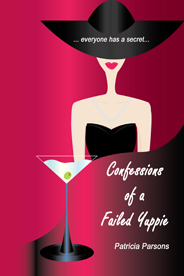
One tactic mentioned in the story is of an author who commissioned a jewelry artist to make necklaces that are featured on her book’s cover as well as a new perfume based on one of her fictional characters. The amount of work and money involved for an author in doing this is staggering to consider.  This, however, reminded me of an event in the provenance of one of my recent ‘new’ books Confessions of a Failed Yuppie.  Stick with me for a few minutes!

If you’ve been reading Backstory for a few years or even months, you might have realized that the “backstory” I’m trying to tell is the anchor of my own experience in writing and publishing.  More than that, though, my objective is to explore the issues that are important to all of us who are more than passingly interested in reading – and writing.  Sometimes I rant about things that have annoyed me; sometimes I tell you a story of my experience.  Sometimes I tell you a real backstory to my writing: what inspired it, how it developed, what happened next.  This post is one of those true backstories.

In the early 1990’s I was on a rant about the Yuppie lifestyle.  So I decided to write a book about it – but rather than a non-fiction examination of the phenomenon, which would have been more akin to my writing experience at the time, I decided to write a novel – a satire of sorts.  I felt strongly, though, that I wanted it published no matter what, so I did what self-publishing authors did at that time, I sent it to a vanity publisher.  (For the working definition of a vanity publisher, you might want to surf back to last week’s post: The confusing world of 21st century publishing jargon: A glossary for writers).

In due course, a box full of hard-cover copies of Yuppie arrived on my doorstep.  What to do with them?  Those were the days before book promotion through online networking channels was de rigeur.  Indeed, there were no social media channels.  Just imagine such a world!  I decided that the first order of business would be to have a book launch.  But before the launch, I’d need some “merchandise.”

The old Yuppie cover and the mug: "I confess: I'm a failed yuppie" with a "reject" stamp!
The old Yuppie cover and the mug: “I confess: I’m a failed yuppie” with a “reject” stamp!

I created a design for the front of T-shirts and for mugs and had dozens of these pieces of paraphernalia created – all at my own expense, of course – and had them available on the day of the pary.  I also had a poster-sized blow-up of the cover of the book so that it could be the focal point of the party, next to the book-shaped cake that adorned the dining room table.  I then created a guest list and sent out invitations.

As parties go, the event was a great success.  We had door prizes of T-shirts that the guests obligingly sported and everyone went home with a signed copy of the book.

As the weeks went by, a number of the guests told me that they had enjoyed the book and when was I going to write another one?

The book, naturally enough, never sold.  Getting a self-published book reviewed in those days was not next to impossible, it was completely impossible.  And since there were no social networks available to promote it, short of taking out advertisements at great expense (I did that once) and going door-to-door with a pile of books (which didn’t sit well with my personality), the book would languish with thousands of others.  And so it did.  Until last year.

Writers have lots of finished and unfinished manuscripts hiding on their hard drives or taking up space in filing cabinets.  I know that most of us should toss most of it, but sometimes a manuscript draws us back and that’s how I felt about Yuppie.

So, I took out the hard-cover copy with its tattered edges and began to write rewrite the book.  It’s now a 21st century Yuppie story, and taking advantage of the digital advances, I decided to make it available once again.

Two decades in the making, Confessions of a Failed Yuppie lives again, and it starts with a definition of Yuppie:


“YUPPIE”: A Definition

Acronym for Young Urban Professional, usually occurring in a married pair (often male/female but not necessarily). Categorized as upper middle class or at least moving in that direction, ambitious, well-educated.  Characterized by excessive concerns about appearances.  Lightly narcissistic.  May have money or at least leverage.  But not necessarily. Normal habitat is the urban condo, sometimes the single-family dwelling of dubious heritage in a downtown area with a postage stamp for a yard, for which a bidding war took place prior to acquisition.  Yuppies with children often move to larger, more impressive dwellings.  Diet consists mainly of cocktails, organic kale and the latest gastronomic fad.  Would not be caught dead in a North-American-produced automobile brand.  Skis in winter, does hot yoga, plays squash (it’s making a come-back), and quietly brags all year round. Widely thought to have become extinct in the early 1990’s.  Not so much.

Maybe you’d like to read the rest.  Or not.