
Posted in Creativity, Ideas generation

Measuring a year – In a [writer’s] life

My view as I sat on our dock this morning thinking about birthdays in the past and what this year might bring.

Today is my birthday.  I’ve never been daunted by the number of candles on the cake.  I am the age I am, I’ve always thought.  Twenty, thirty, forty – they were just numbers.  But July 10 is always New Year’s Day for me.  How I take stock of the year has evolved over the years, though.

Several years ago (perhaps more than several now – that’s what birthdays do to you!), we experienced the Broadway musical Rent while traveling in New York.  More specifically, my husband and I were dragged there by our then-seventeen-year-old son, the dancer (the one who made me the ballet mom I wrote about in my memoir published a couple of years ago).  For those of you who haven’t had the pleasure, Rent is a modern-day version of the opera La Boheme (sort of).  It is set in an artistic ghetto-like area of presumably New York that’s populated by a variety of down-trodden artists…well, you really had to be there.

The most memorable piece of music in it is a song that you’ve probably heard since.  It’s called Seasons of Love and it asks the question: How do you measure a year in a life?  There are 525,600 minutes, but that’s not enough, is it?

I measure my years in the things that inspired me: the people in my life, the places we traveled, the things we accomplished, and by the legacy I’ve left.  So, this past year has been full of inspirations – inspirations that should begin to populate my writing and my other work.

I could write a book about a trans-Atlantic ocean liner, since I started my year on a Queen Mary 2 voyage.  Or perhaps I could pair this with the historical Queen Mary which I visited in California later in the year, and write about a stowaway in the late 1930’s.  Or maybe I could write about a Canadian dancer in Europe (heaven knows I traveled part of this year’s journey with one).  Maybe I could write a travel book about cruises – it seems to be the subject so many web surfers are interested in.  Or maybe I’ll write about an accidental university professor – because that’s what I am!

In the end, I think I’ll spend today thinking about all of this and contemplating Murray McLauchlan’s song The Second Half of Life.  Because as he says, that’s when the fun begins.  “The most important time may not be from nine-to-five…”  Oh, he is so right! Now that’s a great name for my new book.
Posted in Creativity, Writing craft

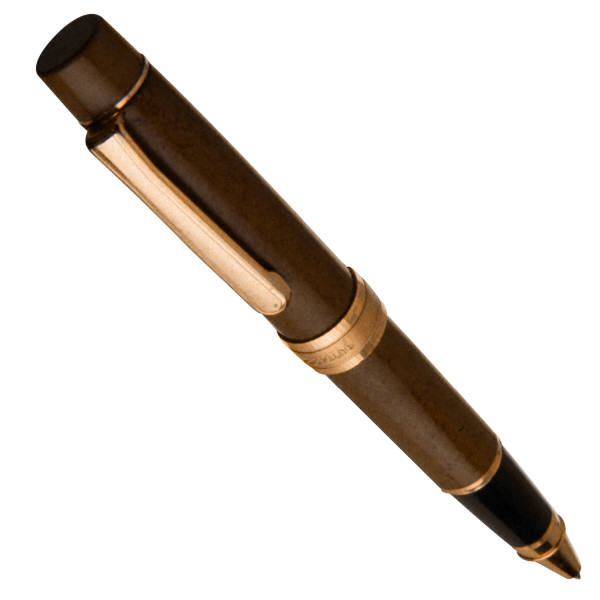
Putting pen (or pencil) to paper

Do you ever write with a pen and paper?  Hmm?  Or are you forever hunched over the computer keyboard like most writers these days? If you only ever write at a computer keyboard, I think you might be missing out.  Stay with me for a few moments all you tweeters.

I wrote a guest piece for our students’ new online newsletter Symmetry recently on the topic of creativity and how it can be leveraged in fields other than the traditional “creatives.”  Some people think that writing creative pieces needs to be done by putting pen to paper – literally.

Ever since I discovered her work in the late 1980’s, I have considered Natalie Goldberg to be one of my major writing teachers.  I’ve never met Natalie Goldberg.  My writing is not one bit like Natalie Goldberg’s writing.  But her early books on writing practice, most notably Writing Down the Bones: Freeing the Writer Within, were my signposts along the journey toward finding my own voice as a writer.  And although I’m seriously dedicated to writing while hunched over a keyboard, Natalie’s approach to teaching writing has often given me pause to consider if there is a difference in the extent to which we  might be able to mine our creativity when inputting words to a computer versus letting them flow onto paper through our writing hand.

Natalie’s approach to writing is that it is a ‘practice,’ and that by practicing, we improve our writing.  We don’t have to publish everything we write.  Writing is often for ourselves only.  (To tell you the truth, I often read material that I wish the writer had kept to him or herself!)

I’ve talked about Nataile’s timed writing approach in previous posts, but her ideas bear further reflection.  She tells us to just “go!” and “keep your hand moving!”  That’s where the pen and paper thing comes in—you can’t do this kind of practice with a computer.

She also tells us to “lose control.”  This is easier said than done, but I believe that this is how we mine our personal creativity. As writers, we put pen to paper and if we’re able to lose control and keep the writing hand moving, interesting ideas just seem to flow.

Lee Rourke wrote a terrific piece in The Guardian’s book blog recently.  In it he refers to longhand writing as a “secretive pleasure.”  He says he “can sit in a corner of a café unnoticed and write to my heart’s content. I’m less conspicuous than the iBook brigade, cluttering up London coffee houses and pubs with their flashy technologies.”

Of course, my personal obsession with writing journals is related to the notion of putting pen to paper.  Sometimes it’s just nice to sit in a comfortable chair and think.  Then pick up that journal and just write.  Okay, I will admit that these days I often pick up my IPad and do this, but to tell you the truth, it’s not the same.  I highly recommend a good dose of the Natalie Goldberg approach to writing practice – with that pen firmly planted on a piece of paper that (preferably) is contained in a beautiful notebook.

Posted in Creativity, creativity generators, Ideas generation

When inspiration strikes

Finding inspiration from a sunset somewhere over the North Atlantic, way out at sea

I’m just back from a summer vacation that has engendered seething jealousy from friends and colleagues alike.  The jealousy stems in part from what several have called its “inspiration” value.  And based on the story I told you last time, I should have my next book completely outlined with loads of snippets of narrative and dialogue in my little purple Moleskine notebook.

Inspiration it was – but I’m not quite ready to write yet – historical fiction requires more than an inspirational story line – it takes significant and detailed research.  We’ll get to that research process, but today I am fixated on the notion of inspiration.

In medical terms, inspiration means breathing in ad breathing out.  In a way, artistic inspiration is the same.  The writer (or choreographer, or painter or even corporate  strategist for that matter) has a sudden burst of creativity – the genesis of that moment might not even be discernable at the time.  We don’t always know the source of our inspiration in the moment.  We know only that something has triggered action.  So in a way, it’s like breathing in and breathing out – the creative fodder is breathed in, and the creative output is breathed out. Over the years, however, various creative individuals have had differing takes on just what it means to be inspired.

Leonard Bernstein said this: “Inspiration is wonderful when it happens, but the writer must develop an approach for the rest of the time…The wait is simply too long.”  Lesson 1: Don’t just sit back and wait for the muse to strike. Find ways to seek inspiration in the meantime.  I found this writer’s blog entry that has a laundry list of things to do to fill that gap between sudden bursts of creativity.

Picasso’s approach to the creative process is echoed by many other artists: “Inspiration exists,” he once said, “but it has to find us working.”  Lesson 2: Just get down to work.  Write about anything around you and eventually, the creative muse will strike and you’ll be inspired either to trash everything or to use it in new and innovative ways.

A glass of champagne aboard the Queen Mary 2 is an inspiration in itself!

American businessman Nolan Bushnell has been quoted as saying that “the ultimate inspiration is the deadline.”  Lesson 3: Set deadlines and stick to them.  Better yet, have someone else set them for you.  Try this:  tell your significant other or someone whose feedback on your writing you actually appreciate, and tell him or her that you’ll have a few chapters to be read in two weeks.  Even that kind of a deadline is inspirational.  Then, when you have a deadline from a publisher, you’ll know how to seek inspiration from knowing it has to get done.

So, here’s what I’m up to: I’m looking at my vacation photos and seeing what stories they hold for me.  I’m writing about a number of things in several different genres. I’m doing research on two new ideas.  I’ve told my husband that he’ll have a few more chapters for him to read in two weeks.