Posted in Creativity, Writing

Why we write what we write

Man Reading Book and Sitting on Bookshelf in LibraryJust like most writers out there in the twenty-first century, I follow a number of writer/author groups and blogs.  I suspect, though, that I follow far fewer than many writers.  I believe we need to spend more time writing than talking about writing; but that’s just me.  Apart from the extreme time suck involved in participation in these online groups, one of the other primary reasons for my reluctance to get more involved is because I really don’t find that many kindred spirits in them.  Perhaps that shouldn’t matter to me, but it does.

For example, just this morning, I received an email from a LinkedIn site that I follow in a general kind of way.  A participant in the discussion posted the following gem as a discussion starter:

“I want to embark on fiction but I just do not have the imagination to concoct stories and plots. Can anyone share with me how successful novelists repeatedly fabricate stories?”

Now, I would expect bona fide writers on this forum to weigh in as follows: If you have no imagination and no stories to tell, you clearly shouldn’t write fiction. End of story.  But, no, that’s not what they said.

One actually started his response by saying that it was a great question.  A great question?  Are you kidding? It is a moronic question in my view and epitomizes what’s wrong with open access to publishing.  There are so many people out there today who actually do have stories to tell and can’t get them published that I shudder to think what will happen to the literary world when self-published books become nothing more than the yearnings of wannabe fiction writers who really want to have written a book – not to actually write one.

Another “writer” suggested to the poster without imagination that he simply mine his own life.  That should be good.  No imagination needed there, I guess.

Someone else told him to read.  Another told him to take a ride on public transport – in response to the very astute comment of one responder who actually had the temerity to say, “If you lack the imagination…why start?”  Bravo to that honest writer who is like me.  What a surprise it was for me to find a like-minded writer in an online forum.

What I want to know is why someone wants to write fiction if he has no story to tell and admits upfront that he lacks imagination.   All the creative thinking suggestions in the world will not help if there is no imagination to carry an idea through.

Arthur Schopenhauer thought a lot about writing and why we write.

German philosopher Arthur Schopenhauer probably had it right in The Art of Literature when he said, “There are, first of all, two kinds of authors: those who write for the subject’s sake, and those who write for writing’s sake. […] The truth is that when an author begins to write for the sake of covering paper, he is cheating the reader; because he writes under the pretext that he has something to say.”  People can write whatever they want and I encourage them to do so.  Much of what we write, however, should not be published.

I think that there are people who truly want to write because they have something they want to say, and those who simply want to have written a book.  The former makes a life –even if it doesn’t’ pay the bills.  The latter makes for good cocktail hour conversation.

Posted in Creativity, Ideas generation

Measuring a year – In a [writer’s] life

My view as I sat on our dock this morning thinking about birthdays in the past and what this year might bring.

Today is my birthday.  I’ve never been daunted by the number of candles on the cake.  I am the age I am, I’ve always thought.  Twenty, thirty, forty – they were just numbers.  But July 10 is always New Year’s Day for me.  How I take stock of the year has evolved over the years, though.

Several years ago (perhaps more than several now – that’s what birthdays do to you!), we experienced the Broadway musical Rent while traveling in New York.  More specifically, my husband and I were dragged there by our then-seventeen-year-old son, the dancer (the one who made me the ballet mom I wrote about in my memoir published a couple of years ago).  For those of you who haven’t had the pleasure, Rent is a modern-day version of the opera La Boheme (sort of).  It is set in an artistic ghetto-like area of presumably New York that’s populated by a variety of down-trodden artists…well, you really had to be there.

The most memorable piece of music in it is a song that you’ve probably heard since.  It’s called Seasons of Love and it asks the question: How do you measure a year in a life?  There are 525,600 minutes, but that’s not enough, is it?

I measure my years in the things that inspired me: the people in my life, the places we traveled, the things we accomplished, and by the legacy I’ve left.  So, this past year has been full of inspirations – inspirations that should begin to populate my writing and my other work.

I could write a book about a trans-Atlantic ocean liner, since I started my year on a Queen Mary 2 voyage.  Or perhaps I could pair this with the historical Queen Mary which I visited in California later in the year, and write about a stowaway in the late 1930’s.  Or maybe I could write about a Canadian dancer in Europe (heaven knows I traveled part of this year’s journey with one).  Maybe I could write a travel book about cruises – it seems to be the subject so many web surfers are interested in.  Or maybe I’ll write about an accidental university professor – because that’s what I am!

In the end, I think I’ll spend today thinking about all of this and contemplating Murray McLauchlan’s song The Second Half of Life.  Because as he says, that’s when the fun begins.  “The most important time may not be from nine-to-five…”  Oh, he is so right! Now that’s a great name for my new book.

Posted in Creativity, Writing craft

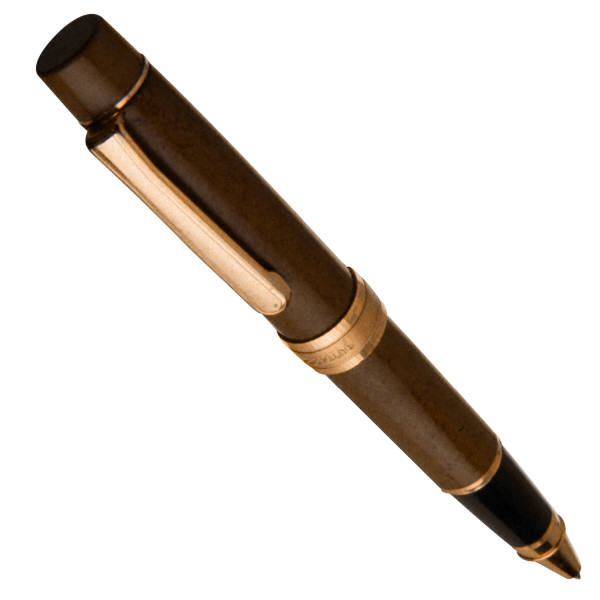
Putting pen (or pencil) to paper

Do you ever write with a pen and paper?  Hmm?  Or are you forever hunched over the computer keyboard like most writers these days? If you only ever write at a computer keyboard, I think you might be missing out.  Stay with me for a few moments all you tweeters.

I wrote a guest piece for our students’ new online newsletter Symmetry recently on the topic of creativity and how it can be leveraged in fields other than the traditional “creatives.”  Some people think that writing creative pieces needs to be done by putting pen to paper – literally.

Ever since I discovered her work in the late 1980’s, I have considered Natalie Goldberg to be one of my major writing teachers.  I’ve never met Natalie Goldberg.  My writing is not one bit like Natalie Goldberg’s writing.  But her early books on writing practice, most notably Writing Down the Bones: Freeing the Writer Within, were my signposts along the journey toward finding my own voice as a writer.  And although I’m seriously dedicated to writing while hunched over a keyboard, Natalie’s approach to teaching writing has often given me pause to consider if there is a difference in the extent to which we  might be able to mine our creativity when inputting words to a computer versus letting them flow onto paper through our writing hand.

Natalie’s approach to writing is that it is a ‘practice,’ and that by practicing, we improve our writing.  We don’t have to publish everything we write.  Writing is often for ourselves only.  (To tell you the truth, I often read material that I wish the writer had kept to him or herself!)

I’ve talked about Nataile’s timed writing approach in previous posts, but her ideas bear further reflection.  She tells us to just “go!” and “keep your hand moving!”  That’s where the pen and paper thing comes in—you can’t do this kind of practice with a computer.

She also tells us to “lose control.”  This is easier said than done, but I believe that this is how we mine our personal creativity. As writers, we put pen to paper and if we’re able to lose control and keep the writing hand moving, interesting ideas just seem to flow.

Lee Rourke wrote a terrific piece in The Guardian’s book blog recently.  In it he refers to longhand writing as a “secretive pleasure.”  He says he “can sit in a corner of a café unnoticed and write to my heart’s content. I’m less conspicuous than the iBook brigade, cluttering up London coffee houses and pubs with their flashy technologies.”

Of course, my personal obsession with writing journals is related to the notion of putting pen to paper.  Sometimes it’s just nice to sit in a comfortable chair and think.  Then pick up that journal and just write.  Okay, I will admit that these days I often pick up my IPad and do this, but to tell you the truth, it’s not the same.  I highly recommend a good dose of the Natalie Goldberg approach to writing practice – with that pen firmly planted on a piece of paper that (preferably) is contained in a beautiful notebook.