Posted in Memoir, Reading, Uncategorized, Writing

A writer’s early roots: What we read & what we write

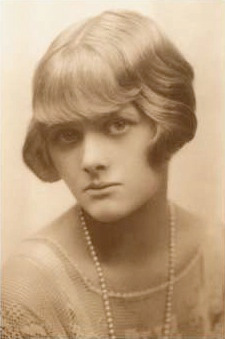
A young Daphne DuMaurier (Source; Wikipedia)
A young Daphne DuMaurier
(Source; Wikipedia)

This morning I had a very odd experience.  I had the privilege of peering in to the mind of a 16-year-old girl – or should I say a 16-year-old writer.  And the most peculiar thing of all is that it was me.

A bit of backstory: when I was in high school (lo these many years ago) I wanted nothing more than to be a novelist – but I also had a very practical side and that practical side won out in the university program selection process.  I had my very best marks in biology, chemistry and analytical trigonometry in my senior year, and you can guess what I studied in university.  And to tell you the truth, that health science degree and the Master of Science have stood me in good stead in my career evolution from health communication, to health & business writer, to creative non-fiction writer, and now into fiction.

But in high school, my English marks weren’t far behind my math and science.  In fact, when given the opportunity in my junior year to complete what was then referred to as a “distinction” project” I didn’t choose to do it in science, rather I chose English.  To be more specific I chose the short story.  This morning I took three magazine boxes off the highest shelf in my office to begin the laborious process of digitalizing all of my publications to rid myself of the glut of paper that threatens to overtake most writers from time to time.  What do you suppose was the first document that I pulled out?  Much to my surprise, it was my Grade 11 “distinction project.”

The framework for the project was aspects of the short story (very apropos since lately I’ve been thinking that I really ought to read some Alice Munro given that she won the Nobel prize for literature recently based on a career writing short stories – and I’ve never read a single sentence she’s written).  The project, painstakingly typed on an old typewriter (with only one or two whited-out typos) was an analysis of the components of the short story.  For each of the traditional components – character, setting, plot etc. – I had written a short story that supposedly showcasing each.  One story’s character took center stage; in the next one setting was the most important part etc.   But it was the themes of each of the stories that told the story of that 15-year-old writer.

The theme that came through again and again, regardless of the actual characters or plot of the story was this: Know who you are, and be true to yourself.

First-edition cover of Rebecca (Source: Wikipedia)
First-edition cover of Rebecca
(Source: Wikipedia)

When I think back through my day-job career, and my writing by moonlight, I think that I have truly tried to do this – but I didn’t realize that it was so deeply embedded in my psyche.  This was kind of a light bulb moment, because I just finished re-reading what I have long considered to be my very favorite novel: Rebecca by Daphne DuMaurier.

I first read the book when I was in high school, right around the time that I wrote those short stories.  I had seen the various iterations of the movies based on it in the interim, but it was eye-opening for me to read this book so many decades later to try to see what it was that captivated me and to figure out if the book had, in fact, had any influence on my writing.

This time around, I found myself impatient with the narrator.  A twenty-something woman of the 1930’s, the unnamed protagonist met and married a much older, and much more worldly man who took her back to England to his estate, Manderley.  Haunted by the ghost of his first wife, the young woman concocts in her mind all manner of scenarios, most of which have absolutely no basis in reality – indeed, the reality is much more sinister.  I kept wanting her to get over it, to move on, to ask the question to clear up the uncertainties.  I don’t remember being so impatient with her at the time.  So, I do think I’ve evolved as a woman.  But what about as a writer?
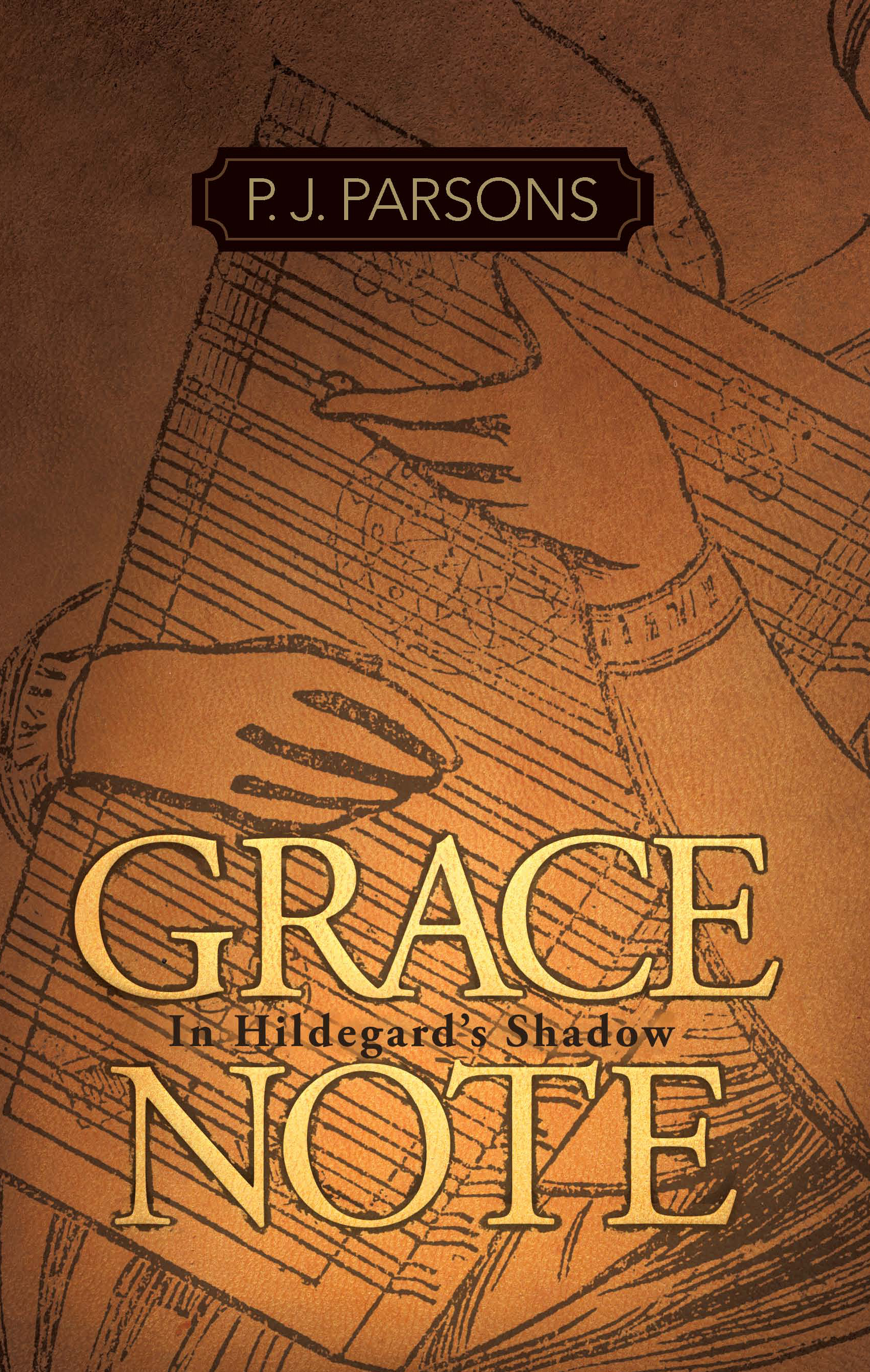
Grace Note Cover PaperbackWritten in 1938, Rebecca was not an historical novel, the genre I found myself drawn to both as a reader and as a writer in the last few decades.  However, I read it near the beginning of the 1970’s, so for me, as a young woman, it was historical indeed, and I remember always thinking about it that way.  Daphne DuMaurier did not need to create the world of the 1930’s: she lived in it.  But for me, the detail was now of historical significance, and I do believe that this influenced my choice of genres.

I enjoyed the book the second time around and hope that some of my own work will stand the test of time as did this ne.  Perhaps in the future some young woman will pick up Grace Note and think about the strength of the Lysanor, the heroine, and recognize that she, too, spent her life trying to be true to herself.

Posted in Writing

Do writers need other people?

crowd 2It’s often been said that writing is a solitary occupation.  Franz Kafka opined as much when he wrote: “Writing is utter solitude, the descent into the cold abyss of oneself.”  And my personal approach to writing is very private.  I have rarely let others read my unfinished work.

The only person who regularly reads my work-in-progress is my trusty in-house editor, and sometime collaborator, my husband.  I have never been one for writing groups.  But these days it is next to impossible to completely avoid that kind of inter-author engagement given the plethora of social media and perhaps even the necessity for developing what has become that annoying phrase: the writer’s platform.

All of this begs a couple of questions for me:  Do writers need other writers?  And if they do, what do they need them for?

I’m working on a piece of writing that could use just such answers.  In an effort to open my mind to others’ perspectives, I’m hoping that as many writers as I can “engage” with will answer these questions.

If you have an answer, please leave a comment or answer my poll.

Posted in Journals, Writing, Writing craft

A tale of two modes: Paper versus digital

My beloved notebook and my even more beloved computer!

The irony was not lost on me.  As I downloaded Natalie Goldberg’s new book The True Secret of Writing: Connecting Life with Language I knew I was treading on sacred ground: you see (if you are not familiar with Natalie Goldberg, which you should be if you think you’re a writer) Natalie’s writing philosophy is deeply underpinned by the notion of the writing flowing from the heart, through the arm and out the pen as you move your hand across the paper.  Although she acknowledges the utility of the computer, and no doubt uses it herself, the paper clearly has the upper hand in the paper versus digital divide for writing practice.

Last week I changed offices again at the university.  Yes, my time chained to my desk toiling away at chairman-type duties has finally come to an end.  Few people understand the concept of peer governance in university departments: that’s when we all take a turn at being “in charge” and spend a year or two or three with all the responsibility and no authority.  I have done my duty now three times – one for a full three-year term and twice to fill in for year-long sabbaticals for others – and now return to doing what I do best and prefer.  That would be teaching and writing.  However, changing offices is not without its substantial benefits.

true secret of writing natalie goldbergThe requirement to take files out of cabinets and books off shelves gives one a moment to pause and consider whether or not one actually needs all that paper.  And that question refers equally to one’s creation as much as to one’s consumption.

First I’m thinking about my consumption – of books, documents, pamphlets (does anyone actually produce these things today?), newspaper clippings, print-outs of academic articles, notes, and the list goes on.  It’s only recently that I succumbed to the eBook mania and began downloading books on my IPad.  What I’ve discovered is that I actually read faster on the IPad – although I still love that feel of a real book in my hands.  Now, though, I can have a whole library in the space of one IPad.  Who can argue with that notion?

So, I’ve taken the view that anything on paper that needs to be kept should be digitalized and saved on a hard drive.  I’ve been doing this both at work and at home.  As I move ever closer to early retirement, and my husband and I move ever closer to right-sizing our living accommodation, we have purged all manner of paper – photos being the number one culprit.  Even all those old photos of our ancestors just after the advent of the widespread use of photography from the early 20th century.  Yup, all scanned and digitalized, and the paper products recycled.  It’s such a feeling of a burden of paper being lifted off our shoulders.  So those are some consumption thoughts.  What about creation?

I create a lot of paper.  All I have to do is open the bottom file drawer in my desk to see that I do love to keep paper copies of my writing.  I write on a computer and I print out everything.  And I do love my writing journals.  I won’t go on about them now – since I’ve done that before – but it does bear repeating that there is nothing quite like a new journal and a pen that glides smoothly over the pages.  If you can get that just right, you can be in writing heaven.  But my hand gets a cramp these days.

Does this mean that I’m confined to the computer forever?  As I’ve begun to read Natalie Goldberg’s book (on my IPad), I begin to get excited again about the possibilities of those ideas truly flowing from head to heart to hand in just that physical way.  I actually dug out one of my hard-backed journals and did some writing practice.  The ideas did flow – but the unfortunate result was a severe hand cramp.  So, I’m back at the computer this morning as I embark on two months of writing.

There was a tie when I’d do a ten-minute timed writing as Natalie suggests every morning before I stared what I considered to be my real writing.  To me that’s a bit like sitting meditation before beginning work: something I should do but often neglect.  Like my return to my daily meditation, perhaps writing practice on paper is something I should get back to.  My only question that still remains though is what to do with all that paper!

I have a list of half- and quarter-completed writing projects, and one that isn’t started but has to be finished by August 1 (only 1500 words for that one, so no problem).  So, pe or keyboard, I better get at it.

What are your thoughts on pen and paper for writing practice?