Posted in Writing books, Writing craft

“Write what you know” – An outdated concept?

I just finished reading B.S. Shapiro’s extraordinary novel The Art Forger.  Not to give it away (because you really ought to read it), it’s the story of an aspiring artist who makes her living wage doing reproductions of famous artwork that are sold as that – copies.  She does “copies” not forgeries – which is all about the intent of the piece.

I picked the book up in the first place because it is at least partly about Edgar Degas’ work, and I’ve been 20,000 words into a manuscript that revolves around Degas’ ballerina sculptures for several years now, having put it on the back burner while I finished other pieces of writing for publication (and in the meantime noting that I’m not the only writer of historical fiction who has found this an interesting subject).  To say that I’m a devotee of Degas’ work might be stretching it a bit, but I am a fan, and I find some of the unanswered questions about historical characters too tantalizing to ignore (remember my book about Edgar Allan Poe?).

"More than a century and a half have passed since Edgar Allan Poe died, alone in Baltimore in 1849, and still no one really knows how - or even why he was in that city. But Bridget knows, and this is her story."
“More than a century and a half have passed since Edgar Allan Poe died, alone in Baltimore in 1849, and still no one really knows how – or even why he was in that city. But Bridget knows, and this is her story.”

Anyway, as I read the book, I felt myself becoming very educated about the fine points of both the art and the science of oil painting.  I relied on the author of this fictional piece to have done her homework: I wanted to believe in the details that so made the story feel authentic and rich.  But I always kept in the back of my mind that this is a work of fiction…so the question always becomes: where is the line between fiction and fact drawn in these kinds of tales, and does it matter?

Most authors whose  fictional work touches on real people, places and things take great pride in doing their homework, and there is usually a note in the book somewhere indicating the aforementioned line: where researched facts give over to the imagination of the writer. So what, you might reasonably ask, does this have to do with the question of whether or not we should take heed of the old adage: “Write what you know”?  It occurs to me that in these days of the World Wide Web, we can “know” a great deal more than we used to!

There was a time when research was much more difficult.  If you’re as old as I am, you might remember slogging to the library to comb through page after page of real reference guides, real books, and real documents.  I have to say that I think back on those days with fondness; I truly enjoyed those hours spent among the great tomes crammed with information just aching to get out.  The trouble was just how long it took to actually find that information that would provide those all-important nuggets that add depth and breadth to a piece of writing.

The truth is that today, we can become semi-experts in many topics if we know how to do the research.

Writing in the New York Times earlier this year, Ben Yagoda, author of How to Not Write Bad: The Most Common Writing Errors and the Best Ways to Avoid Them and a faculty member in the English Department at the University of Delaware, clarifies for us as follows:

“Writers who are intimately familiar with their subject produce more knowing, more confident and, as a result, stronger results…the idea is to investigate the subject till you can write about it with complete confidence and authority. Being a serial expert is actually one of the cool things about the very enterprise of writing…”[1] 

And therein lays the wonder of these days of information overload: for writers, this overload is among the most essential tools in our toolboxes.

The trick, as with all tools, is to become an expert at using it!

As my own writing segued from non-fiction into fiction, I’ve been forever grateful for the research skill I was able to hone through the years.  For any of us who are writing fiction with a basis in fact, those skills are crucial to the authentic voice we all seek.


[1] Ben Yagoda.  Should we write what we know?  The New York Times online, July 22, 2013, http://opinionator.blogs.nytimes.com/2013/07/22/should-we-write-what-we-know/?_r=0

Posted in Journals, Writing, Writing craft

A tale of two modes: Paper versus digital

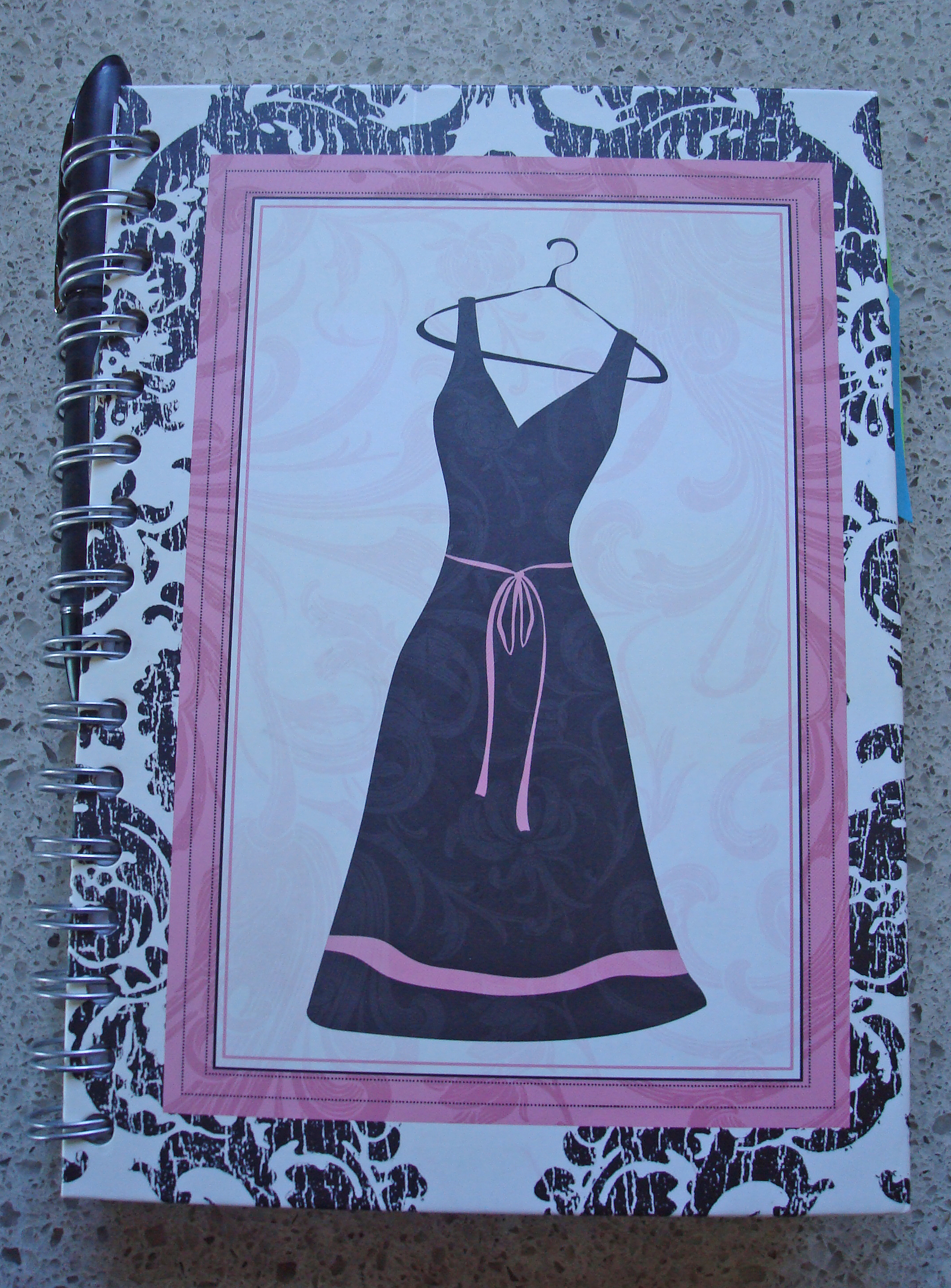
My beloved notebook and my even more beloved computer!

The irony was not lost on me.  As I downloaded Natalie Goldberg’s new book The True Secret of Writing: Connecting Life with Language I knew I was treading on sacred ground: you see (if you are not familiar with Natalie Goldberg, which you should be if you think you’re a writer) Natalie’s writing philosophy is deeply underpinned by the notion of the writing flowing from the heart, through the arm and out the pen as you move your hand across the paper.  Although she acknowledges the utility of the computer, and no doubt uses it herself, the paper clearly has the upper hand in the paper versus digital divide for writing practice.

Last week I changed offices again at the university.  Yes, my time chained to my desk toiling away at chairman-type duties has finally come to an end.  Few people understand the concept of peer governance in university departments: that’s when we all take a turn at being “in charge” and spend a year or two or three with all the responsibility and no authority.  I have done my duty now three times – one for a full three-year term and twice to fill in for year-long sabbaticals for others – and now return to doing what I do best and prefer.  That would be teaching and writing.  However, changing offices is not without its substantial benefits.

true secret of writing natalie goldbergThe requirement to take files out of cabinets and books off shelves gives one a moment to pause and consider whether or not one actually needs all that paper.  And that question refers equally to one’s creation as much as to one’s consumption.

First I’m thinking about my consumption – of books, documents, pamphlets (does anyone actually produce these things today?), newspaper clippings, print-outs of academic articles, notes, and the list goes on.  It’s only recently that I succumbed to the eBook mania and began downloading books on my IPad.  What I’ve discovered is that I actually read faster on the IPad – although I still love that feel of a real book in my hands.  Now, though, I can have a whole library in the space of one IPad.  Who can argue with that notion?

So, I’ve taken the view that anything on paper that needs to be kept should be digitalized and saved on a hard drive.  I’ve been doing this both at work and at home.  As I move ever closer to early retirement, and my husband and I move ever closer to right-sizing our living accommodation, we have purged all manner of paper – photos being the number one culprit.  Even all those old photos of our ancestors just after the advent of the widespread use of photography from the early 20th century.  Yup, all scanned and digitalized, and the paper products recycled.  It’s such a feeling of a burden of paper being lifted off our shoulders.  So those are some consumption thoughts.  What about creation?

I create a lot of paper.  All I have to do is open the bottom file drawer in my desk to see that I do love to keep paper copies of my writing.  I write on a computer and I print out everything.  And I do love my writing journals.  I won’t go on about them now – since I’ve done that before – but it does bear repeating that there is nothing quite like a new journal and a pen that glides smoothly over the pages.  If you can get that just right, you can be in writing heaven.  But my hand gets a cramp these days.

Does this mean that I’m confined to the computer forever?  As I’ve begun to read Natalie Goldberg’s book (on my IPad), I begin to get excited again about the possibilities of those ideas truly flowing from head to heart to hand in just that physical way.  I actually dug out one of my hard-backed journals and did some writing practice.  The ideas did flow – but the unfortunate result was a severe hand cramp.  So, I’m back at the computer this morning as I embark on two months of writing.

There was a tie when I’d do a ten-minute timed writing as Natalie suggests every morning before I stared what I considered to be my real writing.  To me that’s a bit like sitting meditation before beginning work: something I should do but often neglect.  Like my return to my daily meditation, perhaps writing practice on paper is something I should get back to.  My only question that still remains though is what to do with all that paper!

I have a list of half- and quarter-completed writing projects, and one that isn’t started but has to be finished by August 1 (only 1500 words for that one, so no problem).  So, pe or keyboard, I better get at it.

What are your thoughts on pen and paper for writing practice?

Posted in Reading, Writing craft

The beauty of a deadline… (OK, don’t shoot me!)

A few weeks ago I picked up a book that I didn’t realize was about deadlines.  Okay, I now recognize that Chris Baty’s entertaining little book No Plot? No Problem isn’t supposed to be about deadlines, but it is.  Baty, the creator of the National Novel Writing Month says this in the first chapter:

Deadlines are the dynamos of the modern age.  They’ve built every city, won every contest, and helped all of us to pay our taxes reasonably close to on time…a deadline is…optimism in its most ass-kicking form…a potent force… (p. 26)

…and it occurs to me that I’ve been sympathetic to this point of view for many years.  Just ask my students!

A deadline changes everything about any project that you plan to implement.  It moves you past the planning stage and drops you head first into the implementation phase, forcing you to consider milestones along the way.  And when the deadline is imposed by an external force (like your boss or your professor or your editor) those deadlines take on even greater importance.  Or do they?

I have about a dozen writing projects on the go right now.  Some of them are actually academic (low on the priority list at this point in my career), some of them are creative, and some of them are strictly personal.  The one project that gets done every week is my contribution to the travel blog I write with my husband.  Why?  Because I have a self-imposed deadline.  I made a personal commitment to a certain number of posts at certain intervals when we started on this project (which will become a book in due course) last fall, and I have neither looked back nor shirked my deadlines since.  The truth is that I have never missed an externally-imposed writing deadline, and now it occurs to me that when I have actually taken the time to create personal deadlines, my work has progressed faster and more efficiently than the more organic, artistic approach to work schedules that seem to be common among the ‘creatives’ of the world.

Case in point: I had almost forgotten, but a number of years ago I decided that I’d take a foray into screen-writing.  I think it’s because I see plot and dialogue as a kind of film running through my head when I write narrative, so I thought I might capitalize on that tendency.  I registered for a script-writing course, and set about learning the nuts and bolts of the process (not to mention learning about the paranoia that seems to run rampant through the film industry: no one wanted to share their ideas for fear of them being stolen – this never seems to happen in the world of books!).  After the course was finished, I had a notion of script framework, ideas and scraps of dialogue, but not much else.  So, I did what I always do, I bought a book on script-writing.

In fact, I bought several, but the one that really got me to a different level is not Robert McKee’s classic (and wonderful)  book titled Story; rather it is a small book called How to Write  Movie in 21 Days by Viki King.  I followed her framework for getting to a finished 90-minute script in 21 days and it worked.  I have the proof of it sitting in a drawer just waiting for a producer/director to snatch up Something I’m Supposed to Do.  But I had not noticed that her admonitions about deadlines really got inside my head.  In fact she says, “…your deadline…is your friend.  Focus to reach your deadline.  Make it your priority.  Sleep, food and phone are secondary to the deadline…” Okay, this was published in 1988.  These days she would have had to add a list of social networking sites to avoid – but I digress.

The bottom line is that if I impose a deadline on myself, I get it done.  It’s time I stopped flailing about trying to get the parts of my new novel (actually novels, and articles, and blog posts) perfect, and just get them finished.  There will always be time for editing later – with an editing deadline, of course!

Novelist Rita Mae Brown said: “A deadline is negative inspiration.  Still, it’s better than no inspiration at all.”