Posted in Memoir, Reading, Uncategorized, Writing

A writer’s early roots: What we read & what we write

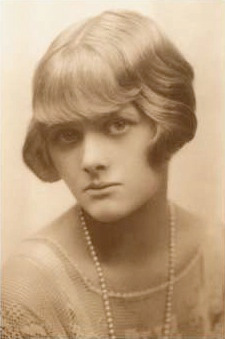
A young Daphne DuMaurier (Source; Wikipedia)
A young Daphne DuMaurier
(Source; Wikipedia)

This morning I had a very odd experience.  I had the privilege of peering in to the mind of a 16-year-old girl – or should I say a 16-year-old writer.  And the most peculiar thing of all is that it was me.

A bit of backstory: when I was in high school (lo these many years ago) I wanted nothing more than to be a novelist – but I also had a very practical side and that practical side won out in the university program selection process.  I had my very best marks in biology, chemistry and analytical trigonometry in my senior year, and you can guess what I studied in university.  And to tell you the truth, that health science degree and the Master of Science have stood me in good stead in my career evolution from health communication, to health & business writer, to creative non-fiction writer, and now into fiction.

But in high school, my English marks weren’t far behind my math and science.  In fact, when given the opportunity in my junior year to complete what was then referred to as a “distinction” project” I didn’t choose to do it in science, rather I chose English.  To be more specific I chose the short story.  This morning I took three magazine boxes off the highest shelf in my office to begin the laborious process of digitalizing all of my publications to rid myself of the glut of paper that threatens to overtake most writers from time to time.  What do you suppose was the first document that I pulled out?  Much to my surprise, it was my Grade 11 “distinction project.”

The framework for the project was aspects of the short story (very apropos since lately I’ve been thinking that I really ought to read some Alice Munro given that she won the Nobel prize for literature recently based on a career writing short stories – and I’ve never read a single sentence she’s written).  The project, painstakingly typed on an old typewriter (with only one or two whited-out typos) was an analysis of the components of the short story.  For each of the traditional components – character, setting, plot etc. – I had written a short story that supposedly showcasing each.  One story’s character took center stage; in the next one setting was the most important part etc.   But it was the themes of each of the stories that told the story of that 15-year-old writer.

The theme that came through again and again, regardless of the actual characters or plot of the story was this: Know who you are, and be true to yourself.

First-edition cover of Rebecca (Source: Wikipedia)
First-edition cover of Rebecca
(Source: Wikipedia)

When I think back through my day-job career, and my writing by moonlight, I think that I have truly tried to do this – but I didn’t realize that it was so deeply embedded in my psyche.  This was kind of a light bulb moment, because I just finished re-reading what I have long considered to be my very favorite novel: Rebecca by Daphne DuMaurier.

I first read the book when I was in high school, right around the time that I wrote those short stories.  I had seen the various iterations of the movies based on it in the interim, but it was eye-opening for me to read this book so many decades later to try to see what it was that captivated me and to figure out if the book had, in fact, had any influence on my writing.

This time around, I found myself impatient with the narrator.  A twenty-something woman of the 1930’s, the unnamed protagonist met and married a much older, and much more worldly man who took her back to England to his estate, Manderley.  Haunted by the ghost of his first wife, the young woman concocts in her mind all manner of scenarios, most of which have absolutely no basis in reality – indeed, the reality is much more sinister.  I kept wanting her to get over it, to move on, to ask the question to clear up the uncertainties.  I don’t remember being so impatient with her at the time.  So, I do think I’ve evolved as a woman.  But what about as a writer?
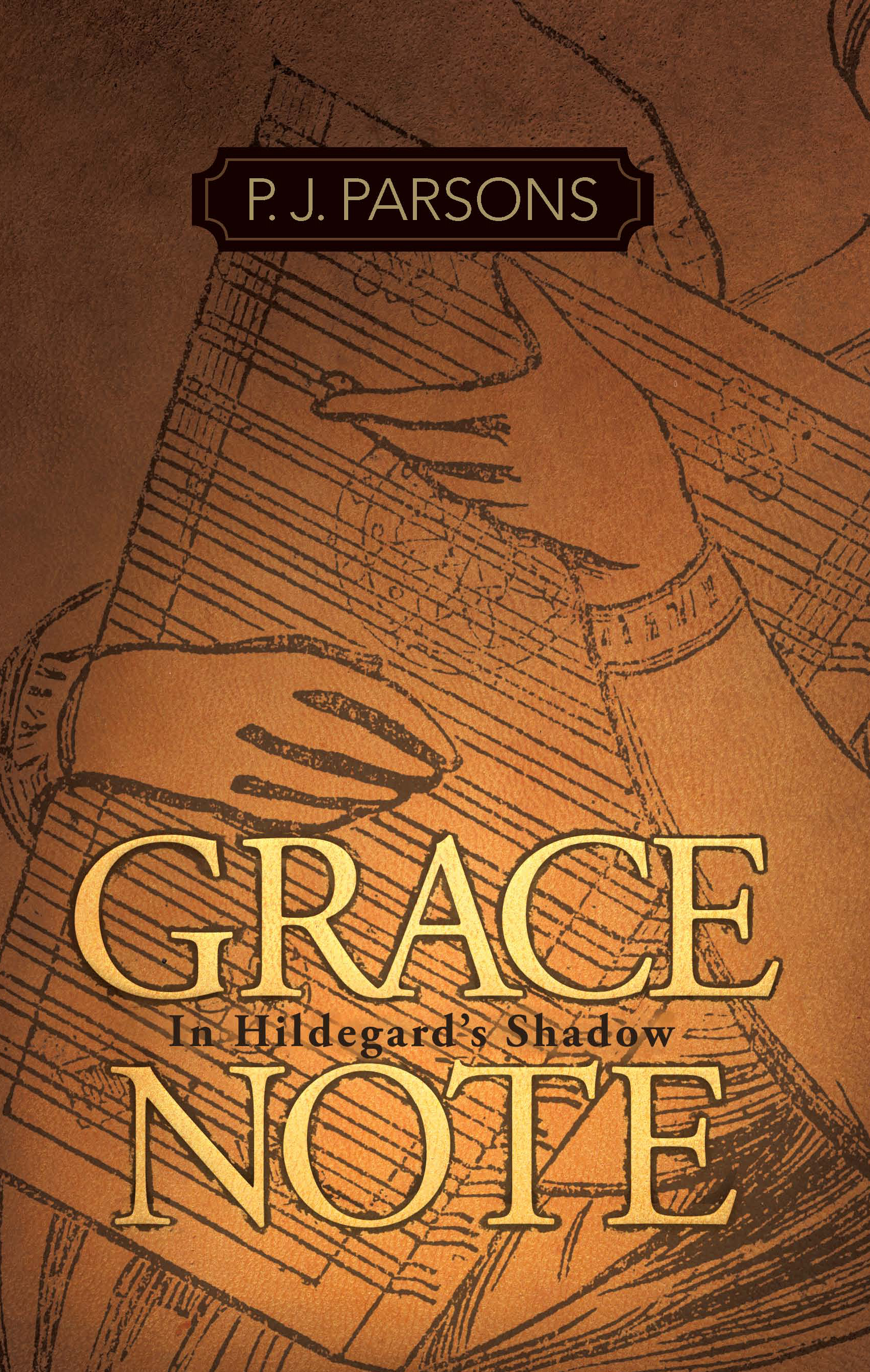
Grace Note Cover PaperbackWritten in 1938, Rebecca was not an historical novel, the genre I found myself drawn to both as a reader and as a writer in the last few decades.  However, I read it near the beginning of the 1970’s, so for me, as a young woman, it was historical indeed, and I remember always thinking about it that way.  Daphne DuMaurier did not need to create the world of the 1930’s: she lived in it.  But for me, the detail was now of historical significance, and I do believe that this influenced my choice of genres.

I enjoyed the book the second time around and hope that some of my own work will stand the test of time as did this ne.  Perhaps in the future some young woman will pick up Grace Note and think about the strength of the Lysanor, the heroine, and recognize that she, too, spent her life trying to be true to herself.

Posted in Book covers, Creativity, creativity generators, Ideas generation

In the beginning…was the idea

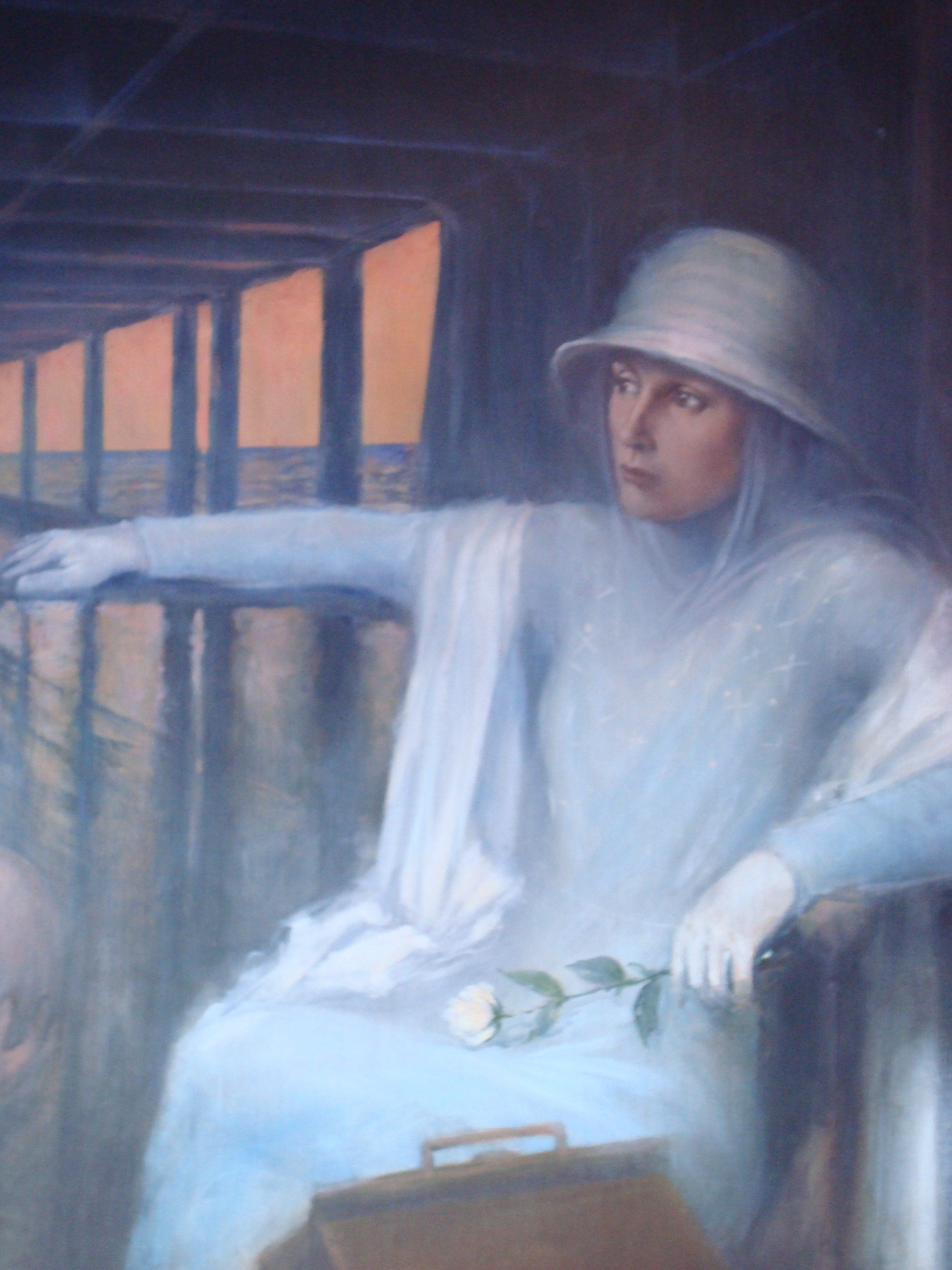
titanic deck chair
Laurie Mireau's Titanic Deck Chair painting

When precisely does a book’s backstory begin? Does is start when the author says to herself, I should write a book about this? Does it begin when someone else says to a would-be author, You should write a book about that?  (This often happens with non-fiction, by the way.) Or is it earlier?

Is it when you come across an interesting idea? A small article in a newspaper – the one you almost didn’t read?  Is it at the moment when that little piece of paper you clipped starts to invade your thoughts – unbidden?  Is it when the would-be author finally says – not I should write a book – but I want to write this book and I’m going to write it?

This issue of the germination of an idea was in the forefront of my mind earlier this week when I pulled my car up in front of the studio/home of a local watercolor artist here in Halifax.  A month ago I’d never heard of Laurie Mireau.  But since the day that my husband, who had met her about a month ago, came home with a brochure about her artwork, I had been haunted by one of the pieces featured.  The piece was a stark watercolor painting of a deck chair from the doomed ocean liner – Titanic.  Titanic has a strong connection to Halifax.  Although the ocean liner went down  closer to Newfoundland than to Nova Scotia, a number of the bodies of those who perished here brought to Halifax and are buried in a cemetery in the city.  Add onto that the fact that there is a truly fascinating exhibit at the Maritime Museum of the Atlantic and you have a storied port city that is part of the tragedy.

But there has always been something iconic about that single deck chair – the real  one that is on exhibit at the museum, as well as the replica that is for you to sit in and let your imagination run.  You lean back, your head just below the star symbolizing the White Star Line.  You close your eyes – and suddenly you’re there, on her deck.  You can smell the ocean.  You can hear the clicking of heels on the deck – no deck shoes in those days.  At least that’s how it is for me.  In any case, when I saw that thumbnail of Laurie’s painting, I had to have it.

First, I had to find out if she still had the original.  I didn’t want a print – only the original would do.  So, I contacted her and she managed to find it.  When she asked me about why I was interested, I spewed out an entire story about the deck chair, a painting that I’d seen and photographed on the wall of a bar on a cruise ship a couple of years ago and how I had an idea for a book set in about the 1920’s or ‘30’s – on a transatlantic voyage.  (No doubt she thought it was too much information!)  To tell you the truth, I didn’t have much of an idea, but it occurred to me that  the idea was germinating.  I had the distinct feeling that this might just be the beginning of a backstory for a new book that I’d write in the coming years.

gloria
My ocean-going character

It doesn’t take much to get my mind rolling.  The new book whose cover you looked at in last week’s post all started when I stumbled upon an academic article in an early music journal calling into question the  widely-held belief that St. Hildegard of Bingen, a 12th century Catholic mystic, writer, healer, composer actually knew enough about music to compose the 77 songs attributed to her.  I started thinking: if she didn’t, then who might have?

See, that’s all it takes for a backstory to start. I suppose the fact that next Wednesday I’ll be stepping onto the deck of the Queen Mary 2 in Southampton in the UK to take that transatlantic voyage to New York might have contributed to the story. I’ll let you know. (Two weeks holiday now!  See you in 14 sleeps as my hair stylist says.)

Posted in Backstory, Book covers, Book titles, Journals

I: What’s in a book cover? Book Titles

now all we need is a title
A book about titles

I love journals.  No, not those academic-type “journals” that I have to refer to weekly for academic-type research (although I’ve come up with several incredible fiction ideas from reading journals – but I digress).

I’m talking about those journals that you write in.  I’m talking about those journals that have covers but no titles.  Then, as I considered telling you about all those journals I have in my office right now, and I looked at the book proof winking at me from my computer screen, it occurred to me that the issue of book titles was actually on the top of my mind. Book covers have titles written on them; journal books do not.  Journal books have no titles because they don’t need them.  Books, on the other hand, do.

How important is a book’s title?  Is a book’s title important to you?

I’m just about finished a proof round for my next book.[1]  But this has been a bit of a different experience for me this time around.  Unlike Ernest Hemmingway who evidently said:

“…I make a list of titles after I’ve finished the story or book – sometimes as many as a hundred.  Then I start eliminating them, sometimes all of them…”[2]

…I am unable to write anything longer than a letter without a title firmly fixed in my mind.  I absolutely must have it in front of me as I move forward, as if I can somehow see the finished product and it’s beckoning me toward it.  And the truth is that I rarely change that title. It may require a bit of a tweak here or there, but those tweaks rarely result in a marked difference.  This rule holds true for me regardless of the genre of the piece of work:  creative non-fiction, business books, or fiction.  It is this latter category into which my upcoming book falls.

So, this upcoming book, whose galley proofs (if you can call them that in these days of electronic proofing) I have before me on the computer screen, has been a bit of a different journey for me in the title area.

This piece of historical fiction required several years of meticulous background research on the 12th century, Roman Catholic mysticism, the Benedictine Order and ancient music.  And all through that work the book had a title – a title I liked.  It was called The Woman in the Shadow and it represented for me what the book was about.  Enter the editor.

The editor liked the story, the characterization, the theme, even the literariness of the writing (not the hallmark of most of my writing).  The editor did not, however, like the title.  The editor said, “As it stands, the title doesn’t tell much about the content of the book.”  Hmm, I thought.  Maybe the editor is right.  This got me thinking about book titles in general.

For example, did you know that Peter Benchley had a number of titles for his now-famous book before he settled on a final one?  Great White, Shark, The Jaws of Death and A Silence on the Water to name a few.[3]  Do you know the final title?  Jaws, of course.  Would a different title have  made a difference?

What difference would it have made if Steig Larsson had called his first book The Swedish Girl, instead of The Girl with the Dragon Tattoo?  Doesn’t have quite the same ring, does it?  So, it seems that in these days of online book-buying at the very least, the title of a book does make a difference.  Titles do matter, so what was I to do with this title I was so attached to?

Before the second editorial review I thrashed it out with my trusty reader – the person who has suffered through every single book manuscript for every type of book I’ve written over the years.  My long-suffering husband.  Genius that he is – and with a more objective view of the story than the author who has lived with her characters for several years – he suggested the new one, and I went with it.

The book has a new title that the editor and I both love and that will be proudly displayed on the fabulous cover – if we can just come to an agreement on the book cover design…


[1] A proof round is the step in book production (after the editor has had a go at the manuscript, after you’ve rewritten, after the designers’ of the book’s interior has laid it out) when you are presented with the book as it will look laid out and printed and you have to do a final edit, checking for last minute issues.  The first proof round is usually on the house.  If as the author you want to make further changes, a publisher will usually charge you a fee – you have to let it go sooner or later!

[2] Quoted in André Bernard’s little book Now All We Need is a Title (Norton Publishing, 1994).

[3] Bernard.