Posted in Backstory, Book launches, Book promotion

Making old manuscripts live again

An old manuscript gets a 21st century makeover.

Earlier this week Jennifer Alsever wrote a piece for CNN Money called “Guerrilla Marketing for Books.”  A cautionary tale for would-be authors, it tells the story of shrinking promotional budgets at traditional publishing houses and the lengths to which authors now must go to get their books to stand out from the ever-increasing numbers of both traditionally and self-published books.  The truth is, it has been ever thus – unless you are a big-name author.

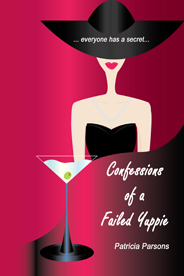
One tactic mentioned in the story is of an author who commissioned a jewelry artist to make necklaces that are featured on her book’s cover as well as a new perfume based on one of her fictional characters. The amount of work and money involved for an author in doing this is staggering to consider.  This, however, reminded me of an event in the provenance of one of my recent ‘new’ books Confessions of a Failed Yuppie.  Stick with me for a few minutes!

If you’ve been reading Backstory for a few years or even months, you might have realized that the “backstory” I’m trying to tell is the anchor of my own experience in writing and publishing.  More than that, though, my objective is to explore the issues that are important to all of us who are more than passingly interested in reading – and writing.  Sometimes I rant about things that have annoyed me; sometimes I tell you a story of my experience.  Sometimes I tell you a real backstory to my writing: what inspired it, how it developed, what happened next.  This post is one of those true backstories.

In the early 1990’s I was on a rant about the Yuppie lifestyle.  So I decided to write a book about it – but rather than a non-fiction examination of the phenomenon, which would have been more akin to my writing experience at the time, I decided to write a novel – a satire of sorts.  I felt strongly, though, that I wanted it published no matter what, so I did what self-publishing authors did at that time, I sent it to a vanity publisher.  (For the working definition of a vanity publisher, you might want to surf back to last week’s post: The confusing world of 21st century publishing jargon: A glossary for writers).

In due course, a box full of hard-cover copies of Yuppie arrived on my doorstep.  What to do with them?  Those were the days before book promotion through online networking channels was de rigeur.  Indeed, there were no social media channels.  Just imagine such a world!  I decided that the first order of business would be to have a book launch.  But before the launch, I’d need some “merchandise.”

The old Yuppie cover and the mug: "I confess: I'm a failed yuppie" with a "reject" stamp!
The old Yuppie cover and the mug: “I confess: I’m a failed yuppie” with a “reject” stamp!

I created a design for the front of T-shirts and for mugs and had dozens of these pieces of paraphernalia created – all at my own expense, of course – and had them available on the day of the pary.  I also had a poster-sized blow-up of the cover of the book so that it could be the focal point of the party, next to the book-shaped cake that adorned the dining room table.  I then created a guest list and sent out invitations.

As parties go, the event was a great success.  We had door prizes of T-shirts that the guests obligingly sported and everyone went home with a signed copy of the book.

As the weeks went by, a number of the guests told me that they had enjoyed the book and when was I going to write another one?

The book, naturally enough, never sold.  Getting a self-published book reviewed in those days was not next to impossible, it was completely impossible.  And since there were no social networks available to promote it, short of taking out advertisements at great expense (I did that once) and going door-to-door with a pile of books (which didn’t sit well with my personality), the book would languish with thousands of others.  And so it did.  Until last year.

Writers have lots of finished and unfinished manuscripts hiding on their hard drives or taking up space in filing cabinets.  I know that most of us should toss most of it, but sometimes a manuscript draws us back and that’s how I felt about Yuppie.

So, I took out the hard-cover copy with its tattered edges and began to write rewrite the book.  It’s now a 21st century Yuppie story, and taking advantage of the digital advances, I decided to make it available once again.

Two decades in the making, Confessions of a Failed Yuppie lives again, and it starts with a definition of Yuppie:


“YUPPIE”: A Definition

Acronym for Young Urban Professional, usually occurring in a married pair (often male/female but not necessarily). Categorized as upper middle class or at least moving in that direction, ambitious, well-educated.  Characterized by excessive concerns about appearances.  Lightly narcissistic.  May have money or at least leverage.  But not necessarily. Normal habitat is the urban condo, sometimes the single-family dwelling of dubious heritage in a downtown area with a postage stamp for a yard, for which a bidding war took place prior to acquisition.  Yuppies with children often move to larger, more impressive dwellings.  Diet consists mainly of cocktails, organic kale and the latest gastronomic fad.  Would not be caught dead in a North-American-produced automobile brand.  Skis in winter, does hot yoga, plays squash (it’s making a come-back), and quietly brags all year round. Widely thought to have become extinct in the early 1990’s.  Not so much.

Maybe you’d like to read the rest.  Or not.

Posted in Book Reviews

When is a book review not a book review?

It seems simple enough. You write a book, someone reads it, likes it (or not), writes a review, and other potential readers interpret the review for themselves, deciding whether or not to read your book based on their own criteria. One of the most important factors readers might use to interpret a review is the identity – and therefore perceived credibility – of the review writer.

For example, for some readers there might be a big difference between a review written by the New York Times and one penned by Oprah (or at least endorsed by her). Or between the writer’s spouse and someone who doesn’t know that writer personally. That may be the line we cross into territory where a review is not really a review – it is an advertisement. And these are not the only kinds of ‘advertisements’ masquerading as book reviews.

There can hardly be a writer or ‘wanabe’ writer around these days who is unaware of the current book review scams visited upon readers.

In August of 2012 The New York Times published an article titled: “The Best Book Reviews Money Can Buy.” Author David Streitfeld reported on what appeared to be a newly established business model: writing book reviews for cash. He tells the story of Todd Rutherford’s gettingbookreviews.com, a business based on writing online book reviews – paid for by the writer. One of the service packages he offered was for him to write 20 online book reviews for $499. What could be better? Twenty reviews proclaiming a book to be worthy of 5 stars, the work of a literary genius. In my view, what would be better would be some honesty.

And Rutherford was merely one among myriad businesses that have been springing up all over the place to provide exactly the same service to writers desperate for sales. Quite often, the entrepreneurs offering this service are themselves wannabe writers.

But what happens when a reader finds out the truth of the review? Maybe the book is a good one; but maybe it isn’t. Readers searching for new, indie writers will soon become jaded from being burned. Buying book reviews hurts everyone.

So if a book review is not a book review when it is written for money, what about when it’s written by your spouse (or mother, or sister etc.)?

The Amazon review by a certain party whose last name is the same as mine was not penned by a relative.

I was mortified when I went onto Amazon.com to see that one of the reviews (and a 5-star one at that) of one of my historical novels Grace Note was penned by someone whose last name is PARSONS. I’m quite certain that anyone looking at that would make the reasonable assumption that it was written by one of my relatives. It wasn’t. I’m just glad the reviewer liked it! The bottom line, however, is that a review by one of your nearest and dearest isn’t really a review either.

So…and here is the one where I’m going to get myself into trouble… what if the review is written by a member of your co-dependency group. These are those writing groups, usually virtual, or Twitter communities, wherein everyone gushes about everyone else’s books mostly so that when yours is published everyone will do the same. I have to admit that this really bothers me. It puts me off buying the promoted books, which is a shame for the writers. However, I just don’t trust these reviews.

I follow a number of otherwise interesting indie authors who also review books on Twitter, but I find that the reviews are always 5-star ones, or very close to it. I’m presuming that they only tweet their 5-star ones (surely there are books they dislike?), but I’d like to be directed to one that might be a 4 or even a 3 ½ star review so that I can make up my own mind. When everything is ‘awesome’, then nothing is ‘awesome.’

Let’s get back to some truth in advertising among writers and publishers. Please.

Posted in Social Media

5 ways your social media platform might be turning toxic

Email abstractAt least twice in just the past week I have acquired new Twitter followers who themselves boast over 10,000 followers.  Imagine that!  10,000+ followers!  I always surf over to see the profiles of my new followers and never cease to be astounded by these huge numbers.  But before I click to “follow” back, I always hesitate in these instances.  I always seem to have the same question for myself: “Why in the world would I want to follow someone (or some organization) with that many followers unless I’m looking for their information.  They certainly won’t be interested in anything I have to say.  Dear god, they’ll never be able to find it!”  And I’m left wondering how anyone can possibly be in a balanced give-and-take situation when there are so many hangers-on involved.

In my day job, I’m a university professor.  To be more precise, I teach in a communication studies department with a focus on public relations and corporate communication. Throughout my long career in the real world and in academia, I’ve specialized in two areas, one of which is strategy.  In that capacity, I’ve helped hundreds of students develop successful promotional plans for non-profits and small businesses, and was an early adopter of social media, teaching our first undergraduate course in the new applications some years ago.  It’s funny now that I’m looking at my own promotional work, I’m struck by a number of oddities in the world of social media – and authors.

My last post found me wondering if publishers really care about a writer’s life on Twitter, and thinking about that led me to contemplate the problems of social media ‘platforms’ in general.  So, at the risk of alienating all of those authors and wannabe authors that I might be connected to online, here goes.

A social media platform no doubt supports sales of independently published books.  Okay, I’ll buy that – but with a few caveats, the most important of which is that there needs to be some recognition of the point of diminishing returns.

I submit that a there is a point at which a writer’s online, social media presence morphs from supportive and beneficial to toxic.  So here are some symptoms of toxicity that I’ve observed.  You might be developing social media toxicity…

  1. When you find yourself falling victim to group-think.  It’s so easy to retweet mindlessly, to find yourself nodding in support of ideas that you hadn’t really given enough time to figure out on your own. I’ve noticed that except for the odd outlier, most reply tweets are supportive, and I even find myself falling into this trap, ignoring the tweets that I think are just plain stupid.  And note that on Facebook and even Linkedin there is no “dislike” button.
  2. When you have an over-inflated notion of how many books you should be selling based on your number of followers, friends etc.  I have to hearken back to my last blog post where I began to find research to support the notion that online ‘likes’ don’t translate into behavior.
  3. When you fall victim to that co-dependency problem.  Codependency is known in mental health circles as a relationship addiction, excessive social or emotional reliance on another person who often has a problem.  I’m suggesting that writers who toil in isolation often look for support among other writers who understand them, and this begins the cycle.  Over-dependence can become toxic leading to inertia and the next symptom of toxicity…
  4. When your social media activities become a major time suck.  This can happen so easily.  It’s like several of my students suggested the other day in class: they find themselves spending inordinate amounts of time on assignments as a result of keeping their electronics devices at their elbow and responding to every ‘ping’ as texts and tweets arrive. My advice: just turn them off!
  5. And finally, when your admiration is seriously misplaced.  I’m talking about the odd phenomenon of actual best-selling writers like Sheila O’Flanagan having fewer than 5,000 Twitter followers (and wisely following far fewer yet selling books in millions) while some indie authors who have sold a few thousand books having tens of thousands of followers.  It might be worth the unknown writer’s (like me) time to follow the ones who have been on the real best-seller lists.  Maybe we could learn a thing or two.

So, you might conclude that I’m just sour because I have a very few Twitter followers.  But I’m not.  I might have at one time when I thought that those followers might actually buy and retweet to actual buyers about my work.  But that rarely happens in reality.  It’s a bit like viral video: You can’t plan to use one for promotional and marketing because you have no way of knowing if a video you produce will catch fire or not.

I’m going to spend less time on my social media presence and more time on my writing.  At least for now.