Posted in Social Media

5 ways your social media platform might be turning toxic

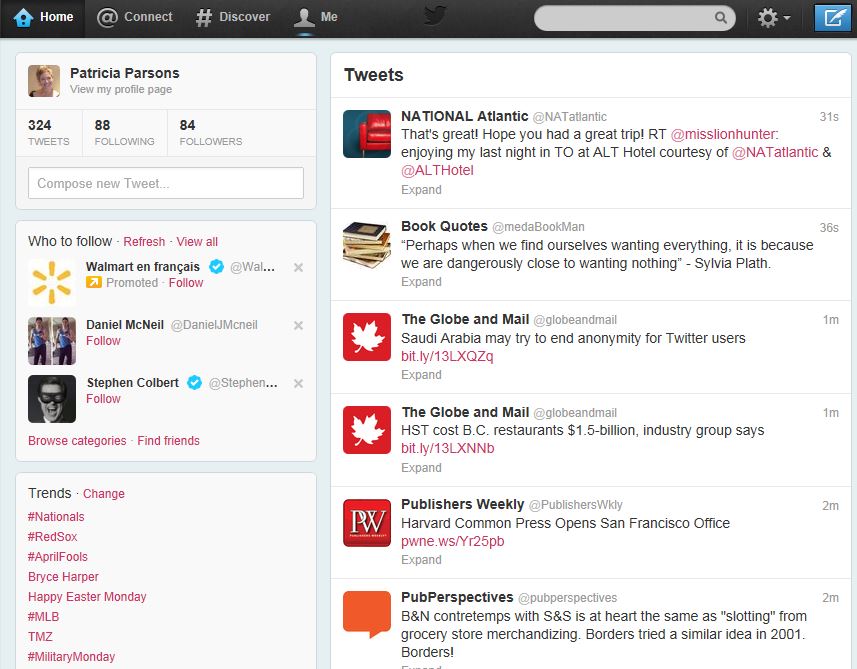
Email abstractAt least twice in just the past week I have acquired new Twitter followers who themselves boast over 10,000 followers.  Imagine that!  10,000+ followers!  I always surf over to see the profiles of my new followers and never cease to be astounded by these huge numbers.  But before I click to “follow” back, I always hesitate in these instances.  I always seem to have the same question for myself: “Why in the world would I want to follow someone (or some organization) with that many followers unless I’m looking for their information.  They certainly won’t be interested in anything I have to say.  Dear god, they’ll never be able to find it!”  And I’m left wondering how anyone can possibly be in a balanced give-and-take situation when there are so many hangers-on involved.

In my day job, I’m a university professor.  To be more precise, I teach in a communication studies department with a focus on public relations and corporate communication. Throughout my long career in the real world and in academia, I’ve specialized in two areas, one of which is strategy.  In that capacity, I’ve helped hundreds of students develop successful promotional plans for non-profits and small businesses, and was an early adopter of social media, teaching our first undergraduate course in the new applications some years ago.  It’s funny now that I’m looking at my own promotional work, I’m struck by a number of oddities in the world of social media – and authors.

My last post found me wondering if publishers really care about a writer’s life on Twitter, and thinking about that led me to contemplate the problems of social media ‘platforms’ in general.  So, at the risk of alienating all of those authors and wannabe authors that I might be connected to online, here goes.

A social media platform no doubt supports sales of independently published books.  Okay, I’ll buy that – but with a few caveats, the most important of which is that there needs to be some recognition of the point of diminishing returns.

I submit that a there is a point at which a writer’s online, social media presence morphs from supportive and beneficial to toxic.  So here are some symptoms of toxicity that I’ve observed.  You might be developing social media toxicity…

  1. When you find yourself falling victim to group-think.  It’s so easy to retweet mindlessly, to find yourself nodding in support of ideas that you hadn’t really given enough time to figure out on your own. I’ve noticed that except for the odd outlier, most reply tweets are supportive, and I even find myself falling into this trap, ignoring the tweets that I think are just plain stupid.  And note that on Facebook and even Linkedin there is no “dislike” button.
  2. When you have an over-inflated notion of how many books you should be selling based on your number of followers, friends etc.  I have to hearken back to my last blog post where I began to find research to support the notion that online ‘likes’ don’t translate into behavior.
  3. When you fall victim to that co-dependency problem.  Codependency is known in mental health circles as a relationship addiction, excessive social or emotional reliance on another person who often has a problem.  I’m suggesting that writers who toil in isolation often look for support among other writers who understand them, and this begins the cycle.  Over-dependence can become toxic leading to inertia and the next symptom of toxicity…
  4. When your social media activities become a major time suck.  This can happen so easily.  It’s like several of my students suggested the other day in class: they find themselves spending inordinate amounts of time on assignments as a result of keeping their electronics devices at their elbow and responding to every ‘ping’ as texts and tweets arrive. My advice: just turn them off!
  5. And finally, when your admiration is seriously misplaced.  I’m talking about the odd phenomenon of actual best-selling writers like Sheila O’Flanagan having fewer than 5,000 Twitter followers (and wisely following far fewer yet selling books in millions) while some indie authors who have sold a few thousand books having tens of thousands of followers.  It might be worth the unknown writer’s (like me) time to follow the ones who have been on the real best-seller lists.  Maybe we could learn a thing or two.

So, you might conclude that I’m just sour because I have a very few Twitter followers.  But I’m not.  I might have at one time when I thought that those followers might actually buy and retweet to actual buyers about my work.  But that rarely happens in reality.  It’s a bit like viral video: You can’t plan to use one for promotional and marketing because you have no way of knowing if a video you produce will catch fire or not.

I’m going to spend less time on my social media presence and more time on my writing.  At least for now.

Posted in Book publishers

Do publishers really care about a writer’s life on Twitter?

I’ve been doing a bit of research lately on book marketing.  This will come as no surprise to my blog readers who have been with me through various book launches.  At every such juncture, I dig out my research skills to see if there is any actual hard evidence on what really works to sell books.  Lately j0316779there’s been an inordinate amount of material on the need for a (huge) social media presence.  Indeed, it seems to be the collective wisdom that publishers won’t touch you with a ten-foot pole if you don’t have thousands of Twitter followers, huge numbers of Facebook ‘friends’ or ‘likes,’ and more than a foot in the door of Google+.  And it’s not only the traditional route to publication that seems to beg for this: there are more blog posts for indie authors on this topic than perhaps any other single current issue.  But now, as it was the last time I tried to find real numbers, there doesn’t seem to be any data.  I need data, people!

This search for evidence comes at the juncture of three events in my life: the release of my most recent business-related book Beyond Persuasion by the University of Toronto Press, my search for a new agent, and my foray into fiction.  Add that to a media story I read last week (tweeted by a fellow academic) about the usefulness (or more specifically the uselessness) of current Twitter metrics, and I’m seriously doubting the collective wisdom.

Since publishers don’t seem to have the data, let’s start with an industry that has done their homework here.  The story tweeted by my colleague focuses on a study of the use of social media by charities.  Facebook users give their ‘likes’ — but not their dollars — to charities: study reports gives me some evidence.

A PhD student at the University of British Columbia studied the correlation between someone ‘liking’ a charity and actually being moved to volunteer or donate.  What he found might come as something of a surprise to the more naïve among us.  The more likely someone is to click like, the less likely that person is to actually give money.  The researchers characterize these people as slactvitists – a new breed of individual who likes the feeling of publicly supporting a good cause but then feels no need to actually do something about it.  So, if this is the case in the non-profit industry, can we not extrapolate to the book buying industry to theorize that the more likely someone is to follow you on Twitter, the less likely that person is to buy your book?  It’s an interesting argument.

Okay, let’s take this argument a step further.  Wait a minute, you say, even if that’s true (and maybe the book’s not for them), if they are active tweeps, then at the very least they’re more likely to tweet it.  This is actually unlikely if they follow more than a few hundred people (studies do show that if you follow numerous peeps on Twitter, you cannot possibly follow their tweets with any degree of regularity), but for the sake of argument, let’s say they do tweet it, and then someone else re-tweets it and on and on.  If our original premise is correct, none of this matters.  Your book will be tweeted all over cyberspace and still not a single person might buy your book.  Indeed, many indie authors would be millionaires (or at least making a luxurious, regular wage) if this were true.  So, we’re back where we started.

It seems to me that the notion of a platform and a social media platform are two different but related concepts that need differentiation.

Just as I’ve always thought, a non-fiction author still needs a platform – and that doesn’t necessarily mean thousands of Twitter followers.  That means the credentials and expertise to actually write the book.  You can rest assured that neither the UTP editors nor the reviewers cared a bit about my online presence for the new book mentioned above.  What they did care about was my background, education and experiential credentials, and my ability to write authentically, clearly and correctly.

Those thousands of Twitter followers might also be impressive, but they are at the lower end of what’s needed at least initially.  According to one agent, this is the kind of platform you need for non-fiction and for fiction, well, it is just as I suspected, unnecessary.[1]   Interestingly, though, she does indicate that when she looks at a potential fiction client’s tweets, she’s looking for the unique voice.  She further considers blogging and what it might mean if you have a blog that is outdated and never used.

Literary agent Carly Watters says, “Twitter is a place for authors–who live a very solitary existence–to engage with other writers going through the same experience, follow industry veterans, follow writers they admire, and learn about how the book business works.”[2]

In her very good post A Definition of Author Platform, blogger Jane Friedman give us this useful advice: “Your platform should be as much of a creative exercise and project as the work you produce. While platform gives you power to market effectively, it’s not something you develop by posting “Follow me!” on Twitter or “Like me!” on Facebook a few times a week.”

So what might your social media presence be good for?

  • Finding beta readers far afield.
  • Doing background research and getting tips.
  • Finding support from like-minded, unknown writers.

And as for this last bullet, I’m reminded of the phenomenon of co-dependency – next blog post.

Posted in Backstory, Book promotion

Do I really need a Facebook presence? Or does any author, for that matter…

Let me begin by telling you what I did last month.  I removed everyone from my Facebook ‘friends’ list except close family.  “Why in the world would a writer do such a thing?” you ask.   And it is no small thing to rid oneself of ‘friends.’  It takes time, so you really do need to be committed to the task and why you’re doing it.

I’m sick of Facebook.  Every time I open my news feed, there among the interesting updates from pages that I’ve liked is the constant stream of narcissistic stream of consciousness from my so-called friends.  And I’d bet my next (day job) pay check that not one of those people gives a rat’s a## about what I’m doing, either.  But it’s not just that.  I often have to bite my cyber-tongue when I see posts.

Sad little Facebook fan page...
Sad little Facebook fan page…

Here are some of the things that I wanted to write but didn’t over the past few months:

  • “Get over it.”  I cannot tell you how many times as a response to so many different status updates that I wanted to say this to someone.
  • “If you post one more ultra-left-wing piece of propaganda, I’ll tell the world what I really think of your politics.”  Ooh, this one could really get me into cyber-trouble.
  • “I don’t actually care what you’re making for dinner tonight.”  Need I say more?

So, you’ve probably come to the conclusion that I’m not really that interested in my ‘friends.’  If so, you’d be right, because a Facebook friend is not a friend.  A friend doesn’t need to keep in touch on Facebook with public posts of anything and everything.  But if I’ve sabotaged my Facebook presence, am I not endangering potential book sales?  Isn’t this the fear of writers who are on Facebook?

I’m a ‘fan’ of a number of writers and their fan pages on Facebook.  It appears to me that the only writers on Facebook who have a real and compelling presence are those who had a name before they put up their Facebook pages.  In other words, if you’re already a best-selling writer and you put up a fan page on FB, your fans will, indeed, flock to you.  However, if you are an unknown writer (as are the majority of writers on Facebook), Facebook is probably a great time suck.

I’ve been trying to find some hard data on the extent to which Facebook really helps writers build their ‘brand’ and sell books to those readers who might actually enjoy/need them.  Despite the fact that everyone and his or her dog seems to be writing about the need to build your ‘platform,’ these exhortations are long on rhetoric and short on hard data.

Sad little Twitter feed!

The truth is these days that publishers don’t seem to understand that one of their roles is to actually help the author to build an audience for a book they believe in.  Rather than taking a lead in the marketing arena, traditional publisher today will often not even touch a book if the writer doesn’t already have a’ platform.’ Of course the platform consists largely of a presence in cyberspace comprising (but not limited to) a Facebook page, a LinkedIn profile, a Twitter feed, a blog etc.  The strength of the platform is a function not only of this presence, but presumably some kind of engagement.  That means that you have thousands of Twitter followers who actually read and reply or retweet your messages.  You have thousands of Facebook fans or friends who post to your wall telling you how distraught they are that your new book won’t be out for another month or two.  You have thousands of blog followers who regularly post pithy comments to which you respond diligently, or who click ‘like’ and you go immediately to their blog and tell them that you’re happy they stopped by.

If you think about it, we could be spending twice as much time ‘engaging’ with people who might or might not buy and/or read our books than actually writing.

So, back to the hard data.  Where exactly is it?  I need evidence people!

Earlier this year Fauzia Burk, president of a digital publicity and marketing firm specializing in creating awareness for books and authors wrote a piece for the Huffington Post titled: Does Social Media Sell Books?.  Burk interviewed a best-selling author’s agent – an author who is not and has never been active on Facebook or any other piece of the platform.  Surely the agent would have some data.  Nope.

?????????????Here’s what this agent said, “…it’s critical that no matter how active an author is online, the conversation about them and/or their book must be picked up and carried on by others for it to truly have an impact on sales. It can’t be ONLY about the author talking (blogging/tweeting)…” and later, “…For nonfiction authors with a specific expertise, being out there in the community that has interest in that expertise will most likely be effective in selling their book.”[1]

Most likely be effective?  Most likely?  I’m shouting now.  This is not the data I’m looking for.  It’s something that seems like a good idea, but the return-on-investment (of time in this instance) just doesn’t seem to have legs.

I’ve moved my attention from Facebook which annoys me no end, to Twitter.  I only have so much time in the day.  And to tell you the truth, I’d rather be writing on my blogs or working on those two new books that I’ve plunged into than check out photos of someone’s cat hanging upside down from a Christmas tree.  But that’s just me.