Posted in Publishing, Self-Publishing

When self-published work is derided: Often it’s justified

publishing word cloudCaitlin Dewey who runs the Washington Post’s Intersect Blog online wrote the following on October 2, 2014, “In the past 90 days, some 84 people have self-published Ebola e-books on Amazon, almost half of them in the past month alone…”[1]  She goes on to say that many of these books have highly-rated reviews on Amazon and yet, “…many of the books — almost all of them, in fact — contain information that’s either wildly misleading or flat-out wrong…”[2]

This is the best evidence I have yet seen on why the self-publishing world is so often deserves the criticism it regularly receives from the traditional literary media and publishers. There are no gate-keepers.  At the most benign end of the outcome spectrum all you have is drivel; at the most malignant, it can cause wide-spread misinformation if not panic, as could potentially happen in the case of Ebola.

I’ve written before about my happy and not-so-happy encounters with self-published books. A novel might simply be poorly written, derivative twaddle that otherwise does not harm other than wasting your time and clogging up the channels of entertainment.  Non-fiction, on the other hand, without benefit of editing, can disseminate all manner of harmful or simply wrong information.  So, why do I self-publish?

There are probably two reasons: first, I am sometimes impatient. Perhaps I am often impatient.  The traditional publishing process takes a long time.  Sometimes a really long time.  Second, and I am being more honest here than I have seen of other self-published novelists, my writing may not be up to the standards that the publishers I have approached in the past are looking for.  I have a track record as a well-published non-fiction writer, but I am a relative newcomer to fiction.  So, does that mean I shouldn’t publish my own novels?

Of course not. I can and I probably will continue to do so. Indeed, I’m also likely to publish a non-fiction piece or two in the future.  That being said, I have no call – nor do any other self-published writers – to either feel hard-done-by when the indie publishing industry is criticized, or to pester traditional reviewers.

If you are a self-publisher or contemplating this route, and you haven’t read Ron Charles’s recent piece No, I don’t want to read your self-published book, you should.  Charles, by the way, is the editor of The Washington Post’s Book World.  In it he refers to another piece you should read: An open letter to the self-published author feeling dissed penned by Roger Sutton the editor of a book review magazine.  Charles asked Sutton what inspired his open letter rant.  Evidently its genesis was in an email exchange with a self-published author who was feeling affronted by Sutton’s refusal to review self-published books.  When Sutton suggested to Charles that “…people are more interested in writing self-published books than in reading them…”[3] I thought, I could not agree more.  And we need to stop deluding ourselves.

[It is heartening to note, however, that Sutton’s derision of the self-published book has evolved over the past few years.  In his view, self-published children’s books today are still terrible; but he admits that “self-publishing for adults these days is demonstrating considerably greater skill and sense of audience than it used to, especially when it comes to niche topics and genre fiction.”[4]  Yay!]

The bottom line is that we should continue to write and even publish if we want to, keeping in mind that not all of our work contains as many bon mots as we think.  But we do need to stop feeling so maligned by the traditional reviewers and publishers: they are not the problem.  The plethora of unedited, poorly written self-published books is.

Of course there are many self-published authors who are probably as good as or even better than many taken on by traditional publishers. Sadly, it is more often the case that this is not true.  As a community of indie authors, what we really need to do is everything in our power to ensure the quality of our work.  Here are my suggestions:

  1. Write any kind of drivel that you want; publish only your best.
  2. Work diligently to improve you writing at every opportunity.
  3. Support other high-quality indie writers.
  4. Be honest when giving feedback or reviewing the self-published work of others.
  5. Stop feeling that the world of the indie writer is somehow in a war with traditional publishing.

What would you add to the list?

[1] http://www.washingtonpost.com/news/the-intersect/wp/2014/10/02/popular-on-amazon-wildly-misleading-self-published-books-about-ebola-by-random-people-without-medical-degrees/

[2] http://www.washingtonpost.com/news/the-intersect/wp/2014/10/02/popular-on-amazon-wildly-misleading-self-published-books-about-ebola-by-random-people-without-medical-degrees/

[3]http://www.washingtonpost.com/blogs/style-blog/wp/2014/10/01/no-i-dont-want-to-read-your-self-published-book/

[4] http://www.hbook.com/2014/09/blogs/read-roger/open-letter-self-published-author-feeling-dissed/#_
Posted in Ideas generation, Journals

Travel as writing inspiration

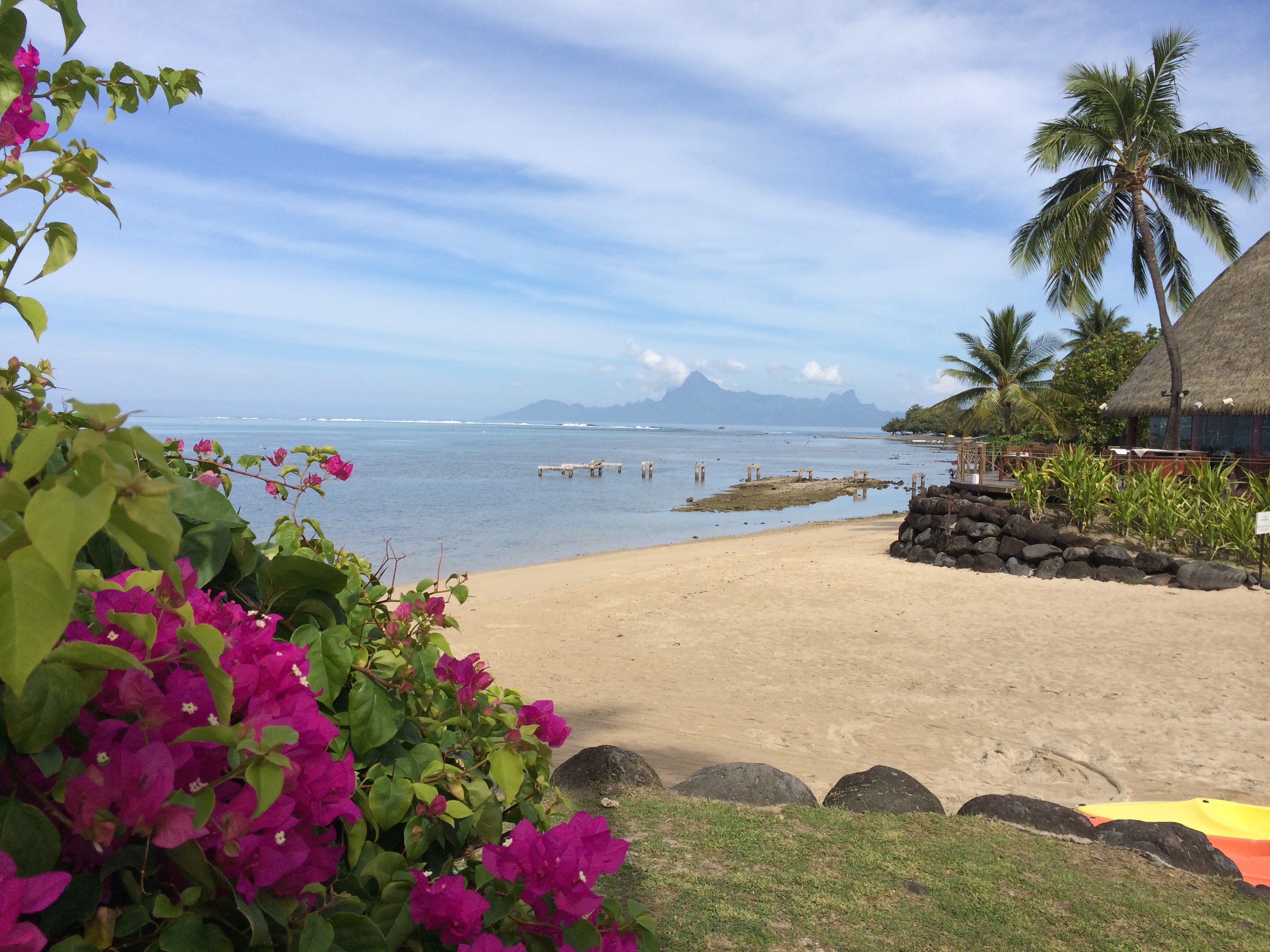
Who wouldn't be inspired by a beach in Tahiti?  I was.
Who wouldn’t be inspired by a beach in Tahiti? I was.

As I finish draft three of the new book and begin deliberations with a new publisher (more about that in an upcoming post), I’m also thinking about my packing list – that list is the one for an upcoming trip to London, Rome, the Greek Islands, Athens and ultimately five days in Istanbul. Travel is the other love of my life – after my husband, son and my writing.  I’m taking a few notebooks, a great pen, a mini-iPad and a flash drive.  Other than clothes, that should about cover my needs!

The truth is that I think we can be inspired by so many things. Whether we write fiction or non-fiction, we need to be always aware of our surroundings, what we see, what we hear, how we feel about what’s going on around us.  There we can find the genesis of an idea.

As I’ve said before, “The most accurate way to describe my mind is to use the Buddhist term: monkey mind. That’s me.  My mind is always moving; the thoughts are chattering away, unbidden.  Ideas fill my head from morning until night.”  Obviously, this can sometime make real life challenging, but I’ve learned to cope as all writers do.  The truth is that travel – whether to the other side of the world or simply to the other side of your town, province, state or country – opens up my mind t new things if I only pay attention and let my mind fill with the ideas without grasping for them.  Then that’s what the notebooks are for.  I take along several Moleskines™ of different sizes, my favorite kind, a great pen, and an iPad for making electronic notes that I then either store in Dropbox or send to myself as an email.  The flash drive is in case I have access to a computer in an airport lounge or, as is the case on this upcoming trip, in our suite on board the ship that will take us from Rome to Istanbul.

My new character.  What could she be thinking?
My new character. What could she be thinking?

I’ve been inspired with ideas for historical fiction in particular several times in the past. Two great ideas are still gestating in my mind as we speak, since I’ve been embroiled in several non-fiction projects with deadlines and haven’t had time to get back to my real love.  But that time is fast approaching.

One time several years ago, my husband and I were on a ship in the Mediterranean. Believe it or not the ship interior was the inspiration.  Among the various pieces of fabulous artwork on board was a large painting that covered one wall of the piano bar.  I was drawn into the face of the main subject as she sat aboard a ship on what in my mind at least was a transatlantic voyage.  She was a character out of an era that has always fascinated me: the 1920’s.  I photographed her and thought about her, wondering what she was thinking.  I didn’t figure it out until a year later when we visited the Caribbean island of

Bequia and I saw the ruin of a village that was evidently built in the 1960’s but in my mind (and that’s all that really matters to a writer, isn’t it?) it was built much earlier and finally I had a transatlantic connection.  I’ve already started the book.  Maybe I’ll post the first chapter here some time.

Moon Hole, Bequia.  My character is headed here.
Moon Hole, Bequia. My character is headed here.

The places that we’re visiting over the next month and a half are steeped in ancient history. I’ve been doing as much background reading as time permits and I think I’m ready.

I’m going to listen, look, smell, taste and feel some new experiences. I’m going to write those impressions down in my trusty notebooks and then I’m going to come home and write a new book.

Other thoughts about inspiration, keeping journals, and travel:

The Genesis of an Idea

Keeping journals

Maybe Bora Bora will inspire you! (from our travel blog)

Posted in Creativity, Writing

Why we write what we write

Man Reading Book and Sitting on Bookshelf in LibraryJust like most writers out there in the twenty-first century, I follow a number of writer/author groups and blogs.  I suspect, though, that I follow far fewer than many writers.  I believe we need to spend more time writing than talking about writing; but that’s just me.  Apart from the extreme time suck involved in participation in these online groups, one of the other primary reasons for my reluctance to get more involved is because I really don’t find that many kindred spirits in them.  Perhaps that shouldn’t matter to me, but it does.

For example, just this morning, I received an email from a LinkedIn site that I follow in a general kind of way.  A participant in the discussion posted the following gem as a discussion starter:

“I want to embark on fiction but I just do not have the imagination to concoct stories and plots. Can anyone share with me how successful novelists repeatedly fabricate stories?”

Now, I would expect bona fide writers on this forum to weigh in as follows: If you have no imagination and no stories to tell, you clearly shouldn’t write fiction. End of story.  But, no, that’s not what they said.

One actually started his response by saying that it was a great question.  A great question?  Are you kidding? It is a moronic question in my view and epitomizes what’s wrong with open access to publishing.  There are so many people out there today who actually do have stories to tell and can’t get them published that I shudder to think what will happen to the literary world when self-published books become nothing more than the yearnings of wannabe fiction writers who really want to have written a book – not to actually write one.

Another “writer” suggested to the poster without imagination that he simply mine his own life.  That should be good.  No imagination needed there, I guess.

Someone else told him to read.  Another told him to take a ride on public transport – in response to the very astute comment of one responder who actually had the temerity to say, “If you lack the imagination…why start?”  Bravo to that honest writer who is like me.  What a surprise it was for me to find a like-minded writer in an online forum.

What I want to know is why someone wants to write fiction if he has no story to tell and admits upfront that he lacks imagination.   All the creative thinking suggestions in the world will not help if there is no imagination to carry an idea through.

Arthur Schopenhauer thought a lot about writing and why we write.

German philosopher Arthur Schopenhauer probably had it right in The Art of Literature when he said, “There are, first of all, two kinds of authors: those who write for the subject’s sake, and those who write for writing’s sake. […] The truth is that when an author begins to write for the sake of covering paper, he is cheating the reader; because he writes under the pretext that he has something to say.”  People can write whatever they want and I encourage them to do so.  Much of what we write, however, should not be published.

I think that there are people who truly want to write because they have something they want to say, and those who simply want to have written a book.  The former makes a life –even if it doesn’t’ pay the bills.  The latter makes for good cocktail hour conversation.