In light of the the digital advances that are currently taking our breath away, any self-respecting book lover has to have considered the question of what constitutes a real book. It used to be easy to answer: a book is that ‘thing’ you hold in your hands that has pages bound between two covers. Maybe we were wrong. Maybe a book is just what the writer writes and what the reader reads. But if that’s true, then a digitally distributed haiku qualifies as a book. Or is there a length rule? If a piece of digital writing is a certain length, maybe then it’s a book.
Most of my books have been made available by the publishers as e-books these days. When I say that, I mean that the books were originally published as pages bound between two covers. But when I’m writing a book, that book resides on my computer’s hard drive. When I put the finishing touches on the electronic file, is it a book yet?
So many questions; so many opinions. If you haven’t seen this new video yet, you might like to take a look at their answer to the question and then join the discussion. (By the way, it’s done with stop-motion not animation. The producers went into the bookstore from 6 pm to 10 am for five nights and moved books and things. Quite a job!).
They say a picture is worth a thousand words, but I’m wondering what those thousand words could possibly be as I contemplate the photos on some of my book covers. And then when I read the bios, it occurs to me that the author bio issue is even more fraught with considerations.
Generally, from my point of view, the author photo on the book cover has two distinct objectives:
* To assist in the marketing of the book.
* To massage the author’s ego.
Achievement of the first objective is very difficult to figure out. Achievement of the second – a lot easier.
Book marketers see the visual needs of the potential book buyer as very important important (that’s why covers are very important); thus the author photo is a key part of the book jacket’s appeal or lack thereof as far as they’re concerned. One web commentator suggests that there are three reasons to put author photos on book covers…
Author photos help to sell books.
Author photos help to build name recognition.
Author photos help TV bookers decide whether the author would be “good television” material[1].
Valid points, all; however, no one really knows the extent to which an author’s image assists in the selling of the book. No one seems to have done any solid research.
We convinced them to put us on the front cover. Quite a coup!
Some years ago when my co-author (husband) and I were negotiating the cover for a health-related book targeted at the general public, we insisted that to personalize it, our photo had to be on the cover. We had previous experience of this publisher; they had not wanted any photo on the earlier one, front or back. In fact the cover issue was a contentious one with this publisher. This time around, we wanted our photo there – and not on the back cover – we wanted it to be the front cover. When a doctor and a health educator are writing a book that they hope will benefit the readers, it seemed important to us that when potential readers slid it off a shelf in a book store (it was the dark ages, after all), they might be interested in who was speaking to them. It seems that most book marketers agree, but there are pitfalls here. The selection of the photo can be hazardous.
Paul Hiebert, writing online in Flavorwire makes a very good point: “Excellent authors avoid writing clichés. The problem is that some of these very authors do not apply the same level of vigilance when it comes to taking promotional photographs, whether they’re for magazine profiles or back-of-the-book biographies…”[2] He describes the kinds of staged photos that really do give little information to the potential reader and often make the author look, well, clichéd. His piece is worth a click.
If you think that no one actually looks at author photos, you might want to surf by David Wills’ piece The Curse of the Douchey Author Photo, wherein he writes an email to a reader who actually had the temerity to write a nasty note about the photo on his book. It makes an author think carefully about image, an image and personal brand that are influenced by both the photo and the bio.
Over the years, I’ve had publishers who insisted that there be no author photo (very hard on the author ego) as well as others who insist on one (easy on the ego if I get to select the photo – which I do). Their focus was on the author bio. A succinct statement of author credentials is very important to readers who are looking for information in addition to entertainment. I take great pains over the construction of that very brief bio, taking into consideration the needs and wants of the actual target market. What do they want to know about me? What do they need to know about me? What do they not care about? Then I avoid over-sharing – the plague of the modern technological society.
When it comes to fiction, the author’s bio might not be all that important. Do you really care what kinds of previous books the author wrote? Do you care where the author lives? Probably not. You are probably going to be more concerned about the book summary on the cover and whether or not it is compelling to you as an individual reader. Do you care what the author looks like? Probably not. But you might be curious. The real down side to this is that an author photo might actually put off the bigots of the world who might be the very people who need to open their minds.
Two different kinds of books (first, historical fiction; second, business), two different photos & bios — same author.
Someday I’m going to write a Christmas book. But since I also plan to try my hand at a travel book, perhaps I’ll write a Christmas travel book.
I’ve been thinking about this over the past week as I get ready to head out on the annual Christmas pilgrimage to visit our peripatetic son who now dances with Les Ballets de Monte Carlo in Monaco. Spending Christmas in a hotel might not be something that many of you would like to do, but I hardly know how to spend Christmas any other way at this point in my life! So, I think I’ll write about Christmas in a hotel. I’m going to think about that over the next couple of weeks, but before I leave, I thought I’d give my writing blog readers a bit of a Christmas gift — a book recommendation and a Christmas travel story.
Have you read Skipping Christmas? At fewer than 200 pages in a small format, it’s one of John Grisham’s lesser known books. However, if you’re a Christmas movie junkie, you sort of know the story. Hollywood turned his gem of a book into Christmas with the Cranks. I wish they had kept the title and a bit more of the soul of the book. Grisham’s story-telling has a lot more depth than the scriptwriter’s has; you should order the book, pour yourself a drink of your choice, and curl up with it before the onslaught of the season begins in earnest.
We tried to skip Christmas one year… I now invite you to our travel blog to read about it. Merry Christmas – or whatever other kind of holiday you might be celebrating. Just click on the Christmas tree…
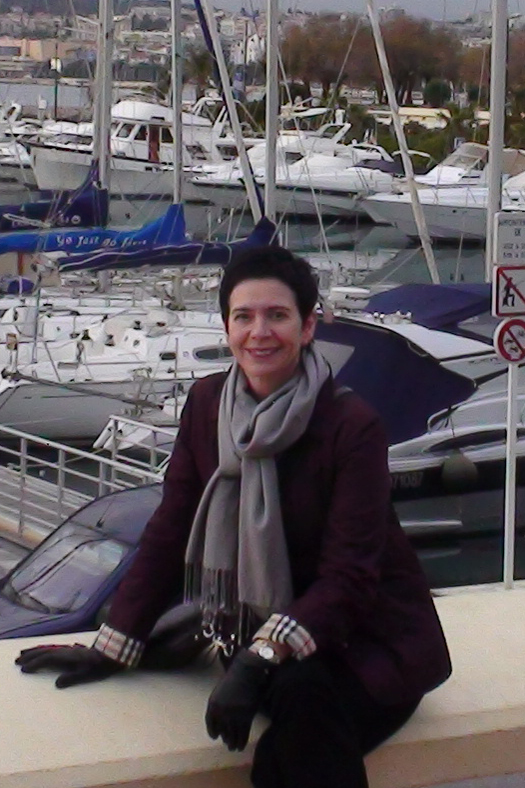



 Patricia J. Parsons