Posted in Ideas generation, Journals, Memoir, Writing craft

Keeping journals

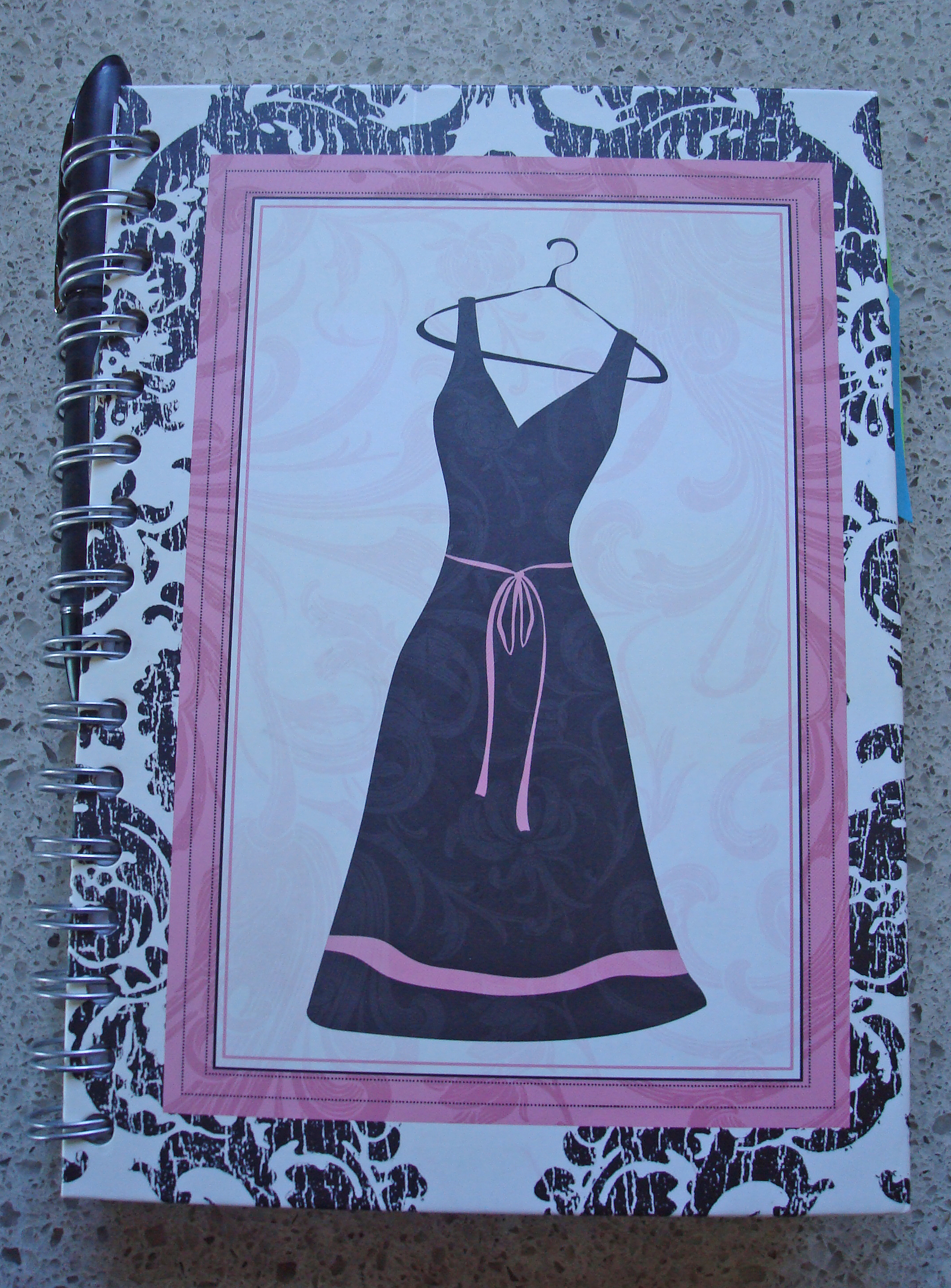
What kind of book notes & ideas reside in this journal? Hmm...

Do you keep a journal?  If you’re a writer, perhaps you ought to consider it.  There is hardly a teacher of writing craft around who doesn’t encourage students to keep journals.  It is said that,  “Journals have been the secret weapon for writers from Allen Ginsburg to Virginia Woolf to Victor Hugo.”  So, there are aspects of a writer’s journal that might bear discussion.

First, let me edit my original question to make it more specific to me and my own backstory.  Do you keep journals?  That “s” at the end of the word is key for me since I keep multiple journals.  In fact, I’m a tad addicted to the notion of journals – and I have journals that are pen and paper ones, as well as journals that reside on my computer.  As you can see, I’m not a purist either way.

Virginia Woolf is quoted as having said, “The habit of writing for my eye only is good practice,” and that sums up the first reason for keeping a journal: it gives you a chance to work on your writing without the self-consciousness of knowing it will be read by others.  Although this might, at first glance, seem like that cathartic kind of journaling that has become the ubiquitous habit of the navel-gazers among us, it’s really more than that. This kind of journaling is really an exercise that lets you try out different turns of phrase, that lets your mind wander to ideas deeply buried in your sub-conscious (see the comments on last week’s discussion), and that is a safe place for writing that you have no intention of showing anyone else.  And this kind of journaling can be semi-structured.

Writer and teacher Natalie Goldberg’s approach to journaling is one that I’ve come back to year after year.  In her first writing book (which I highly  recommend) Writing Down the Bones (originally published in 1986 and re-released in 2010), she suggests that you take pen to paper – something that  she’s adamant about – and place your pen on the paper, never lifting it for your ten-minute writing practice each day. Her rule is this: keep your hand moving.  Begin with the words “I remember…” or even “I don’t remember…” (She has other suggestions but you’ll have to read her book to get those ones); and never stop or lift the pen as it moves across the page.  Every time you get stuck, write down “I remember…” again and keep going for the full ten minutes.  It’s a very liberating process.

There are other reasons other than practice, though, for keeping journals.  One of my primary reasons is so that I have places to keep ideas that come to me.  These ideas can be thoughts, clippings, photos etc.  But I also have general idea journals and a special journal for every project I’m working on.  Okay, I do have lots of journals, but I’d wager a guess that I’m not the only one!

One of the journals I kept for many years was a bit like a diary – but it focused
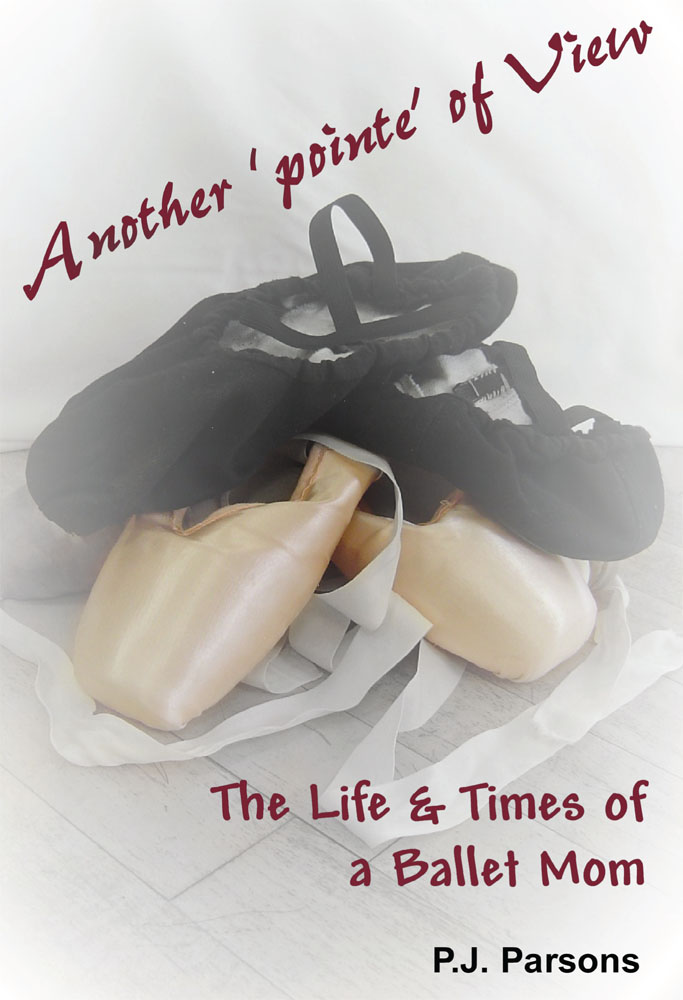
on only one of the general kinds of experiences in my life.  It chronicled my experience as a ballet mom.  That journal became the basis for my memoir Another Pointe of View: The Life and Times of a Ballet Mom.  I was able to capture detailed memories that would have faded into themists of my mind, and that would have been altered by subsequent experiences.  That journal was critical to my ability to write a story that might resonate with other mothers of gifted children.

Right now, I have so many journals on the go.  I have two that hold notes on two separate book projects.  I have one that is a kind of general catch-all for ideas.  I have a travel journal (this is a new idea – it’s time to capture details of our travels).  I have one that keeps notes about a book that my husband and I will write in our retirement to add to the four that we wrote some years ago.  I have two new ones that have not found their purpose yet, but they will.  And I have one for this blog.  I also have two computer-based journals and one on my iPad.

The very best part of my journals, though, is when I look into one of them and what I read becomes part of something larger – something that I’ll write that
someone else might read and enjoy – or at least learn from.

Posted in Creativity, creativity generators, Ideas generation

When inspiration strikes

Finding inspiration from a sunset somewhere over the North Atlantic, way out at sea

I’m just back from a summer vacation that has engendered seething jealousy from friends and colleagues alike.  The jealousy stems in part from what several have called its “inspiration” value.  And based on the story I told you last time, I should have my next book completely outlined with loads of snippets of narrative and dialogue in my little purple Moleskine notebook.

Inspiration it was – but I’m not quite ready to write yet – historical fiction requires more than an inspirational story line – it takes significant and detailed research.  We’ll get to that research process, but today I am fixated on the notion of inspiration.

In medical terms, inspiration means breathing in ad breathing out.  In a way, artistic inspiration is the same.  The writer (or choreographer, or painter or even corporate  strategist for that matter) has a sudden burst of creativity – the genesis of that moment might not even be discernable at the time.  We don’t always know the source of our inspiration in the moment.  We know only that something has triggered action.  So in a way, it’s like breathing in and breathing out – the creative fodder is breathed in, and the creative output is breathed out. Over the years, however, various creative individuals have had differing takes on just what it means to be inspired.

Leonard Bernstein said this: “Inspiration is wonderful when it happens, but the writer must develop an approach for the rest of the time…The wait is simply too long.”  Lesson 1: Don’t just sit back and wait for the muse to strike. Find ways to seek inspiration in the meantime.  I found this writer’s blog entry that has a laundry list of things to do to fill that gap between sudden bursts of creativity.

Picasso’s approach to the creative process is echoed by many other artists: “Inspiration exists,” he once said, “but it has to find us working.”  Lesson 2: Just get down to work.  Write about anything around you and eventually, the creative muse will strike and you’ll be inspired either to trash everything or to use it in new and innovative ways.

A glass of champagne aboard the Queen Mary 2 is an inspiration in itself!

American businessman Nolan Bushnell has been quoted as saying that “the ultimate inspiration is the deadline.”  Lesson 3: Set deadlines and stick to them.  Better yet, have someone else set them for you.  Try this:  tell your significant other or someone whose feedback on your writing you actually appreciate, and tell him or her that you’ll have a few chapters to be read in two weeks.  Even that kind of a deadline is inspirational.  Then, when you have a deadline from a publisher, you’ll know how to seek inspiration from knowing it has to get done.

So, here’s what I’m up to: I’m looking at my vacation photos and seeing what stories they hold for me.  I’m writing about a number of things in several different genres. I’m doing research on two new ideas.  I’ve told my husband that he’ll have a few more chapters for him to read in two weeks.

Posted in Book covers, Creativity, creativity generators, Ideas generation

In the beginning…was the idea

titanic deck chair
Laurie Mireau's Titanic Deck Chair painting

When precisely does a book’s backstory begin? Does is start when the author says to herself, I should write a book about this? Does it begin when someone else says to a would-be author, You should write a book about that?  (This often happens with non-fiction, by the way.) Or is it earlier?

Is it when you come across an interesting idea? A small article in a newspaper – the one you almost didn’t read?  Is it at the moment when that little piece of paper you clipped starts to invade your thoughts – unbidden?  Is it when the would-be author finally says – not I should write a book – but I want to write this book and I’m going to write it?

This issue of the germination of an idea was in the forefront of my mind earlier this week when I pulled my car up in front of the studio/home of a local watercolor artist here in Halifax.  A month ago I’d never heard of Laurie Mireau.  But since the day that my husband, who had met her about a month ago, came home with a brochure about her artwork, I had been haunted by one of the pieces featured.  The piece was a stark watercolor painting of a deck chair from the doomed ocean liner – Titanic.  Titanic has a strong connection to Halifax.  Although the ocean liner went down  closer to Newfoundland than to Nova Scotia, a number of the bodies of those who perished here brought to Halifax and are buried in a cemetery in the city.  Add onto that the fact that there is a truly fascinating exhibit at the Maritime Museum of the Atlantic and you have a storied port city that is part of the tragedy.

But there has always been something iconic about that single deck chair – the real  one that is on exhibit at the museum, as well as the replica that is for you to sit in and let your imagination run.  You lean back, your head just below the star symbolizing the White Star Line.  You close your eyes – and suddenly you’re there, on her deck.  You can smell the ocean.  You can hear the clicking of heels on the deck – no deck shoes in those days.  At least that’s how it is for me.  In any case, when I saw that thumbnail of Laurie’s painting, I had to have it.

First, I had to find out if she still had the original.  I didn’t want a print – only the original would do.  So, I contacted her and she managed to find it.  When she asked me about why I was interested, I spewed out an entire story about the deck chair, a painting that I’d seen and photographed on the wall of a bar on a cruise ship a couple of years ago and how I had an idea for a book set in about the 1920’s or ‘30’s – on a transatlantic voyage.  (No doubt she thought it was too much information!)  To tell you the truth, I didn’t have much of an idea, but it occurred to me that  the idea was germinating.  I had the distinct feeling that this might just be the beginning of a backstory for a new book that I’d write in the coming years.

gloria
My ocean-going character

It doesn’t take much to get my mind rolling.  The new book whose cover you looked at in last week’s post all started when I stumbled upon an academic article in an early music journal calling into question the  widely-held belief that St. Hildegard of Bingen, a 12th century Catholic mystic, writer, healer, composer actually knew enough about music to compose the 77 songs attributed to her.  I started thinking: if she didn’t, then who might have?

See, that’s all it takes for a backstory to start. I suppose the fact that next Wednesday I’ll be stepping onto the deck of the Queen Mary 2 in Southampton in the UK to take that transatlantic voyage to New York might have contributed to the story. I’ll let you know. (Two weeks holiday now!  See you in 14 sleeps as my hair stylist says.)