Posted in Book covers, Creativity, creativity generators, Ideas generation

In the beginning…was the idea

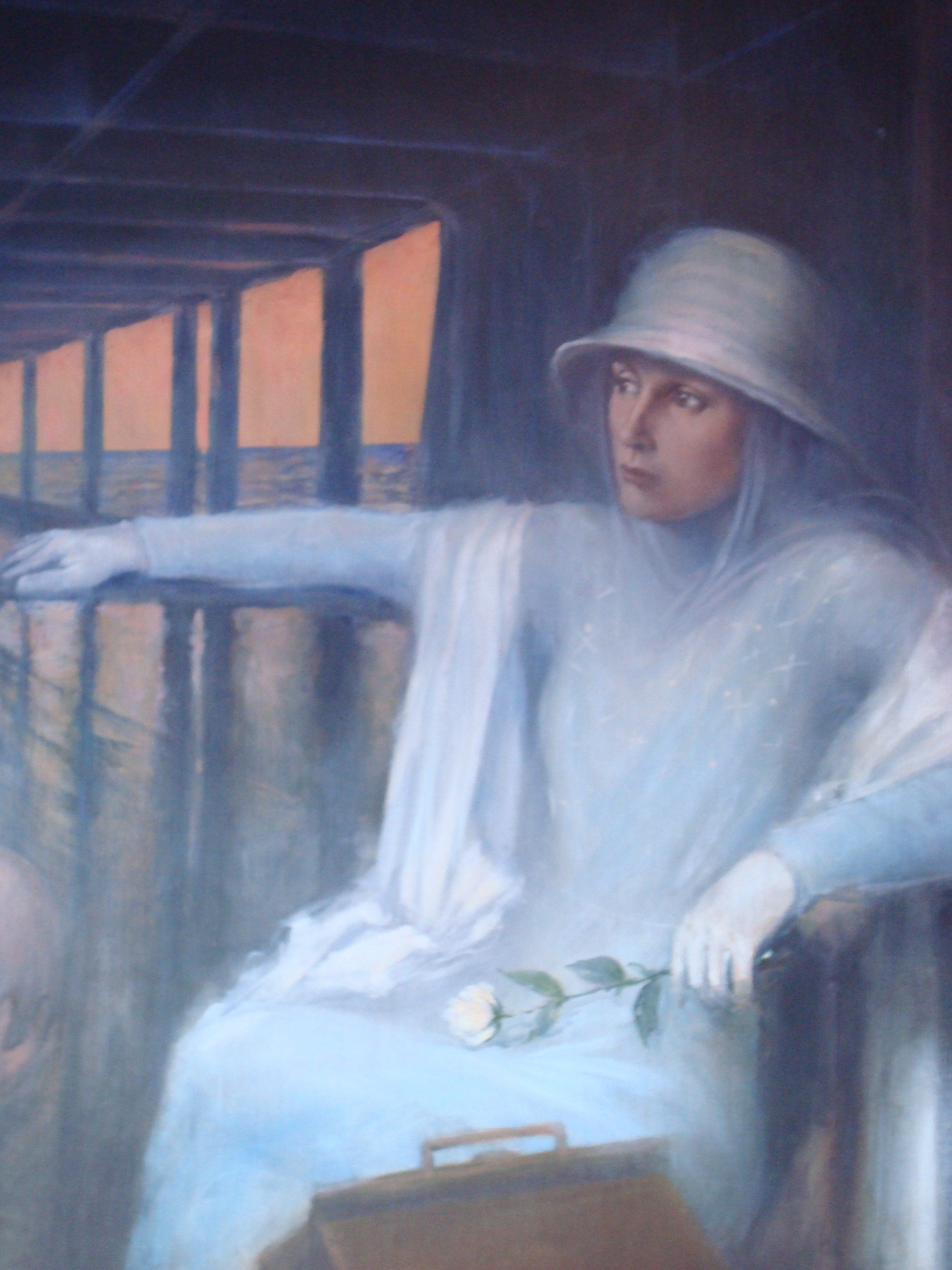
titanic deck chair
Laurie Mireau's Titanic Deck Chair painting

When precisely does a book’s backstory begin? Does is start when the author says to herself, I should write a book about this? Does it begin when someone else says to a would-be author, You should write a book about that?  (This often happens with non-fiction, by the way.) Or is it earlier?

Is it when you come across an interesting idea? A small article in a newspaper – the one you almost didn’t read?  Is it at the moment when that little piece of paper you clipped starts to invade your thoughts – unbidden?  Is it when the would-be author finally says – not I should write a book – but I want to write this book and I’m going to write it?

This issue of the germination of an idea was in the forefront of my mind earlier this week when I pulled my car up in front of the studio/home of a local watercolor artist here in Halifax.  A month ago I’d never heard of Laurie Mireau.  But since the day that my husband, who had met her about a month ago, came home with a brochure about her artwork, I had been haunted by one of the pieces featured.  The piece was a stark watercolor painting of a deck chair from the doomed ocean liner – Titanic.  Titanic has a strong connection to Halifax.  Although the ocean liner went down  closer to Newfoundland than to Nova Scotia, a number of the bodies of those who perished here brought to Halifax and are buried in a cemetery in the city.  Add onto that the fact that there is a truly fascinating exhibit at the Maritime Museum of the Atlantic and you have a storied port city that is part of the tragedy.

But there has always been something iconic about that single deck chair – the real  one that is on exhibit at the museum, as well as the replica that is for you to sit in and let your imagination run.  You lean back, your head just below the star symbolizing the White Star Line.  You close your eyes – and suddenly you’re there, on her deck.  You can smell the ocean.  You can hear the clicking of heels on the deck – no deck shoes in those days.  At least that’s how it is for me.  In any case, when I saw that thumbnail of Laurie’s painting, I had to have it.

First, I had to find out if she still had the original.  I didn’t want a print – only the original would do.  So, I contacted her and she managed to find it.  When she asked me about why I was interested, I spewed out an entire story about the deck chair, a painting that I’d seen and photographed on the wall of a bar on a cruise ship a couple of years ago and how I had an idea for a book set in about the 1920’s or ‘30’s – on a transatlantic voyage.  (No doubt she thought it was too much information!)  To tell you the truth, I didn’t have much of an idea, but it occurred to me that  the idea was germinating.  I had the distinct feeling that this might just be the beginning of a backstory for a new book that I’d write in the coming years.
gloria
My ocean-going character

It doesn’t take much to get my mind rolling.  The new book whose cover you looked at in last week’s post all started when I stumbled upon an academic article in an early music journal calling into question the  widely-held belief that St. Hildegard of Bingen, a 12th century Catholic mystic, writer, healer, composer actually knew enough about music to compose the 77 songs attributed to her.  I started thinking: if she didn’t, then who might have?

See, that’s all it takes for a backstory to start. I suppose the fact that next Wednesday I’ll be stepping onto the deck of the Queen Mary 2 in Southampton in the UK to take that transatlantic voyage to New York might have contributed to the story. I’ll let you know. (Two weeks holiday now!  See you in 14 sleeps as my hair stylist says.)
Posted in creativity generators, Ideas generation

Paying Attention: Or how to attract ideas

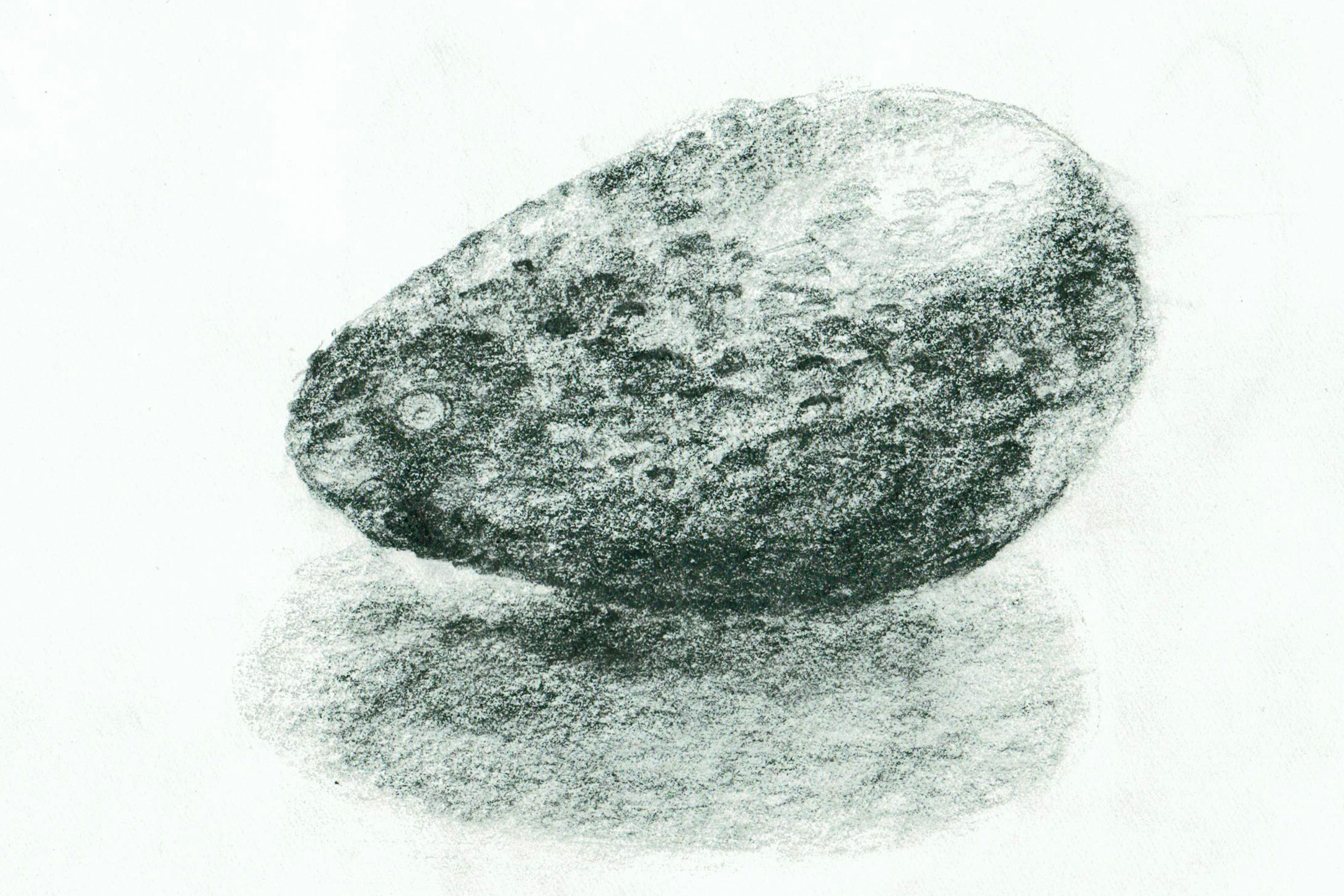
My avocado drawing

The most accurate way to describe my mind is to use the Buddhist term: monkey mind.  That’s me.  My mind is always moving; the thoughts are chattering away, unbidden.  Ideas fill my head from morning until night.

Here are some of the writing ideas that have flitted through my brain in just the past 24 hours:

  • I was doing some background fact- checking for the cover copy that my publisher has just completed for my upcoming book and I stumbled on the biography of Christiane de Pisan.  Never heard of her?  I’m not surprised; she was a 14th century woman, a writer, a woman ahead of her time, a Venetian by birth.  That sounded intriguing to me – and I wondered where I’d heard of her before.  In any case, I decided that there was a story there just waiting to be told.  A new book, perhaps?
  • Then, I was working on a document for my day job (university professors have to write stuff even when they are not in the midst of a teaching term), and I stumbled on another interesting idea: maybe I should write something about how university students want to be entertained by their professors these days.  Interesting.
  • Then, there are the inevitable ideas that spring to mind as I complete the activities necessary for our upcoming vacation.  A story set in London or New York? On Broadway, perhaps?  Well, you get the idea.

I did take meditation classes a few years ago and do have a meditation practice – when I have not fallen off the wagon as I have recently.  (Yes, of course I’m writing a piece called The Meditation Class based on the journal I kept.)

But, here’s the thing: to truly capture ideas, I have learned that you need more than a sturdy journal or two.  You actually need to quiet your mind and pay attention.  According to research, a wandering mind is one of the characteristics that make us human.  However, it is also what makes us unable to be attentive.

A few years ago, I decided that I need to be able to hone in on details more – that these details would enrich my writing.  So, I decided to learn to pay more attention.  I took a drawing class.

I am someone who clearly does not have a shred of talent when it comes to that kind of visual expression.  I seem to have some flare for graphic art, but picking up a drawing pencil was very foreign to me.  But I persevered with the classes.

Le Gourmet
Le Gourmet, Picasso, 1901

What I learned is that to be a visual artist, you have to be very observant.  Even if your artwork resembles Picasso’s later works with all of the deconstructed images, you still need to be keenly observant.  Until I visited the Picasso Museum in Barcelona some years ago, I had no idea that Picasso was not always an abstract painter; in fact his early work was very realistic. All of his work required considerable focus on details regardless of the artistic product at the end.

I did learn to pay attention to visual details and I did learn to draw.  I’ve often used this new skill in paying attention to details of people around me that later make their way onto a page.  Funny how I learned to describe things better from learning to draw.  But the bottom line is that I now (sometimes) pay attention.  Next week I’m going to tell you how many writing journals I have and what I use them for…

Posted in Creativity, creativity generators, Cross-writing, Reading

What writers should read

It’s been raining here non-stop – almost—for months—almost.  At least that’s the way it feels. This is terrific for our lawns and gardens, but not so much for anyone longing to get a bit of (dry) fresh air and sunshine.  If you’re anything like me, though, a rainy day is an invitation to a good book, or any book, good or otherwise.  It’s an opportunity to lose yourself in the pages (or electronics if that’s your preferred platform), to learn something, to be entertained, to be provoked, to daydream.

I have two questions for you: What does a writer read?  And…What should a writer read?

The first question is, of course, making the reasonable assumption that writers read.  Of course they read.  The answer to the question is obvious: whatever he or she wants to read.  My answer to the second question – what should a writer read – might surprise you.

Perhaps you think that writers should read about writing.  Or they should read books in their specialty area (for example if you’re a creative non-fiction writer, you should read  creative non-fiction; if you’re an historical novelist, you should read historical novels; if you’re a women’s lit writer, that’s what you should read and so on).  Of course it’s important for you to read the kind of literature that you write.  In fact, it’s probably more important the other way around: you should probably write what you like to read.  So, it’s likely that you will read all of this anyway.  But in my view it’s only part of what you should read.

I think it’s important to cross-read.  This is a natural extension of last week’s discussion of cross-writing and is related again to the concept of creativity cross-training.  Reading in genres far afield from your everyday work and writing is one of the best ways to keep your creative mind working overtime.  And it’s fairly easy to tell if you’re a cross-reader; stack up the books you are currently reading, and the books that you have on your next-to-read list, and see what’s there.

Here’s my current stack of reading-now books…

Books I'm reading now.

As I mentioned, it’s been raining, so both my husband and I have managed to take on Stieg Larsson’s trilogy and I’m on the final one The Girl Who Kicked the Hornet’s Nest.  We added onto that experience by watching the Swedish (with English sub-titles) movie versions.  We’ll watch the final one this weekend after I finish reading it.

But you can see a real range of literature in this pile.

  • London Day-by-Day is a representation of my favorite way to prepare for a trip.  I’ve been to London several times before, but next month we’re meeting my son (who lives in Europe) there for a few days before ticking off one of the experiences on our bucket list for which he will join us: a transatlantic liner crossing from London to New York on the Queen Mary 2.  This little book series is my bible for walking new areas of cities.  Sometimes they are even useful in the future when I’m writing about those cities.
  • No Exit and Three Other Plays by John Paul Sartre is a bit outside my usual reading.  In fact, I can’t remember the last time I actually read a play.  However, one of my avocations is writing ballet libretti and I promised a new one to my son who is a budding choreographer.  I’ve been inspired by the notion of Sartre’s take on hell.
  • Health Communication – what can I say?  I’m also working on the development of a new course in my department (many of us writers do still have day jobs).
  • Finally, the book on vintage purses represents one of my passions: handbags.  I actually have a collection of vintage Coach handbags.  The truth is that one of the antique handbags I came across in my cross-reading is the inspiration for some research for another historical novel.

See, what did I tell you about cross-reading? What are you reading now?