Posted in Creativity, Writing craft

Putting pen (or pencil) to paper

Do you ever write with a pen and paper?  Hmm?  Or are you forever hunched over the computer keyboard like most writers these days? If you only ever write at a computer keyboard, I think you might be missing out.  Stay with me for a few moments all you tweeters.

I wrote a guest piece for our students’ new online newsletter Symmetry recently on the topic of creativity and how it can be leveraged in fields other than the traditional “creatives.”  Some people think that writing creative pieces needs to be done by putting pen to paper – literally.

Ever since I discovered her work in the late 1980’s, I have considered Natalie Goldberg to be one of my major writing teachers.  I’ve never met Natalie Goldberg.  My writing is not one bit like Natalie Goldberg’s writing.  But her early books on writing practice, most notably Writing Down the Bones: Freeing the Writer Within, were my signposts along the journey toward finding my own voice as a writer.  And although I’m seriously dedicated to writing while hunched over a keyboard, Natalie’s approach to teaching writing has often given me pause to consider if there is a difference in the extent to which we  might be able to mine our creativity when inputting words to a computer versus letting them flow onto paper through our writing hand.

Natalie’s approach to writing is that it is a ‘practice,’ and that by practicing, we improve our writing.  We don’t have to publish everything we write.  Writing is often for ourselves only.  (To tell you the truth, I often read material that I wish the writer had kept to him or herself!)

I’ve talked about Nataile’s timed writing approach in previous posts, but her ideas bear further reflection.  She tells us to just “go!” and “keep your hand moving!”  That’s where the pen and paper thing comes in—you can’t do this kind of practice with a computer.

She also tells us to “lose control.”  This is easier said than done, but I believe that this is how we mine our personal creativity. As writers, we put pen to paper and if we’re able to lose control and keep the writing hand moving, interesting ideas just seem to flow.

Lee Rourke wrote a terrific piece in The Guardian’s book blog recently.  In it he refers to longhand writing as a “secretive pleasure.”  He says he “can sit in a corner of a café unnoticed and write to my heart’s content. I’m less conspicuous than the iBook brigade, cluttering up London coffee houses and pubs with their flashy technologies.”

Of course, my personal obsession with writing journals is related to the notion of putting pen to paper.  Sometimes it’s just nice to sit in a comfortable chair and think.  Then pick up that journal and just write.  Okay, I will admit that these days I often pick up my IPad and do this, but to tell you the truth, it’s not the same.  I highly recommend a good dose of the Natalie Goldberg approach to writing practice – with that pen firmly planted on a piece of paper that (preferably) is contained in a beautiful notebook.
Posted in Writing books, Writing craft

Finding my point of view

“What’s your point of view?’

Whenever you hear that question directed toward you, what do you think? For anyone who isn’t a writer, it’s simple. The question is asking if you have an opinion, a perspective, a personal take on something. When a writer is faced with that question, it takes on a whole new meaning – and it’s something that I’ve been thinking a lot about lately as I consider my next major writing project.

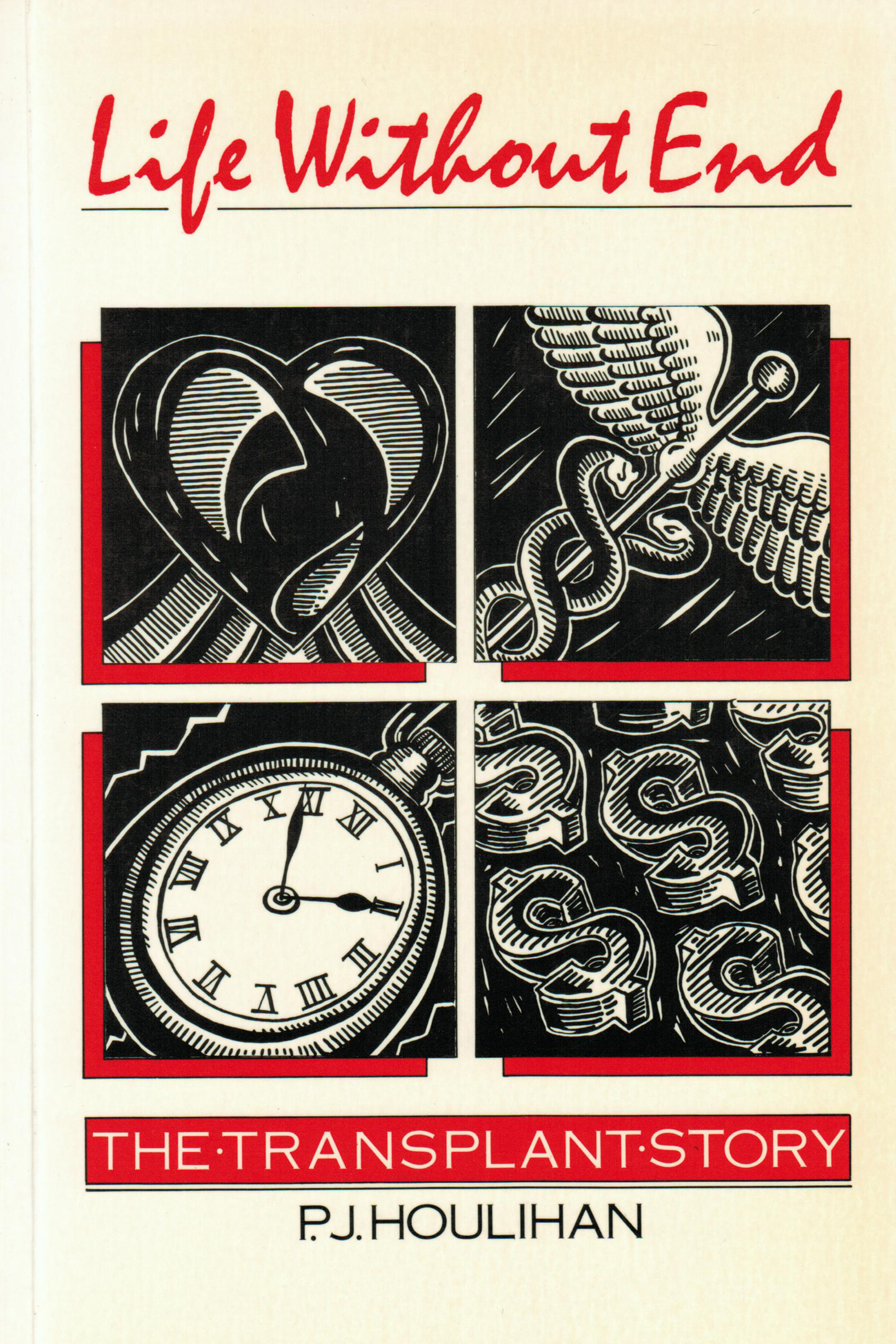
For many years as a non-fiction writer, it was fairly straightforward: my writer’s point of view was my bias. When I wrote my first-ever-published book way back in the dark ages, it was about the ethics and politics of organ transplantation.

My point of view, or my bias, was clear from the outset. The book began with a section called “A Parable.” My story-within-a-story was about a Transplant Surgeon who presents himself to St. Peter at the Pearly Gates. St. Peter tells the Transplant Surgeon that an unusual situation has developed: God would like a few one-on-one personal words with him before a decision about granting him access to heaven is made. God has a few questions for the Transplant Surgeon.

life without end
My First Book

“Who decides if a person needs an organ?” God says.

“Well, I do,” says the Transplant Surgeon.

“Who decides which person gets the organ when there are not enough to go around?”

“Well, I do.”

“Who decides if someone’s life should be saved with this organ?”

“Well, I do.”

“Who decides when technology has been stretched to its limit?” This is God’s final question.

The Transplant Surgeon is becoming increasingly uncomfortable.

Finally God says, “I am afraid that I am going to have to find another place for you other than Heaven…I just can’t afford the competition.”

…and with that, the author’s point of view is clear and sets the stage for the pages that follow.

It is true that a non-fiction author can try to be objective (that’s the purview of the journalist, I think, although objectivity in reporting these days is a bit difficult to find), but usually there is a purpose to the writing and that purpose as articulated from the outset sets up the bias. If I want to write a story about what happened on September 11, 2001, I have to decide on a “slant.” Will I tell a survivor’s story? A firefighter’s story? A victim’s story? My selection of that viewpoint will dictate the kind of research that I’ll have to do and eventually the bias that the story will hold. But, the story is still circumscribed by the facts – even if I choose which ones I’ll use. The same is not true for fiction.

Fiction writers have a lot more leeway. I don’t have to be reined in by facts when I write fiction. I can choose the ones I want to incorporate and even change ones that need changing to fit the story. There’s something a bit freeing about that, don’t you think? The problem when beginning to tell a story, however, is that a writer has to make a decision about point of view. The decision has to be deliberate, and then the voice has to be consistently used throughout the story if it is to hold any plausibility for the reader.

We all learned about the difference between first and third-person story telling when we were in fourth grade or thereabout. But there are other considerations. Here’s my current dilemma.

I have an idea for my next historical novel. The inspiration came from a picture of an object that I think would be interesting to follow through an historical journey. I could take on the role of narrator myself with an omniscient viewpoint and tell the story through generations. Or I could make it a first-person account; however, since I plan for it to cover several centuries, the first person will have to change from one character to another since people inevitably have to die. Or will it? What about first-person, inanimate-object perspective? Inanimate objects can endure through the ages and we’ve often said, “If only [it] could speak.” Well, why can’t it speak and be that narrator for us?

Obviously, this is not a new idea. Others have done it before. What I’m not entirely sure about, though, is if it works. Can a reader suspend his or her disbelief long enough to really believe that this object is telling a story? Does the inanimate narrator have to break through that fourth wall and speak directly to the reader? If so, is there anything wrong with that?

As you can see, the selection of point of view is an important one. It’s almost as if I can’t even complete the research until I know how my head is viewing the material. If I’m going to be a character (a person) in the story, I’ll have to think about the material in one way. On the other hand, if I’m going to be that object (if anyone asks, I might tell you what the object is), I’ll be thinking about the material I uncover quite differently. It’s time I decided.

Posted in Cross-writing, Genres, Writing books, Writing craft

Writing across genres

So many genres...so little time.

It may come as something of a surprise to students I’ve had over the years – those who have have sat in my classes to learn about communication ethics or strategy – but I began my unexpected academic career as a writing teacher.  I never intended to be a university professor.

I had always been interested in teaching and thought that it was probably one of my strengths.  I had done it for several years in a previous incarnation – I taught anatomy & physiology, ethics and human sexuality (!) to nursing students before my career evolved into health and medical communication, leading eventually to writing books and teaching in the area of communication (public relations to be specific).  But I went to the university initially as a writer who could teach writing.

The first course I taught (before I ever considered teaching full-time) was called “Print Media.”  There is no such course with that title any longer, but its descendent “Text-Based Media” comes close.  I also taught news and feature writing and persuasive writing after the then-chairman of the department talked me into applying for a full-time job.  But I never intended to stay.

That was 23 years ago!  So, what’s the lesson here?

For me, it means that our skill sets can cross many disciplines – and in writing can cross different genres.  But writing across genres has two different meanings.  First, let’s talk about individual writers writing across genres; then we’ll talk about those genres that cross genres themselves.

When I was trying to create copy for my web site, it occurred to me that this was, in fact the hallmark of my writing: I am a bit of a switch-hitter.  As I say on my home page

…Goethe is said to have opined that every author in some way portrays himself [sic] in his works, even if it be against his [sic] will. For someone who writes in a variety of genres, this is either a symptom of some kind of mental confusion – or perhaps the hallmark of an interesting personality. I’d like to think that, in this case, it’s the latter…

The bottom line is that I started my writing career as a medical writer.  Skills honed there took me into medical communication which morphed into communication in general – most of my past work has been writing about health and corporate  communication.  But, I’m a writer.  To me that means that I can use my skills to write anything that takes my fancy.  I decided to move into creative non-fiction and wrote my memoir, then took my research skills into an area that I love to read – historical fiction.

In my view, writers, like everyone else, have individual strengths – and my strengths are probably not the same as yours.  I think it’s important to know what those strengths are and see how you can use them across genres.  For example, my meticulous research skills, honed in the areas of non-fiction, have been enormously useful to me in moving into historical fiction. Story-telling is also a strength that many of us have – it’s a skill that is important both to non-fiction (creative or otherwise) as well as to fiction writers.

The second way that you can think about the concept of “writing across genres” is the notion that there are discrete categories of writing, and to create  a mash-up, to use the current parlance, is to create a cross-genre genre.  Make sense?

Here’s my example: I have a secret – I sometimes read chick lit and I’m not apologizing for it.  Since I like a bit of escapist reading from time to time, and only if it’s well-written like some chick lit is, I am also interested in creating some of my own.  But I don’t want to be formulaic.  So, I’ve taken my interest in travel and travel writing and put it together with my interest in chick lit and I’m writing a travel chick lit book.  Is this a cross-genre?  Maybe, but who’s to say?  Who is the arbiter of what is and is not a genre?  And who says that because my book is funny, with a young, modern woman as the protagonist, that it’s chick lit anyway?  Maybe it’s just women’s literature – ooh, that sounds a lot better for a university prof-type, doesn’t it?

In any case, cheers to coming up with your own genres and writing whatever moves you.