Posted in Ideas generation, Journals, Memoir, Writing craft

Keeping journals

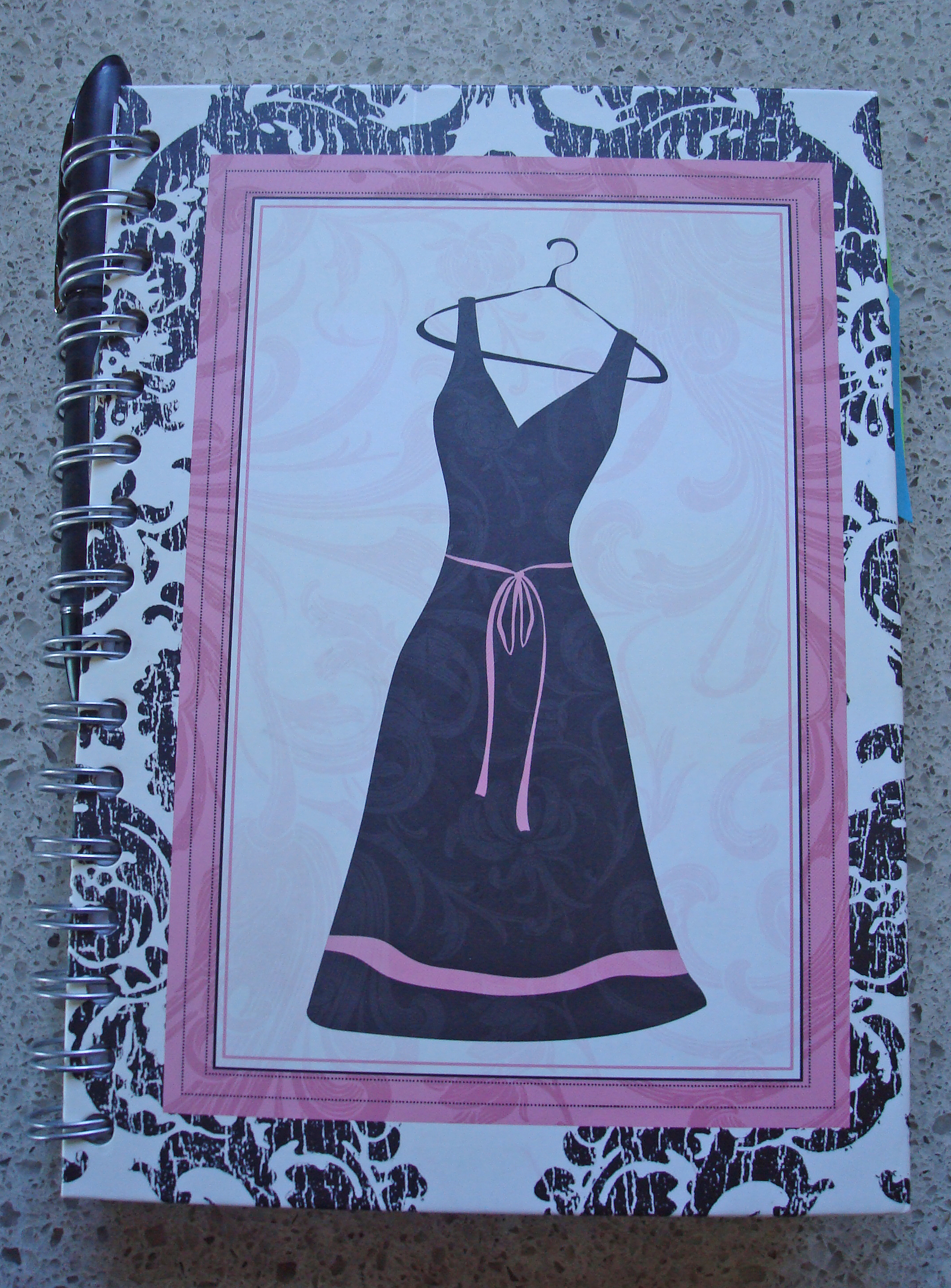
What kind of book notes & ideas reside in this journal? Hmm...

Do you keep a journal?  If you’re a writer, perhaps you ought to consider it.  There is hardly a teacher of writing craft around who doesn’t encourage students to keep journals.  It is said that,  “Journals have been the secret weapon for writers from Allen Ginsburg to Virginia Woolf to Victor Hugo.”  So, there are aspects of a writer’s journal that might bear discussion.

First, let me edit my original question to make it more specific to me and my own backstory.  Do you keep journals?  That “s” at the end of the word is key for me since I keep multiple journals.  In fact, I’m a tad addicted to the notion of journals – and I have journals that are pen and paper ones, as well as journals that reside on my computer.  As you can see, I’m not a purist either way.

Virginia Woolf is quoted as having said, “The habit of writing for my eye only is good practice,” and that sums up the first reason for keeping a journal: it gives you a chance to work on your writing without the self-consciousness of knowing it will be read by others.  Although this might, at first glance, seem like that cathartic kind of journaling that has become the ubiquitous habit of the navel-gazers among us, it’s really more than that. This kind of journaling is really an exercise that lets you try out different turns of phrase, that lets your mind wander to ideas deeply buried in your sub-conscious (see the comments on last week’s discussion), and that is a safe place for writing that you have no intention of showing anyone else.  And this kind of journaling can be semi-structured.

Writer and teacher Natalie Goldberg’s approach to journaling is one that I’ve come back to year after year.  In her first writing book (which I highly  recommend) Writing Down the Bones (originally published in 1986 and re-released in 2010), she suggests that you take pen to paper – something that  she’s adamant about – and place your pen on the paper, never lifting it for your ten-minute writing practice each day. Her rule is this: keep your hand moving.  Begin with the words “I remember…” or even “I don’t remember…” (She has other suggestions but you’ll have to read her book to get those ones); and never stop or lift the pen as it moves across the page.  Every time you get stuck, write down “I remember…” again and keep going for the full ten minutes.  It’s a very liberating process.

There are other reasons other than practice, though, for keeping journals.  One of my primary reasons is so that I have places to keep ideas that come to me.  These ideas can be thoughts, clippings, photos etc.  But I also have general idea journals and a special journal for every project I’m working on.  Okay, I do have lots of journals, but I’d wager a guess that I’m not the only one!

One of the journals I kept for many years was a bit like a diary – but it focused
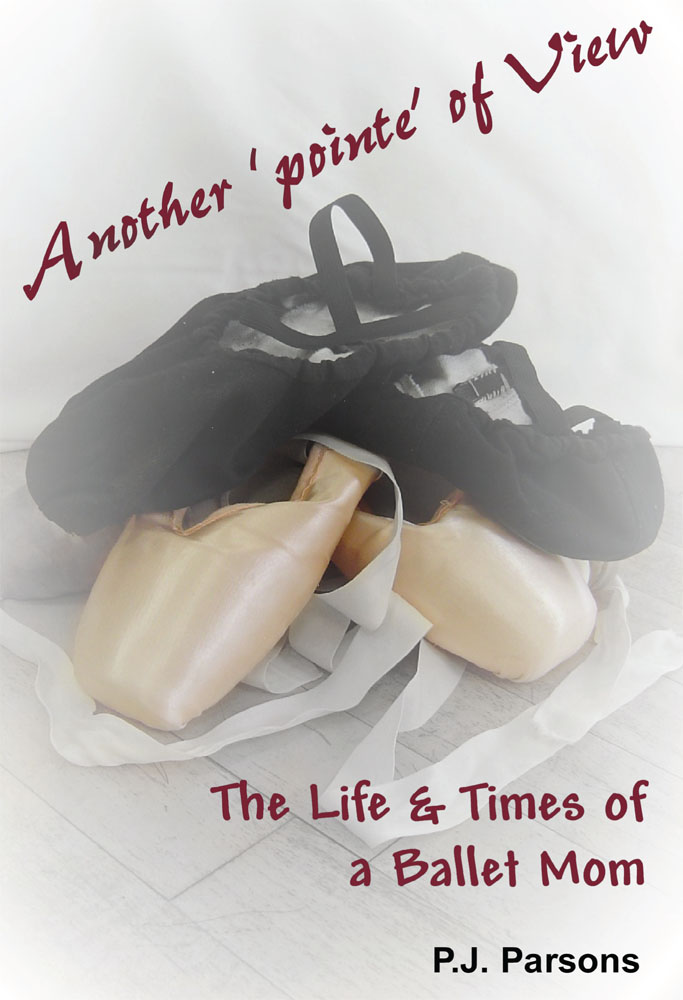
on only one of the general kinds of experiences in my life.  It chronicled my experience as a ballet mom.  That journal became the basis for my memoir Another Pointe of View: The Life and Times of a Ballet Mom.  I was able to capture detailed memories that would have faded into themists of my mind, and that would have been altered by subsequent experiences.  That journal was critical to my ability to write a story that might resonate with other mothers of gifted children.

Right now, I have so many journals on the go.  I have two that hold notes on two separate book projects.  I have one that is a kind of general catch-all for ideas.  I have a travel journal (this is a new idea – it’s time to capture details of our travels).  I have one that keeps notes about a book that my husband and I will write in our retirement to add to the four that we wrote some years ago.  I have two new ones that have not found their purpose yet, but they will.  And I have one for this blog.  I also have two computer-based journals and one on my iPad.

The very best part of my journals, though, is when I look into one of them and what I read becomes part of something larger – something that I’ll write that
someone else might read and enjoy – or at least learn from.

Posted in Cross-writing, Writing craft

Cross-training, cross-writing, it’s all the same

I doubt if there is a person among us who hasn’t come across a magazine or newspaper article or online post on cross-training.  After all, we’re all obsessed with fitness these days – n’est-ce pas?  Not you? Even so, I’ll bet that you still have a pretty good idea about what cross-training is.  It’s that approach tofitness that involves a variety of training methods to improve your overall fitness level.  For example, if you usually run for its health benefits, by adding strength conditioning, you’ll improve your overall fitness level, which is likely to improve your running.  So, you already know this.  But have you ever thought that the same  approach might apply to your writing?

It doesn’t matter if most of your writing is on a blog, in magazines, in academic journals or even in your own personal journal, how you write matters.  How you write affects the way that both you and others understand your ideas.  As William Zinsser (whose book On Writing Well should be in your library) suggested, “Most people have no idea how badly they write.”

Go back and read some of your very earliest writing and you’ll quickly notice that if you’ve kept on with it, your writing today is so much better than it was when you started.   Your continual practice has, in fact, made you better.  But if you’ve gone a step further by actually working at improving your writing, it will jump off the page at you and scream: “I am better!”  One of the most under-appreciated approached to writing improvement in my view is the concept of cross-writing.

I’m not sure when I came up with or stumbled upon the idea, but it probably had something to do with a creativity course I taught a few years ago to a small group of third-year university students.  In that course we explored the idea of creativity cross-training: for example, if you’re a choreographer, then you could try a visual art such as photography or painting to keep the creative juices flowing – learn to see things in different ways.  This enhances your creativity.  The same holds true for writing.

I have great respect for authors who work in a particular specialty, but I’ll bet my next paycheck that most of them (if not all) do at least a bit of cross-writing even if they don’t cross-publish (not sure that’s a real concept for anyone but me). Many, if not most authors, keep journals in which they write a lot of material that they never intend for readers to see.  So, they cross write, too. But I’m talking about an even bigger commitment to this approach.

I’m talking to all you academic writers (including students) out there who don’t seem to think that your writing needs to improve – that it’s “good enough.”  But I think that taking the time to write a bit of fiction, to blog or even to keep a personal journal would help. You would improve your story-telling ability, and in spite of the parameters within which you must publish, at the heart of what you’re doing is telling the story of your research, or your theory, or your opinion.

I’m also talking to all those bloggers out there who free-associate in every blog post. I’m imploring you to take the time to do a bit of research for a change, and craft a piece that is more authoritative  I’m not necessarily suggesting that you post it on your blog – rather do it for yourself and your writing.

Perhaps all of this is to justify my own approach to writing:  a bit of academia, a bit of blogging, a few non-fiction trade books, a couple of textbooks, a bit of creative non-fiction (memoir) and, increasingly, works of fiction.  This apparent lack of focus on my part, I like to think of as evolutionary in terms of the quality of my own writing.  When I have the courage to open the pages of that first book I wrote  and really read, I am usually astounded that a publisher bought it.  My writing is better now, and gets better with every article and every book I write.  I don’t think you can ever stop improving.

What, then, are some of the skills that I learned by writing in one genre and was then able to use to improve another style?

  • First, I used to write feature articles.  One of the first things you have to be able to do (after gathering your material) to write a feature is to organize your material and write an outline.  That ability to think about how to tell a story has improved the way I’m able to write case studies in textbooks.
  • That ability to tell a story also became extraordinarily useful in writing the memoir.
  • The self-reflection skills that I had to engage to write the memoir became a key to opening up my imagination so that I could pick up on the rich possibilities of fiction that might come from an academic journal article (that’s the backstory about my upcoming book Grace Note which I’ll tell you about the minute I have it in my hand from the publisher).
  • My research skills that I honed by writing textbooks are the key to my ability to write historical fiction that is full of accurate historical detail.
  • And of course, all of the editors who have had a crack at my work have taught me some of the fine points of grammar, punctuation and style – even if I had to argue with them from time to time. In almost all cases, they won.

All of this makes me a writer who I think continues to improve, but one who has not yet arrived!

What parts of your current writing could be improved by trying out another form?