Posted in Book launches, Ethics

The Book I Was Probably Always Supposed to Write

One thing I’ve always considered to be important for writers is to be able to use their previous knowledge and skills in their writing. For me, that began with transferring my nonfiction research skills to historical fiction. Over the years, however, I’ve followed my bliss more or less and written whatever story crept into my mind. My new book is no different in that respect, but it has an added element of past knowledge, namely, my background in ethics. (Bet you didn’t see that one coming!)

When my novel We Came From Away was named a finalist for the 2025 Stephen Leacock Medal for Literary Humour earlier this year, some of my former students probably thought it was a clerical error. After decades of teaching ethics and corporate communication, I was about as funny as a midterm exam.

My new novel, though? This is the book they always suspected was hiding in me.

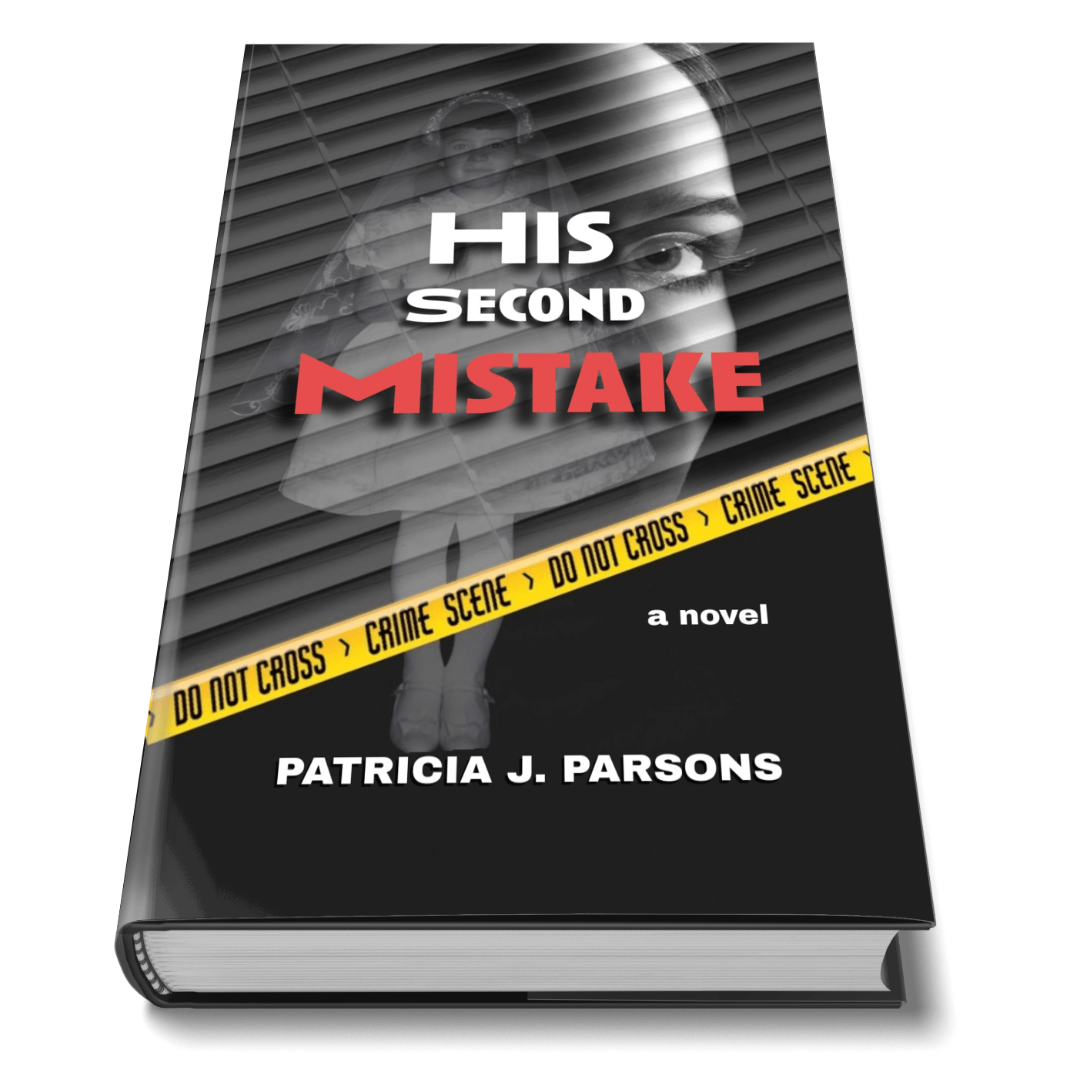
Edgy, baffling, intellectually unsettling, my new novel, His Second Mistake, challenges everything you ever thought you believed about what is good, what is evil and whether good is right and evil is bad.

The story:

Rachel Underwood has it all—wealth, influence, and a gleaming reputation as one of Toronto’s most admired crisis managers and philanthropists. But beneath the charm lies a lethal secret. Driven by her abiding sense of justice, Rachel is also a killer, methodically hunting men who abuse women and evade accountability.

Detective Hannah Novak, eager to prove herself in homicide, finds her own sense of justice tested when a string of suspicious deaths points to a woman’s hand—and to someone dangerously close to her.

What follows is a tense and deeply personal game of cat and mouse between two women bound by friendship, loyalty, and lies. As the truth edges closer, each must decide how far she’s willing to go—and what price she’s willing to pay—for justice.

His Second Mistake is a gripping, disquieting exploration of power, betrayal, and the ethics of vengeance—where right and wrong blur, and friendship may be the deadliest weapon of all.

Posted in Backstory, Writing books

Writing a Book Series: What No One Else Will Tell You

It seems that everywhere you look these days, writers are being told to write a series of books—often before they’ve even written the first one! As far as I’m concerned, this is the dumbest way to write a series or even a book. The thinking seems to be that if you can hook a reader on one book, that reader will buy another one that continues the story or theme.

And this can be either fiction or nonfiction. Bestselling writers like David Baldacci and Michael Connelly are the masters of the book series, so much so that readers lie in waiting for their favourite characters to reappear. But it’s not just for fiction.

If you’re a travel writer, for example, you might write a series of books on a variety of places. The same goes for a health or food writer. Regardless of the topic you’re searching for these days, you can find a series.

There is a lot of advice on writing a book series, and most of it is the same. Most of it starts with the admonition to plan out your series. I’m going to turn that advice on its head because my advice is 180 degrees in the opposite direction from the conventional wisdom. (Although, to tell you the truth, I’m not sure anyone who’s written that advice has ever really written a series).

Here’s what no one else will tell you: Do not, under any circumstances, think of your book as a series until you’ve written the last sentence of the last chapter and the book tells you there’s another one.

Now, I’m going to tell you why and what else you might consider.

What is a book series?

Let’s start by ensuring we’re all thinking about a book series in the same way.

First, a series is not just a number of books written by the same author. In fact, many bestselling series authors have penned several different series. David Baldacci has written something in the vicinity of ten distinct series.

There are also different kinds of series (even publishers can group books by various authors and call them a series―one of my nonfiction books is part of just such a publisher’s series), but I’m talking about a specific type of series.

The definition of a series we’ll use today is this…

“…a sequential group of books by the same author that share specific characteristics…”

My unconventional advice

First—and this is key—do not set out to write a series. No matter what anyone tells you, write one book and see how you feel about it at the end of the process. Could it be the beginning of a series? If it could, the book will tell you.

When I wrote The Year I Made 12 Dresses, I had absolutely no notion of writing a series. But Charlie Hudson, the main character, simply wouldn’t let go of me. She forced me to tell her mother’s secrets, and Kat’s Kosmic Blues was born―and even that wasn’t the last one. She just kept talking.

My second piece of advice is that each book should stand on its own outside the series. Not all readers will find your first book and then proceed sequentially through the series. So, you need to tell enough of the backstory but not too much.

For example, when I wrote book three of the “almost-but-not-quite-true stories,” a reader had to be able to become immersed in The Inscrutable Life of Frannie Phillips without having read Kat’s story. However, the reader also had to be able to think that he or she might like to go back and read the previous two books.

I also recommend that you keep meticulous notes on backstory—characters, places, events, etc.

If you’re writing a nonfiction series, keep a carefully crafted style guide. If it’s fiction, you need a notebook that contains the complete backstory of every character who might reappear. It also needs details on recurring settings, etc.

As you write the first book, let the process become organic. Let one book lead you into the next one. Each well-crafted paragraph in a book contains a transition into the next one. Each well-crafted chapter transitions into the next. It should be the same from one book to the next―even if you have to go back and rewrite the ending of the first book when the character tells you there’s another one that needs to be written.

Finally, think abt your readers. They always need something new, so keep the material fresh by introducing something new in each book,

When I wrote Kat’s Kosmic Blues, the main character was the through-line from one book to another, and the events were sequential. But in this book, although my use of point of view was the same as in the first one, this book came with a Spotify playlist―where each chapter was named for a song from the 60s and 70s, the years in which the book was primarily set.

Of course, there are different kinds of series: ones that have an overarching plot, ones where there is only one plot per book and the anthology kind where the individual books are only loosely tied together by a setting, perhaps. For me, that’s stretching the series definition, but it does exist.

I once saw it written that a series is the meal they keep coming back for. Maybe. But in my view, a series is at least as much a feast for the writer!
Posted in Publishing

How to Avoid Publishing Scams

For many people who’ve always dreamt of writing, one of the dreams is to see that writing in print (or, equally these days, in a digital format) to share it with the world. I remember the feeling in my early writing days of looking forward to having that physical book in my hand—of being able to share my writing with readers who might somehow be moved by it. And because that drive is so powerful, it can blind writers to situations that they should avoid.

With the advent of digital publishing, more and more scammers have come out of the woodwork. There is a plethora of cottage industries that have sprung up around writers, and it can be overwhelming when you’re just getting started. So, how can you avoid falling into a scammer’s clutches?

First, know this above all: If a “publisher” approaches you, this is not a legitimate publisher unless you’ve already had several bestsellers via traditional publishing contracts or have won a major (authentic) national or international writing award (not an award created by an organization for the purposes of making money). Publishers do not approach unknown authors. Now that we have that out of the way and your ego has been deflated, let’s look at a few other keys to avoiding scammers.

If a publisher offers you a contract and asks for a fee, they are not a traditional publisher. A traditional publisher will never ask you to pay to have your book published. This is what has traditionally been viewed as a vanity publisher. It can be argued that anyone who self-publishes pays the whole bill and thus is vanity publishing. However, the term is a pejorative one and refers to publishers masquerading as traditional publishers.

 If you want to vanity publish, by all means, go ahead. But just know that this is what you’re doing.

And what about literary agents? A literary agent contacting you out of the blue offering deals―either book publishing deals or sales of film rights―is not a legitimate literary agent. Just as traditional publishers don’t do this, neither do agents.

I regularly get emails from “agents” who are offering to take on a specific novel that was published some years ago and sell the film rights for me. And isn’t it tempting? Isn’t it a bit of a boost to a writer’s ego? Yes, but it’s illegitimate. All you have to do is take a deep dive into Google or your other favourite search engine to find out that this agent isn’t the kind you want to work with. Ever.

Agents these days have so many submissions that they do not ever go looking for clients unless you are already a legitimately bestselling writer. And by legitimately bestselling, I don’t mean that you finessed an Amazon logarithm to have your book a bestseller in a tiny, obscure niche.

And while we’re on the topic of literary agents, any agent who requests a reading fee or any fee beyond their percentage after signing is to be avoided at all costs. Agents who charge fees are barred from belonging to their professional associations for a reason. If an agent is making money from reading fees, this is their business model. They have no need to find a publisher for your book to make money. You do not want this literary agent.

 Another scam that you, as a writer, need to avoid relates to copyright. New writers are so ill-informed about copyright and so frightened of having their work ripped off that this is a scam that they often fall victim to. If someone offers to obtain the copyright for your book for a fee, just say no.

New writers often think that people are going to steal their work or even their ideas. They seem to believe that they need to do something proactive about making sure they own the copyright to their work. The truth is that the minute you create a piece of work, the copyright is vested in you as the creator. You do not need to register the copyright. Believe it or not, no one is going to steal your book, but if they steal an idea, you’re out of luck. Ideas are not subject to copyright. (See my previous post about copyright.)

If you’re writing a screenplay, that’s a slightly different beast since there is so much more money involved. You can copyright your work by sealing it in an envelope and mailing it to yourself. When it arrives, file it without opening it. If there is ever a dispute, you will have it with a date-stamped mailing label.

A bonus, related tip: never buy an ISBN from a third party. If you live in a country where you have to pay for an ISBN (we don’t have to here in Canada), get it yourself.

Finally, if anyone —ANYONE—offers sales guarantees, avoid them like the plague. One thing we all know to be true about book publishing is that there are no guarantees. No one can predict sales―not publishers of any stripe, not agents and certainly not writers.

If you think a scammer might have contacted you, visit the Authors Guild scam page[1] at authorsguild.org and search for a scam alert.

And don’t forget to do your own due diligence. Search online for the name of the company or the part of the email address that looks like a legitimate business name. It’s amazing what you can find.     


[1] https://authorsguild.org/resource/publishing-scam-alerts/