Posted in Backstory, Electronic Publishing, Publishing, Self-Publishing, Traditional Publishing, Writing, Writing books

Helping Writers Means Telling the Truth


Anyone who knows me knows that I was an accidental academic. When I took my first part-time university teaching position so many years ago, I had no intention of making it permanent. I didn’t see myself starting off as a lowly assistant professor making my way up the academic ladder to associate professor and finally the ultimate academic goal: Full Professor. But that’s what happened. You know the old saying… “If you want to make God laugh, tell her your plans…” Well, God must be laughing. Anyway, that happened, but that part of my life is also over. And I find myself back where it all began: teaching writing.

Yes, that first course I taught all those years ago was a writing course. You see, I had already begun to carve out a path for myself as a writer. I had published numerous magazine articles mostly in my specialty area of health and medicine, and I had also already published my first book – also in my specialty area. So, teaching writing seemed natural to me. And it still does. However, my venue has changed.

This past year I finally pulled together thirty years of writing and publishing experience to share it with the world. I thought I’d be able to be a mentor to newbie writers just starting out. But something happened.

In the intervening years between when I first established myself as a writer, and today, the writing and publishing industry has undergone nothing short of a transformation. Everyone can be published today. No one seems to need a publisher. Or even an editor. And so many writers are part of an online writing community that oozes self-congratulation and disingenuous positivity about everyone’s writing – all because you never know what someone else might say about your writing. You pat my back and I’ll pat yours, or something like that.
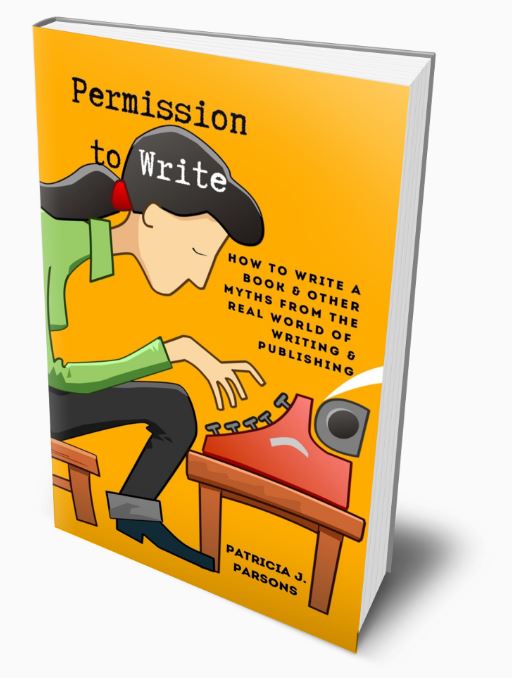
The upshot of this whole project was a book that seeks not only to provide a bit of mentoring to new writers but also to provide a foundation in reality and to disabuse writers these days of some of the myths about fame and fortune as a writer. The book is Permission to Write: How to Write a Book and Other Myths from the Real World of Writing and Publishing. I’ve also decided to share additional materials through the medium of video.

Thus, I’ve begun a 10-part series to accompany the book. The first episode “Want to be a rich and famous writer? Don’t give up your day job” is already up and running.

Today episode number two launches: “Don’t write that book! Or at least don’t publish it.”
So you can see that I don’t necessarily paint a rosy picture for wannabe writers. However, serious wannabe writers will get through them and still want to write that book. Those are the writers I aim to help.

The videos are posted on the Moonlight Press YouTube channel. Let your friends who “wanna write a book” know. 
Posted in Book covers, Genres, Publishing, Self-Publishing, Uncategorized, Writing

The dumbing down of ‘chick-lit’

pen

I already know what ‘serious’ writers are going to say: chicklit is ‘dumb’ by definition. I beg to differ; however, I also think that the derision isn’t entirely without foundation. My own reading and writing habits have led me to this conclusion. But let’s start in broader terms to address the question of whether writing and the literature that is the result has, overall, suffered from the dreaded ‘dumbing down.’ Many believe so.

In a 2015 piece by Stephen Carter, a Blomberg View columnist (he also happens to be both a law professor at Yale and a novelist), he quotes prominent science fiction writer Ursula K. Leguin who refers to what she sees as the twenty-first century formulaic creation of best sellers in this way: “The readability of many best sellers is much like the edibility of junk food…I believe that reading only packaged microwavable fiction ruins the taste, destabilizes the moral blood pressure, and makes the mind obese.”[1]

Of course she refers to the influence of Amazon and its well-pondered algorithm for determining best-seller status. Carter, however, isn’t buying it. He believes that perhaps a more important part of the issue is that readers’ tastes have changed; attention spans are shorter. Perhaps we have done it to ourselves. But others take a different view.

There is much grumbling in the ‘serious’ writers’ communities about the perceived negative impact of self-publishing on current literature; there is a significant sentiment (not held by all self-described serious writers, I might add) that it has been the proliferation of unedited self-published books that has had the most serious effect.

One online writer has suggested that “with self-publishing it seems like the editors have all disappeared. Ten or more books on recent New York Times Best Sellers List are there because the millions of fanboys and fangirls have bought their hero’s book…maybe the bar is set a bit too low.”[2]

So there seem to be two issues that people consider to be characteristics of ‘dumbed-down literature.’ The first one (and a big one for people like me who have taught writing over the years) is the issue of actual command of the language including grammar, syntax, spelling, word choice and all those things that our English teachers tried to inculcate in us over the years. The second one is the substance – or lack thereof – of the books that are popular today.

In my view, the truth is that quality writing can be practiced in any genre from literary fiction to popular erotica and everything in between. The topic seems secondary; if you’re passionate about writing it, you’re good at it, and your readers love it (or at least the first two if your readers haven’t found you yet), then I say write on. Even if what you write is derided by some as merely ‘chick lit.’

In general, the term chick lit means any literature that appeals mostly to women. So, what’s wrong with that? Does that make it dumb? If chick lit is dumb, then women are dumb by extension. Don’t say that to my face. But has even literature aimed at women been dumbed down? I have a personal hate on for many pieces of chick lit and it isn’t for the reasons you might think.

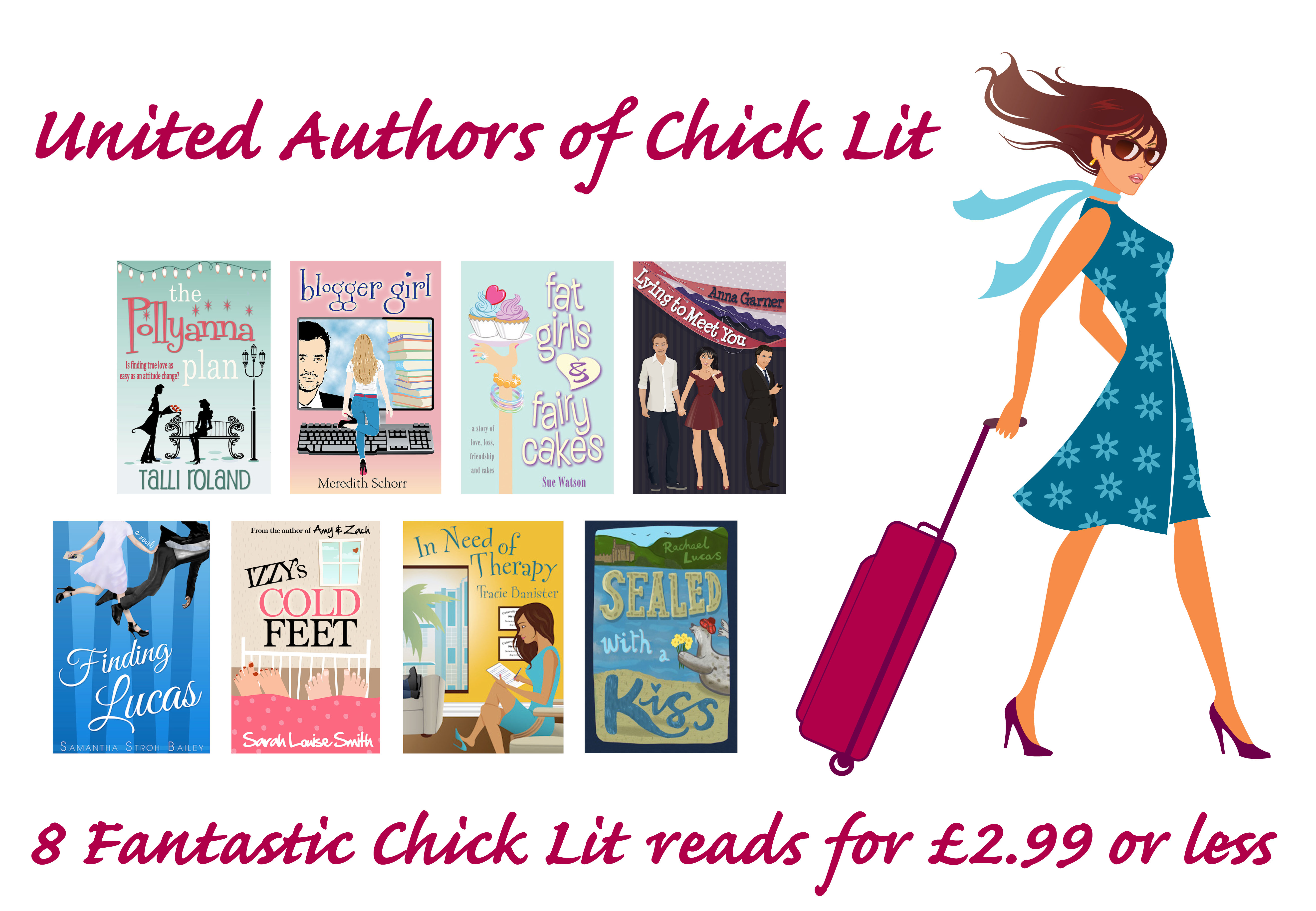
In my view, women are infantilized by their chick lit not so much by the stories or the writing, but byu the covers. Have you looked at any lately? I’ve been examining them as we contemplate the design of my new book which is women’s fiction. Is this really how women see themselves?

final-promo-art-uk
Need I say more?


chk_jpg
Okay, just a bit more!


Well, I’m a smart woman and I write #litforintelligentchicks. In fact, I love to read chick lit, but I can’t get to your really great story if I feel infantilized by the dumb cover – whether it’s an illustration or a stock photo depicting a sweaty clinch and a few bits of a six-pack.

Okay, my rant is over. Back to the drawing board for that new cover.

Sources:

[1] Stephen L. Carter. June 11, 2015. Don’t Blame Amazon For Dumbing Down Literature. Bloomberg View. https://www.bloomberg.com/view/articles/2015-06-11/why-ursula-k-le-guin-s-amazon-pan-is-only-half-right

[2] Self-publishing and the Dumbing Down of Literature. http://www.dailykos.com/story/2015/11/21/1452940/-Self-Publishing-And-The-Dumbing-Down-Of-Literature

Posted in Book marketing, Book trailers, Fortune

Book Trailers: For fun or profit?

Clapper BoardIt happens every time I finish a book-length project. I begin to think about marketing the book to readers who might like/love/need/enjoy it. Of course if it’s a non-fiction book, I’ve given it a lot of thought up front because publishers these days want a fairly well-fleshed-out marketing plan from an author as part of the book proposal long before the book is even completed. If it’s a piece of fiction, I write what I write then think about marketing it after it’s published. I can’t help it; I’m a writer not a content creator! But, what about that marketing?

Well, it’s like this. There are lots of places these days that will purport to be the best places to get your book in front of readers; however, on closer inspection, the members are usually other wannabe writers trying to get their books in front of readers. It’s a bit of a vicious circle. But, if you have a book that takes off, good for you. The elements of a well-constructed book marketing plan may or may not be part of it. But, what precisely is included in that plan?

One of the elements often touted these days is the inclusion of a book trailer. What is a book trailer, you say? Glad you asked, because I love developing them – whether or not they are really useful marketing tools (more about that as we proceed).

I’ve written about book trailers before – almost every time I have a new one I can hardly wait to write about them – not because they are so wonderful, but because I think they are fun. Yes, that’s it – I think they’re fun.

As I defined them in a long-ago blog post, “…a book trailer is a short video clip that presents a small sample of a book in a similar format to that of a movie.” When I wrote that original post (Book trailers Part 1) and its follow-up (Book Trailers: What’s the Point?) way back in 2011, book trailers were very new. There was very little information on the impact they may or may not have on books sales, but what I did perceive at the time was this: quite apart from the unknown of whether or not someone would actually be inclined to buy a book based on seeing a trailer, how that trailer made its way onto someone’s computer screen would be paramount in finding out if it could be be an effective sales tool.

Fast-forward five years, and here we are still discussing the same issue. Again, I’ve been searching for data on the impact of book trailers.

There is little doubt that in the past five years online video in general has seen an incredible upsurge. That by itself, however, doesn’t bolster any data supporting the usefulness of the book trailer. According to one video trailer producer, “Readers are 64% more likely to purchase your book if they see a book trailer that effectively promotes your book. (Source: ComScore)” and “Visitors to your author website stay an average of 2 minutes longer than on author sites that do not use video. (Source: ComScore)”.[1] FYI: according to their web site ComScore is “a leading cross-platform measurement company that precisely measure audiences, brands and consumer behavior…”[2] Of course, MacLain reiterates the notion that distribution is key. You can have the most fantastic, well-planned and well-executed video but if no one knows it exists, its going to be for your eyes only.

Of course there are reasons you might want to skip the book trailer production all together. Marisol Dahl, writing on The Write Life Blog suggests that a bad book trailer is worse than no trailer at all, and further reiterates that it can be difficult to determine return on investment (and the investment can be massive).[3]

The truth is that most of those touting the value of book trailers are usually individuals and companies who actually produce trailers. Unless they have hard data, their promotion of book trailers as a sales tool is pretty self-serving. Book trailers certainly should be useful marketing tools if we just had a way to track their success after wide distribution.

I personally love planning and writing scripts for book trailers then giving that script to my trusty video developer (my husband) and letting him loose on the material. I keep them brief (certainly under two minutes, generally under a minute-and-a-half), and share them as widely as I can. So, if you’ve considered a book trailer I can give you several caveats as a writer for their production.

You probably want a book trailers if:

  1. You think it’s fun to have one;
  2. You can write a brief, tight script;
  3. You can give the potential reader a glimpse of the material without giving it all away;
  4. You can afford to produce one;
  5. You have somewhere to post it; and
  6. You have no illusions about how many sales it might garner.

If you can’t fulfil all of these, you might want to step away.

Anyway, I think they’re fun. If you a minute, here’s my latest trailer for my new medical thriller The Body Traders.


[1] Jerome MacLain as quoted in “Book Trailers And Using Video For Book Marketing” by Joanna Penn (March 2, 2015). http://www.thecreativepenn.com/2015/03/02/book-trailers/

[2] https://www.comscore.com/About-comScore

[3] Marison Dahl November 5, 2015. “Are Book Trailers a Marketing Must-Have?” http://thewritelife.com/are-book-trailers-a-marketing-must-have/